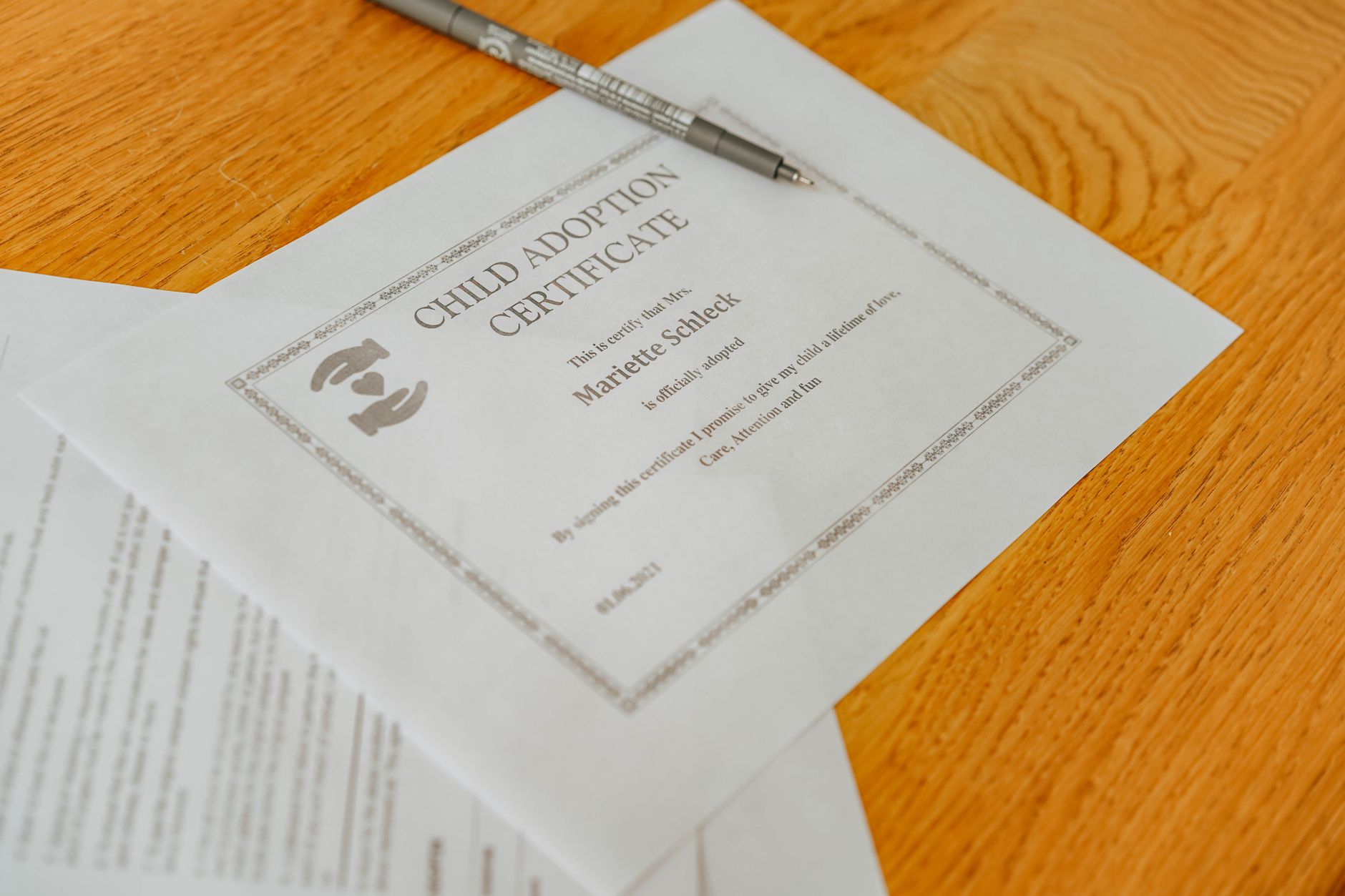
he paperwork is where many families hit a wall—and where the process can feel overwhelming. But with the right preparation, you can navigate it smoothly. Here’s what to expect:
1. Gather your documents: You’ll need proof of your relationship (marriage certificate or domestic partnership agreement), proof of the child’s birth (birth certificate), and your identification. Some states also require a home study, which assesses your living situation and suitability as parents. For a modern adoption home study checklist, we’ve outlined the essentials to help you prepare.
2. Choose your path: You can file through your state’s court system or hire an adoption attorney. Court filing is often cheaper but can be time-consuming, while an attorney streamlines the process but comes with higher costs. Many families opt for a hybrid approach—filing themselves but consulting an attorney for complex legal questions.
3. Complete the petition: This is where the paperwork becomes personal. You’ll file a petition to adopt, which includes details about the child, your relationship to them, and your reasons for seeking adoption. Be honest and clear—this is a legal document that will be reviewed by a judge.
4. Submit and wait: Processing times vary by state, but it typically takes 3–6 months from filing to finalization. Some states require a waiting period or home visit to ensure the child’s well-being.
**Pro tip**: Start gathering documents early. The sooner you begin, the sooner you can focus on the emotional and family dynamics of the process—rather than getting stuck in paperwork.
What are the legal requirements for second parent adoption in same-sex families?
The legal landscape for second parent adoption varies by state, but there are some common requirements across the board. Here’s what you need to know:
1. Residency: Most states require at least one parent to live in the state for a certain period (often 6 months) before filing. Check your state’s specific rules—some allow for "short-term residency" if you’re adopting a child born out of state.
2. Consent: The biological parent must consent to the adoption unless they’ve terminated their parental rights. If the child is over a certain age (usually 12–14, depending on the state), their consent may also be required.
3. Home study: Many states require a home study, which includes interviews, background checks, and a visit to your home. This is to ensure the child’s safety and well-being. If you’re adopting after the child is born, the home study may focus on your relationship with the child and your ability to provide a stable environment.
4. Background checks: All adult household members may need to pass a background check. This is standard practice to ensure the child’s safety.
5. Court approval: Finally, a judge must approve the adoption. This is where the emotional weight of the process really hits home—you’re asking a court to recognize your family as legally valid.
**State-by-state variations**: Some states, like California and New York, have streamlined processes for same-sex couples, while others may have more bureaucratic hurdles. For example, Texas requires a waiting period after filing, while Florida allows for "simultaneous adoption" in some cases. Always check your state’s specific guidelines.
**Representative story**: "We adopted in Georgia," shares Lisa, a reader from Atlanta. "The home study was the most intense part. We had to show our child’s bedroom, our budget, even our parenting styles. But it was worth it—now we both have the same rights, and our daughter knows we’re a team."
How does second parent adoption affect child custody in same-sex households?
One of the most critical reasons families pursue second parent adoption is to secure equal custody rights. Without it, the non-birth parent’s rights can be legally ambiguous—especially in emergencies, divorces, or international travel. Here’s how adoption changes the game:
1. Equal parental rights: After adoption, both parents have the same legal rights and responsibilities. This means you can make medical decisions, enroll the child in school, and travel with them without legal restrictions.
2. Protection in divorce: If your relationship ends, the adopted parent’s rights are protected by law. Without adoption, a judge could theoretically award custody to the biological parent, even if the non-birth parent has been raising the child for years.
3. Healthcare access: Adoption ensures the child can access medical care through both parents’ insurance plans, which is especially important if one parent’s plan has better coverage.
4. Travel and immigration: Many countries require both parents to be legally recognized to bring a child abroad. Adoption provides that legal clarity.
**What if you adopt after the child is born?** Some families worry that adopting an older child will be more complicated, but the process is largely the same. The key difference is that you’ll need to prove your relationship with the child—through photos, letters, or testimony from friends and family. This can actually strengthen your case, as it shows the depth of your bond.
**Myth vs. Fact**:
- Myth: "Second parent adoption is only necessary if we’re not married." Fact: Even if you’re married, adoption provides an extra layer of legal protection. Marriage alone doesn’t guarantee equal custody rights in all states.
- Myth: "Adoption will change our child’s sense of family." Fact: Most children adoptive families thrive with clear legal recognition. The emotional impact comes from how you explain the process—not the adoption itself.
What are the financial costs of second parent adoption for same-sex couples?
Money is often the biggest hurdle for families considering second parent adoption. Costs can vary widely, but here’s a breakdown of what to expect:
1. Attorney fees: Hiring an adoption attorney typically costs between $3,000–$10,000, depending on complexity. Some attorneys offer flat-rate packages for second parent adoptions.
2. Court filing fees: These range from $200–$1,000, depending on your state. Some states waive fees for low-income families.
3. Home study costs: A licensed social worker conducts the home study, which can cost $500–$1,500. This includes background checks, interviews, and a home visit.
4. Additional expenses: Some families incur extra costs for translations (if documents aren’t in English), notarization, or travel to court.
Total estimated cost: $5,000–$15,000+. While this may seem steep, many families find it worth the investment for the peace of mind and legal security it provides.
**Ways to reduce costs**:
- Check if your state offers fee waivers for low-income families.
- Consider a modern adoption grants and loans program to help cover expenses.
- Some nonprofits or legal aid organizations offer pro bono or low-cost assistance.
**Representative story**: "We budgeted $8,000 for the process," says Mark, a reader from Chicago. "But with a little research, we found a grant that covered half the cost. It was a relief to know we weren’t paying out of pocket for something so important."
How to prepare for a second parent adoption interview for same-sex parents
The adoption interview is where the legal process meets the emotional reality of your family. Here’s how to prepare so you feel confident and clear-headed:
1. Understand the questions: The interviewer will ask about your relationship, your home environment, and your reasons for adopting. They may also ask about how you’ll explain the adoption to the child. Be honest and concise—this isn’t an exam, but a conversation about your family.
2. Gather supporting documents: Bring copies of your marriage certificate, birth certificate, home study report, and any other relevant paperwork. This shows you’re organized and serious about the process.
3. Practice explaining your family: The interviewer may ask how you’ll explain the adoption to the child. Think about how you’ll frame it in a way that feels true to your family. Many parents use simple, age-appropriate language, like: "You have two moms/dads because we love you and want to be your family forever."
4. Prepare for follow-up questions: Be ready to discuss any challenges you’ve faced as a family. The interviewer wants to see that you’re a stable, loving environment for the child. If you’ve had tough moments, focus on how you’ve worked through them together.
5. Dress comfortably: This is a serious but not formal meeting. Wear something that makes you feel confident but not stressed.
**What to expect**: The interview usually lasts 30–60 minutes. It’s not a test—it’s an opportunity to show the interviewer that your family is ready for this next step.
What are the emotional benefits of second parent adoption for same-sex families?
While the legal process is clear, the emotional benefits of second parent adoption are often what make it worthwhile. Here’s how families describe the impact:
1. Clarity and security: Many parents report feeling a deep sense of relief after adoption. "I finally stopped worrying about what would happen if something happened to my partner," says Sarah, whose story we shared earlier. "Now I know my daughter is legally mine—and that’s a weight off my shoulders."
2. Strengthened family bonds: The process of adopting often deepens the connection between parents and child. It’s a shared experience that can bring you closer together. Some families even create a "family tree" or book to document their journey, which the child can look back on as they grow.
3. Empowerment for the child: Children in adoptive families often feel a sense of belonging and permanence. Knowing that both parents are legally recognized can help them feel secure in their identity. Many parents also find that adopting gives them a stronger voice in advocating for their child’s needs.
4. Community and support: Connecting with other adoptive families can provide emotional support and practical advice. Many same-sex families find solace in knowing they’re not alone in their journey. Online forums, support groups, and local adoption networks can be invaluable resources.
**How to talk to your child about adoption**: If you’re adopting an older child, it’s important to explain the process in a way that feels true to your family. Some parents use books like *The Invisible String* or *The Family Book* to help children understand their family structure. Others create their own stories, emphasizing love and permanence.
Second parent adoption process same sex couples: A step-by-step timeline
Understanding the timeline can help you plan and prepare. Here’s a general roadmap, though it can vary by state:
1. Research and preparation (1–3 months): This is when you gather documents, choose an attorney (if applicable), and start the home study process.
2. Filing the petition (1 month): Once you’re ready, you’ll file your petition with the court. This can be done in person or by mail, depending on your state.
3. Home study and background checks (2–4 months): The social worker will conduct interviews, background checks, and a home visit. This is the most time-consuming part of the process.
4. Court approval (1–3 months): After your petition is filed, the court will schedule a hearing. You may need to attend a pre-hearing meeting with the judge.
5. Finalization (1 month): Once the judge approves your adoption, you’ll sign the final papers, and your child’s birth certificate will be updated to reflect both parents.
Total estimated time: 6–12 months. While this may seem long, it’s important to take your time and ensure everything is done correctly.
Second parent adoption vs joint adoption same sex: Key differences
It’s easy to confuse second parent adoption with joint adoption, but they serve different purposes. Here’s how they compare:
**When to choose second parent adoption**: If you’re building a family through surrogacy, donor conception, or birth, second parent adoption is often the simplest and most cost-effective way to secure legal parenthood for both partners.
Post-adoption support and resources for same-sex families
Adoption doesn’t end with the legal paperwork. Many families find that ongoing support helps them navigate the emotional and practical challenges of raising an adopted child. Here are some resources to consider:
1. Support groups: Connecting with other adoptive families can provide a sense of community and shared experience. Organizations like Adoptive Families and National Foster Care Adoption Association (NFCAC) offer online and in-person support groups.
2. Therapists and counselors: Some therapists specialize in adoption and trauma-informed care. They can help you and your child process the adoption experience in a healthy way. Look for professionals with experience in LGBTQ+ families.
3. Books and media: Books like *The Invisible String* by Patrice Karst and *And Then You’re Family* by Robie H. Harris can help children understand their family structure. Shows like *The Fosters* and *Heartstopper* also provide positive representations of adoptive families.
4. Legal updates: Adoption laws can change, so it’s important to stay informed. Follow organizations like the American Bar Association or your state’s adoption council for the latest guidance.
**Representative story**: "We joined a local support group after adopting," says Priya from New York. "Hearing other families’ stories made us feel less alone. We also found a therapist who helped our daughter talk about her adoption story in a way that felt safe and positive."
Key takeaways
- Second parent adoption is a legal process where the non-birth parent in a same-sex family formally adopts their partner’s child, creating equal parental rights.
- The process involves paperwork, a home study, and court approval, with costs ranging from $5,000–$15,000+ depending on your state and whether you use an attorney.
- It provides clarity and security for custody, healthcare, and estate planning—but it’s also emotionally complex. Many families find the peace of mind worth the effort.
- Second parent adoption differs from joint adoption in that it recognizes the non-birth parent’s rights in a family where one parent is already the biological parent.
- Post-adoption support, including therapy, support groups, and educational resources, can help families navigate the emotional journey of adoption.
- Always check your state’s specific legal requirements, as they vary widely across the U.S.
Frequently asked questions
What is second parent adoption for same-sex couples?
Second parent adoption is a legal process where the non-birth parent in a same-sex family formally adopts their partner’s child. It ensures both parents have equal legal rights, responsibilities, and protections—such as custody, healthcare access, and estate planning. Without it, the non-birth parent’s rights can be legally ambiguous, which is why many families choose to pursue adoption for security and clarity.
How does second parent adoption work for same-sex parents?
The process starts with gathering documents (marriage certificate, birth certificate, ID) and deciding whether to file through the court system or hire an attorney. You’ll then complete a petition to adopt, submit it to the court, and undergo a home study and background checks. After that, you’ll attend a court hearing where a judge reviews your case and approves the adoption. The entire process typically takes 6–12 months, depending on your state.
What are the legal requirements for second parent adoption in same-sex families?
Legal requirements vary by state, but common steps include residency proof (often 6 months), consent from the biological parent (unless rights are terminated), a home study, background checks for all adult household members, and court approval. Some states also require the child’s consent if they’re over a certain age (usually 12–14). Always check your state’s specific guidelines, as they can differ significantly.
How much does second parent adoption cost for same-sex couples?
The cost of second parent adoption typically ranges from $5,000–$15,000+, depending on whether you hire an attorney, court filing fees, home study costs, and any additional expenses like translations or travel. Attorney fees alone can range from $3,000–$10,000, while court fees and home studies add another $500–$1,500. Some families reduce costs by applying for grants or low-income fee waivers.
What documents are needed for second parent adoption in a same-sex family?
You’ll need the following documents: a copy of your marriage certificate or domestic partnership agreement, the child’s birth certificate, your identification (driver’s license or passport), proof of residency, and any relevant medical or school records for the child. If you’re adopting after the child is born, you may also need to provide evidence of your relationship with the child, such as photos, letters from friends/family, or testimony. A home study report and background checks for all adult household members are also typically required.
Can a second parent adoption be done after the child is born in a same-sex family?
Absolutely. Second parent adoption is often done after the child is born, especially in cases of surrogacy, donor conception, or birth. The process is largely the same, but you’ll need to prove your relationship with the child through documentation like photos, letters, or testimony from others who know you. This can actually strengthen your case by showing the depth of your bond. Some families even create a "family storybook" to help explain the adoption to their child.
When to see a doctor / specialist
While second parent adoption is a legal process, there are times when consulting a professional can help you navigate the emotional and practical challenges. Here’s when to reach out:
- Therapist or counselor: If you or your child are struggling with the emotional aspects of adoption—whether it’s grief, identity questions, or family dynamics—consider speaking with a therapist who specializes in adoption or LGBTQ+ families. They can provide tools to process the experience in a healthy way.
- Adoption attorney: If you’re unsure about the legal process or need help navigating complex situations (like termination of parental rights), an attorney can guide you through the steps and ensure your rights are protected.
- Social worker or adoption agency: If you’re adopting an older child or need support with the home study process, a social worker or agency can provide resources and advice tailored to your situation.
- Pediatrician or child psychologist: If your child is showing signs of anxiety, confusion, or behavioral changes related to the adoption, a pediatrician or child psychologist can help address their needs.
Important note: This article is for informational purposes only and does not constitute legal or medical advice. Always consult with a qualified attorney or healthcare professional for guidance tailored to your specific situation.
References
- American Bar Association. (2023). Second Parent Adoption for Same-Sex Couples. American Bar Association.
- National Conference of State Legislatures. (2023). Adoption Laws by State. National Conference of State Legislatures.
- The Trevor Project. (2023). Supporting LGBTQ+ Families. The Trevor Project.
- Adoptive Families Magazine. (2023). Second Parent Adoption: A Guide for Same-Sex Couples. Adoptive Families.
- National Foster Care Adoption Association (NFCAC). (2023). Resources for Adoptive Families. NFCAC.