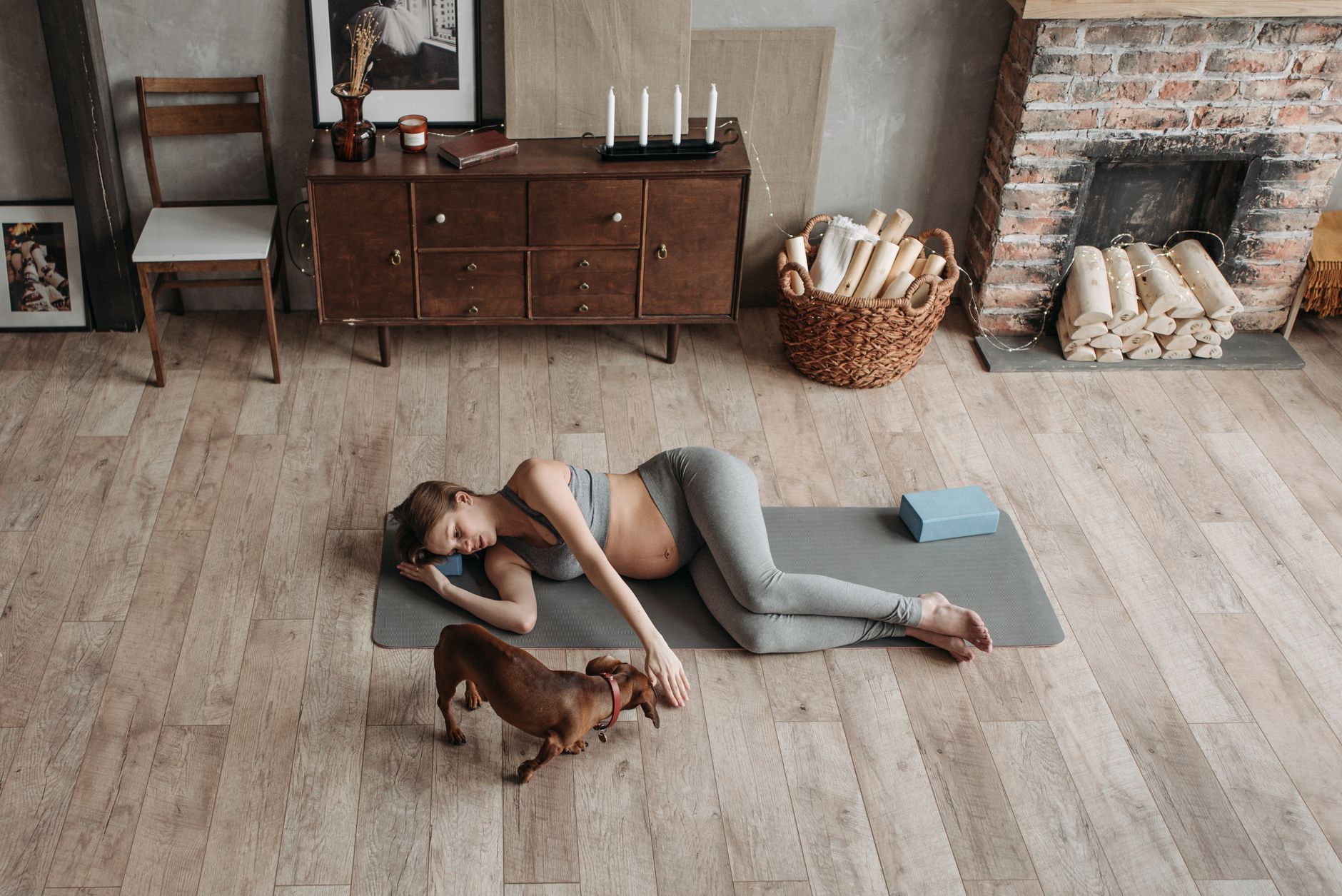
Wondering when to start postpartum yoga? Begin safely 4-6 weeks after vaginal birth or 8-12 weeks post-C-section, with doctor approval. Learn the best timeline here.
By Shubhra Mishra — a mom of two who turned her own confusion during pregnancy into BumpBites, a global mission to make food choices clear, safe, and stress-free for every expecting mother. 💛
Check whether any food is safe during pregnancy with the BumpBites Food Safety Checker.
Quick take: Most moms can begin gentle postpartum yoga as early as two weeks after a vaginal birth or four to six weeks after a C‑section—once they’ve cleared it with their provider and feel comfortable with light movement. Start with modified, low‑impact poses, listen to your body, and gradually build frequency and intensity.
It’s 2 a.m., you’ve just finished a late‑night feeding, and a soft yoga video is humming in the background. You wonder, “Is it okay to stretch now, or should I wait until my belly feels back to normal?” You’re not alone—new parents often wrestle with the right moment to re‑introduce exercise after birth.
Postpartum yoga can support physical recovery, mental well‑being, and the bond you share with your baby. But timing matters. In this guide we’ll walk you through when it’s safe to start, how to tailor your practice to the type of delivery you had, what to do if you have diastasis recti, and how to fit yoga into life with a newborn (or twins!). We’ll also compare online and studio classes, suggest beginner‑friendly poses, and give a realistic schedule you can stick to.
Read on for a step‑by‑step roadmap, practical tips, and evidence‑based answers to the most common questions—so you can breathe easy, roll out your mat, and move forward with confidence.
When can I start postpartum yoga after a C‑section?
A C‑section is major abdominal surgery, so the healing timeline differs from a vaginal birth. Most surgeons advise waiting four to six weeks before beginning any activity that strains the incision. However, “light” yoga that avoids direct pressure on the belly can be introduced earlier, typically around the two‑week mark, provided you’ve received clearance from your obstetrician.
Key signs that you’re ready for gentle movement include:
Incision edges are closed and no longer ooze or bleed.
Pain is manageable with over‑the‑counter analgesics and does not increase with light stretching.
You can cough or sneeze without a sharp, stabbing pain.
If any of these are not true, pause and consult your provider. When you do start, choose poses that keep the abdomen neutral—think seated forward folds, gentle seated twists (with the twist limited to the upper spine), and supported cat‑cow movements on hands and knees. Use props like pillows or blocks to reduce strain on the incision.
During the first few weeks, limit sessions to 10–15 minutes and focus on breathing (pranayama) and pelvic‑floor engagement. This not only respects the healing process but also primes the muscles you’ll need later for core recovery.
Gentle, seated stretches are a safe way to begin after a C‑section.
Postpartum yoga timeline for vaginal delivery moms
Vaginal births typically allow a faster return to movement. Many providers give the green light for light activity within 48–72 hours** after an uncomplicated delivery, especially if there was no extensive perineal tearing. That said, the body still needs time to recover, so start with short sessions (<15 minutes) and listen closely to any pelvic or abdominal discomfort.
A practical timeline might look like this:
Days 1‑7: Focus on breathing, gentle pelvic‑floor contractions (Kegels), and short supine stretches with a pillow under the knees.
Weeks 2‑4: Add seated forward folds, modified child's pose, and tabletop cat‑cow. Aim for 2–3 sessions per week, 15–20 minutes each.
Weeks 5‑8: Introduce low‑impact standing poses (e.g., mountain pose, gentle warrior I with a block) and begin light core activation (pelvic‑tilt, supine heel slides).
Weeks 9‑12: If you feel strong and have no pain, you can explore more dynamic flows, but keep the focus on alignment and breath.
Throughout, keep an eye on any signs of excessive bleeding, worsening perineal pain, or a feeling of heaviness in the abdomen—these warrant a check‑in with your provider.
How soon after birth is it safe to do postpartum yoga?
“Soon” depends on three factors: delivery type, personal healing, and medical clearance. In general:
Vaginal birth: Light, low‑impact yoga can start within the first few days if you feel up to it and your provider agrees.
C‑section: Wait at least two weeks for gentle, incision‑friendly movements, and four to six weeks for any weight‑bearing poses.
Complications (e.g., high‑grade tears, severe hemorrhage, infection): Follow your doctor’s specific timeline—this may extend to 8‑12 weeks.
Across all scenarios, the safest initial focus is on breathing, pelvic‑floor awareness, and gentle stretching. These elements boost circulation, reduce swelling, and calm the nervous system—benefits that are valuable even before you’re ready for full‑body flows.
Remember, “safe” isn’t a one‑size‑fits‑all number. Your body will give you clues: if a pose makes you feel a sharp pain, shortness of breath, or dizziness, stop and rest. When in doubt, ask your midwife or obstetrician for a quick “green light” before progressing to the next level.
Postpartum yoga for diastasis recti: when to begin?
Diastasis recti— a separation of the abdominal muscles—occurs in up to 60 % of pregnant people. Yoga can be a gentle way to rebuild core strength without the high pressures of traditional crunches. However, you should only begin once the separation is assessed and you have a clear plan from a qualified professional (physiotherapist, postpartum doula, or your OB‑GYN).
Typical guidance suggests waiting four to six weeks** after a vaginal birth and six to eight weeks after a C‑section** before engaging in any core‑focused yoga. Your provider may recommend a “diastasis test” (fingertip press on the midline while lifting the head slightly) to gauge severity.
When cleared, start with these safe, diastasis‑friendly poses:
Supine pelvic tilt: Lying on your back with knees bent, gently flatten your lower back into the floor, engaging the transverse abdominis.
Modified tabletop plank: Hands under shoulders, knees under hips, and a slight lift of the torso—keep the belly button pulled toward the spine.
Heel slides: On your back, slide one heel away while keeping the lower back neutral, then alternate.
Progress to more challenging variations only when you can maintain a neutral spine without bulging the belly outward. Over‑exertion can worsen the separation, so always prioritize control over range of motion.
Postpartum yoga schedule for new mothers with a newborn
Newborns have unpredictable sleep cycles, so a flexible yoga routine works best. Aim for 3‑4 short sessions per week, each lasting 15‑30 minutes. Here’s a sample weekly plan that fits around feeding times:
Monday – Morning (after a diaper change): 20‑minute breathing and gentle stretch flow.
Wednesday – Mid‑day (while baby naps): 30‑minute seated and supine sequence focusing on pelvic‑floor activation.
Friday – Evening (post‑feeding): 15‑minute restorative pose set with a bolster.
Sunday – Optional “mom‑and‑baby” time: 20‑minute floor‑based poses that you can do while holding your infant on a safe surface.
Use a yoga mat on a firm but comfortable surface, and keep a water bottle nearby. If a nap is cut short, swap the session for a few minutes of deep breathing—any mindful movement is beneficial.
Consistency beats intensity. Even 5‑minute “micro‑sessions” help maintain flexibility, reduce stress hormones, and support lactation.
Set up a calming space for short, frequent yoga sessions while caring for a newborn.
Postpartum yoga classes online vs in‑person: which to start first?
Both formats have strengths. In‑person classes provide hands‑on adjustments, a sense of community, and a dedicated space free from household distractions. Online classes, however, offer flexibility for night‑time practice, the ability to pause for a feeding, and a wider selection of instructors specializing in postpartum recovery.
Feature
Online Classes
In‑Person Studios
Flexibility
Practice any time; pause for baby
Fixed schedule; may need childcare
Professional Guidance
Visual cues only; limited real‑time correction
Hands‑on adjustments; immediate feedback
Cost
Often lower‑cost or free trial videos
Typically higher per‑class fee, membership
Community Support
Chat groups or live Q&A
Shared space fosters peer encouragement
If you’re unsure which to try first, ask yourself: Do you have reliable childcare or a partner who can watch the baby while you attend a studio? If not, start with a reputable online program (e.g., those vetted by ACOG or the NHS) and transition to a studio once you feel more comfortable with the routine and can arrange supervision.
Postpartum yoga and breastfeeding: best time to start
Breastfeeding stimulates oxytocin release, which naturally promotes relaxation and can enhance the calming effects of yoga. Most lactating mothers can safely begin gentle postpartum yoga as early as the first week after birth, provided they’re cleared by their provider.
Key considerations for nursing moms:
Hydration: Keep water close; yoga can increase fluid loss.
Comfort: Use a supportive nursing pillow or bolster for seated poses, and avoid positions that compress the breasts.
Timing: Many moms find a short morning flow before the first feed helps set a calm tone for the day, while an evening session can aid nighttime milk let‑down.
Incorporate breathwork (e.g., “Ujjayi” breathing) to help regulate the let‑down reflex and reduce engorgement. If you experience nipple pain or mastitis, pause the practice and seek medical advice before resuming.
Postpartum yoga after twins: recommended start date
Having twins often means double the feeding, diaper changes, and sleep disruptions, which can make finding “me‑time” feel impossible. Nevertheless, the physical benefits of yoga—especially pelvic‑floor strengthening and stress reduction—are even more valuable when you’re caring for two infants.
Most experts suggest a four‑to‑six‑week window** after a vaginal delivery of twins before beginning a gentle yoga practice, and a slightly longer wait (six‑to‑eight weeks) after a C‑section. This extra time allows the uterus, perineum, and incisions to heal adequately.
To make it work:
Schedule short sessions during the longest stretch of baby sleep (often early morning).
Use a yoga mat on a firm surface and keep props within reach to minimize getting up and down.
Consider “twin‑friendly” poses—such as seated side‑bends while holding a baby on a pillow, or a gentle “baby‑and‑me” tabletop flow where both infants rest on a soft blanket.
Remember, the goal isn’t to achieve a perfect pose but to move mindfully, breathe deeply, and give yourself a brief mental reset.
Postpartum yoga benefits for mental health
Beyond the physical recovery, yoga has a strong evidence base for supporting mental health after birth. A 2022 systematic review by the American College of Obstetricians and Gynecologists (ACOG) found that postpartum yoga reduced symptoms of depression and anxiety in over 70 % of participants.
Mechanisms include:
Mindful breathing: Lowers cortisol, the stress hormone.
Community connection: Group classes combat isolation.
Even a brief 10‑minute flow can trigger the relaxation response, making it a valuable tool for managing postpartum blues or more persistent depressive symptoms. If you notice persistent low mood, loss of interest, or intrusive thoughts, reach out to your provider—yoga is a complement, not a substitute, for professional treatment.
Beginner postpartum yoga poses for new moms
Here are six safe, beginner‑friendly poses that address core stability, pelvic‑floor tone, and gentle stretching. Move slowly, focus on breath, and keep the belly gently engaged (think “drawing the navel toward the spine”).
Seated Cat‑Cow (Marjaryasana‑Bitilasana) on a chair: Sit tall, place hands on knees, inhale to arch the back (cow), exhale to round (cat). Repeat 5‑7 breaths.
Supported Child’s Pose (Balasana): Knees wide, big toes touching, sit back onto heels, and rest torso on a bolster or pillow. Stay 30 seconds to a minute.
Supine Pelvic Tilt: Lying on your back with knees bent, flatten the lower back into the floor, hold 5 breaths, repeat 8‑10 times.
Bridge Pose (Setu Bandha Sarvangasana) with a block: Place a block under the sacrum for a gentle backbend, engage glutes, and hold 5 breaths.
Standing Forward Fold with a block: Hinge at hips, place hands on a block for support, keep knees slightly bent. Hold 30 seconds.
Leg Slides: On your back, slide one heel away while keeping the lower back neutral, then switch sides. Perform 10 reps per leg.
These poses can be strung together into a 15‑minute routine that you can repeat 2‑3 times weekly.
Postpartum yoga for weight loss timeline
Weight loss after birth is a gradual process. The American College of Sports Medicine (ACSM) recommends a safe rate of 0.5‑1 kg per week** once you’re cleared for moderate activity. Postpartum yoga alone is unlikely to achieve rapid weight loss, but it contributes to calorie burn, muscle tone, and metabolic health.
A realistic timeline might look like this:
Weeks 1‑6: Light yoga (10‑20 minutes) — focus on mobility, not calorie deficit.
Weeks 7‑12: Increase duration to 30 minutes, add low‑impact cardio (walking) on non‑yoga days.
Months 3‑6: Combine moderate‑intensity yoga flows (vinyasa‑style) 3‑4 times per week with strength training for a balanced approach.
Pair yoga with a balanced diet (consult a registered dietitian if needed) and adequate sleep—both critical for hormonal regulation and weight management.
Postpartum yoga and pelvic floor recovery
The pelvic floor supports the bladder, uterus, and bowel, and can be weakened after pregnancy. Yoga offers gentle, functional ways to rebuild strength without over‑loading the muscles.
Key poses for pelvic‑floor activation:
Pelvic Floor Kegels: While seated or lying, gently contract the muscles you’d use to stop urination, hold 3‑5 seconds, release. Repeat 10‑15 times.
Bridge Pose with a ball: Place a small yoga ball between knees, squeeze while lifting hips—engages both glutes and pelvic floor.
Squat (Malasana) with a block: Sit into a deep squat, elbows inside knees, hold for 30 seconds; this opens the pelvis and promotes gentle activation.
According to the NHS and the American Physical Therapy Association (APTA), consistent low‑impact exercise combined with targeted pelvic‑floor work reduces urinary incontinence rates by up to 40 % in the first year postpartum.
Postpartum yoga video tutorials free
Many reputable organizations offer free, evidence‑based yoga videos tailored for new parents. A few trusted sources include:
Yoga for Bump & Beyond (ACOG‑endorsed): Short 10‑minute “post‑birth reset” series.
BBC Wellbeing – Postpartum Yoga: Guided flows with subtitles for quiet practice.
Yoga International – Free Postpartum Basics: Downloadable PDFs and video links.
DoYouYoga – “First‑Four‑Weeks” playlist: Free with optional premium upgrade.
When selecting a video, look for clear qualifications (e.g., “certified prenatal/postnatal yoga instructor”) and a disclaimer that encourages medical clearance before beginning.
Postpartum yoga vs. regular yoga after pregnancy
Regular yoga classes often assume a healthy, unrestricted spine and core, which may not be appropriate for a postpartum body still healing. Postpartum‑specific yoga adapts the practice in three key ways:
Modified intensity: Lower impact, more props, and avoidance of deep backbends.
Focused alignment: Emphasis on neutral spine, pelvic‑floor awareness, and gentle core activation.
Integrated support: Options to practice with a baby nearby, include breathing techniques that aid lactation, and address diastasis recti.
Once you’ve rebuilt core stability and healed sufficiently (usually around 12‑16 weeks), you may transition to regular yoga classes if you wish.
Postpartum yoga for moms with diastasis recti
While we covered diastasis earlier, it deserves its own spotlight because many mothers search specifically for “postpartum yoga for diastasis recti.” The safest approach is to start with “core‑neutral” poses that keep intra‑abdominal pressure low.
Gentle side‑lying leg lifts (retain neutral spine).
Finish with a relaxing Savasana using a bolster under the knees.
Progression is guided by your ability to keep the belly flat without bulging. If at any point you feel a pulling sensation across the midline, back off to the previous level.
Postpartum yoga and sleep improvement
Sleep disruption is a hallmark of early parenthood, and yoga can help reset the nervous system for better rest. Research from the National Institute for Health and Care Excellence (NICE) shows that a nightly 15‑minute gentle yoga routine reduces sleep latency by an average of 20 minutes.
Best practices for a sleep‑enhancing flow:
Practice in dim lighting, preferably before the last feeding of the night.
Incorporate restorative poses—legs‑up‑the‑wall (Viparita Karani), supported child's pose, and a brief body scan.
Finish with three rounds of 4‑7‑8 breathing (inhale 4 seconds, hold 7, exhale 8).
Even if you can’t find a full session, a few minutes of deep diaphragmatic breathing can lower heart rate and signal the body that it’s time to wind down.
From our medical team: Starting postpartum yoga is a personal decision that should be guided by your healthcare provider. Gentle, breath‑centered movements are safe for most new parents within the first weeks after vaginal birth and a month after a C‑section, provided you have no signs of infection, excessive bleeding, or severe perineal pain. Listen to your body, stay hydrated, and use props to keep the practice comfortable. If you experience any sharp pain, sudden swelling, or unusual discharge, pause the practice and call your provider.
Myth vs. fact
Myth: You must wait at least three months before doing any yoga after birth.
Fact: Light, modified yoga can be started within days after an uncomplicated vaginal birth and after two weeks post‑C‑section, with medical clearance.
Myth: Postpartum yoga will straighten a separated belly (diastasis recti) instantly.
Fact: Yoga helps strengthen the deep core muscles over weeks to months; consistent practice combined with proper technique is needed for gradual improvement.
Myth: You need a special “postpartum” yoga mat.
Fact: A regular yoga mat works fine; the key is using props (blocks, blankets, bolsters) to support your body as it heals.
Key takeaways
Get medical clearance before beginning any postpartum yoga, especially after a C‑section.
Start with short, gentle sessions focusing on breathing, pelvic‑floor activation, and core‑neutral poses.
Tailor your schedule to your baby’s sleep pattern—consistency matters more than length.
Choose online or in‑person classes based on childcare availability, cost, and the need for hands‑on guidance.
Use yoga as a tool for mental health, pelvic‑floor recovery, and sleep improvement, but seek professional help for persistent depression or pain.
Progress gradually; only advance to more challenging poses once you can maintain a neutral spine without discomfort.
Frequently asked questions
Is it safe to start yoga right after giving birth?
Yes, you can begin gentle, modified yoga within a few days of an uncomplicated vaginal birth, provided you have your provider’s approval and avoid any poses that strain the incision or perineum.
How many weeks should I wait after a C‑section before doing yoga?
Most surgeons recommend waiting four to six weeks before starting any weight‑bearing or core‑focused yoga, though light seated stretches can often be introduced after two weeks with clearance.
Can postpartum yoga help with postpartum depression?
Current evidence suggests that regular postpartum yoga reduces symptoms of depression and anxiety for many new parents, but it should complement—not replace—professional mental‑health treatment when needed.
What are the best yoga poses for diastasis recti after pregnancy?
Safe poses include supine pelvic tilts, heel slides, modified tabletop plank, and side‑lying leg lifts—each performed with a neutral spine and gentle core engagement.
Do I need a doctor’s clearance to start postpartum yoga?
Yes. A brief check‑in with your obstetrician or midwife ensures that any surgical wounds, bleeding, or pelvic‑floor issues have healed enough for safe movement.
How often should I practice postpartum yoga in the first months?
Aim for 2‑3 short sessions (15‑30 minutes) per week, adjusting frequency based on your baby’s schedule and how your body feels after each practice.
When to call your doctor
If you notice any of the following, contact your provider right away: sudden or heavy vaginal bleeding, fever over 38 °C (100.4 °F), severe abdominal pain, worsening perineal pain, signs of infection at a C‑section incision (redness, swelling, pus), or a sudden bulge in the midline that worsens with movement. This article is for informational purposes only and does not replace personalized medical advice.
References
American College of Obstetricians and Gynecologists (ACOG). “Physical Activity and Exercise During Pregnancy and the Postpartum Period.” 2022 clinical guidance.
National Health Service (NHS). “Postnatal care: exercise after birth.” Updated 2023.
World Health Organization (WHO). “Recommendations on Antenatal Care for a Positive Pregnancy Experience.” 2021.
American Physical Therapy Association (APTA). “Pelvic Floor Rehabilitation After Childbirth.” Clinical practice guidelines, 2022.
National Institute for Health and Care Excellence (NICE). “Postnatal depression: prevention and management.” NICE guideline NG217, 2023.
Centers for Disease Control and Prevention (CDC). “Postpartum Care.” 2023 fact sheet.
Mayo Clinic. “Diastasis recti: Symptoms, causes, and treatment.” 2022 health article.
Not sure about the label on Postpartum Yoga When To Start products?
Snap the ingredients list and SafeFilter checks every ingredient for your stage — only 3 free scans this month, then you're locked until reset. Unlimited from $7/mo or $50/yr.
When Shubhra Mishra was expecting her first child in 2016, she was overwhelmed by conflicting food advice — one site said yes, another said never. By the time her second baby arrived in 2019, she realized millions of mothers face the same confusion.
That sparked a five-year journey through clinical nutrition papers, cultural diets, and expert conversations — all leading to BumpBites: a calm, compassionate space where science meets everyday motherhood.
Her long-term vision is to build a global community ensuring safe, supported, and free deliveriesfor every mother — because no woman should face pregnancy alone or uninformed. 🌿
🌍 Stand with mothers, shape safer guidance
Join a small circle of experts who review BumpBites articles so expecting parents everywhere can decide with confidence.