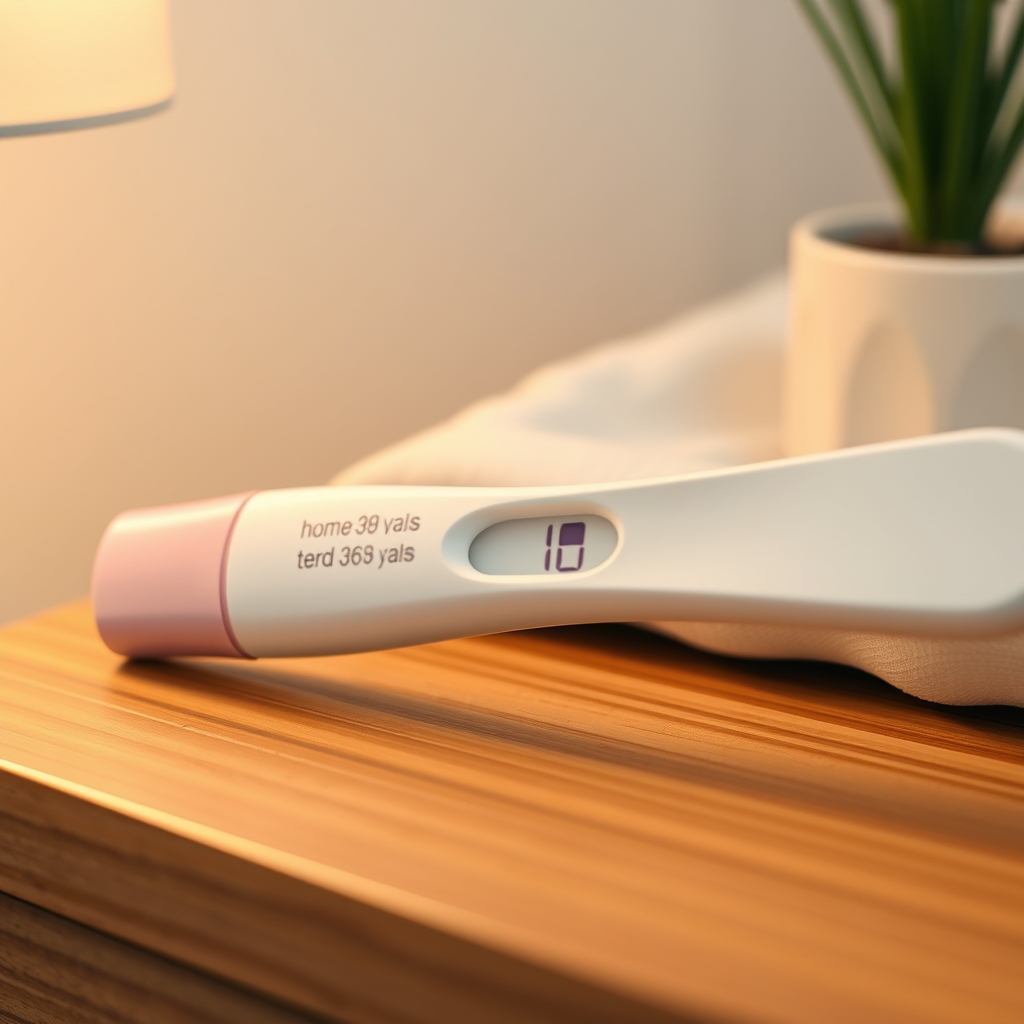
Experiencing a chemical pregnancy at 4 weeks? Learn the early signs of this common early loss, including spotting, cramping, and hormonal changes.
By Shubhra Mishra — a mom of two who turned her own confusion during pregnancy into BumpBites, a global mission to make food choices clear, safe, and stress-free for every expecting mother. 💛
Check whether any food is safe during pregnancy with the BumpBites Food Safety Checker.
Quick take: A chemical pregnancy at 4 weeks is an early loss that usually shows up as light spotting, mild cramping, and a brief rise then drop in pregnancy‑test hormones. It’s common, often painless, and most women recover physically within a week and emotionally with time and support.
It’s 2 a.m., you’ve just taken a home pregnancy test, and the line is faintly positive. A few days later, the line disappears and you notice a tiny spot of brown‑ish discharge. You’re wondering if this could be a “chemical pregnancy” and what that means for your hopes of becoming a parent. That initial flicker of hope, followed by confusion and sadness, is a feeling many expecting parents recognize.
We’re here to demystify the signs of a chemical pregnancy at 4 weeks, explain why it happens, and give you a clear roadmap for what to expect next. This early loss, though often physically mild, can bring significant emotional weight, and we want you to feel supported and informed. You’ll learn how it differs from a miscarriage or ectopic pregnancy, what the emotional recovery looks like, and when you should reach out to your provider.
Read on for a step‑by‑step guide that answers every related question you might type into Google, from “how common is a chemical pregnancy at 4 weeks?” to “can I still be pregnant after a chemical pregnancy?” We’ll help you understand the medical facts and offer practical guidance for navigating this experience.
What are the symptoms of a chemical pregnancy at 4 weeks?
The hallmark signs are usually very mild and short‑lived, often mimicking a slightly unusual period. Most women notice:
Spotting or brown discharge: Often described as light brown or pinkish spotting that lasts a day or two. This is typically much lighter than a regular menstrual period, sometimes just a few drops when wiping.
Cramping: Low‑grade uterine cramping that feels similar to mild menstrual cramps. It’s usually not severe enough to interfere with daily activities and subsides quickly.
Positive pregnancy test that turns negative: The home test shows a faint line, then disappears within a week or becomes unequivocally negative. This rapid change in test results is a key indicator.
Breast tenderness or fatigue: Hormonal changes may cause brief breast soreness or tiredness, but these fade quickly as hCG levels drop. You might also notice a sudden disappearance of other early pregnancy symptoms you’d just started to feel.
Because the embryo is so tiny (about the size of a grain of rice), there is rarely any noticeable growth of the uterus, and most women do not experience the “pregnancy glow” that later weeks bring. The symptoms are essentially your body recognizing the non-viable pregnancy and returning to its normal cycle.
How common is chemical pregnancy at 4 weeks?
Chemical pregnancies are surprisingly common, though many women may not even realize they’ve experienced one. Studies from the American College of Obstetricians and Gynecologists (ACOG) estimate that 50‑75 % of known pregnancies end before a fetal heartbeat can be detected, and a significant portion of these are chemical pregnancies. In the United Kingdom, the NHS reports similar rates, noting that up to two‑thirds of early losses occur before the five‑week scan.
While the exact proportion at exactly 4 weeks is hard to pin down, the consensus is that a chemical pregnancy is one of the most frequent causes of early, unexplained bleeding after a positive test. For many, it's nature's way of ending a pregnancy that wasn't developing properly, often due to genetic issues. This high rate means that if you experience one, you are far from alone, and it doesn't typically indicate a problem with your fertility.
Signs of chemical pregnancy vs miscarriage
While both are forms of early pregnancy loss, a miscarriage typically occurs later (after 5 weeks) and presents with heavier bleeding, clots, and more intense cramping. In contrast, a chemical pregnancy is usually limited to light spotting, no clots, and a rapid decline in hCG (human chorionic gonadotropin) levels before a gestational sac can be seen on ultrasound.
The distinction often comes down to timing and the severity of symptoms. A miscarriage, sometimes referred to as a clinical miscarriage, is diagnosed when there's ultrasound evidence of a pregnancy (like a gestational sac or fetal pole) that then fails. A chemical pregnancy, on the other hand, is a biochemical diagnosis, meaning it's confirmed by hormones but not yet by ultrasound. Both can cause emotional distress, but the physical recovery from a chemical pregnancy is usually faster and less medically intensive.
Feature
Chemical Pregnancy (≈4 wks)
Miscarriage (≥5 wks)
Bleeding
Light spotting, brown discharge
Heavy bleeding, clots
Cramping
Mild, brief
Moderate‑to‑severe
hCG trend
Rise then rapid fall
Gradual decline
Ultrasound
No gestational sac visible
Gestational sac or fetal pole present
Can you have a chemical pregnancy at 4 weeks and still be pregnant?
No, a chemical pregnancy refers specifically to the loss of an early conception where the embryo fails to properly implant or develop. If the loss occurs, the pregnancy ends. The positive pregnancy test was a sign of a very early pregnancy, but its subsequent disappearance confirms the loss. You cannot still be pregnant from that specific conception.
However, many women conceive again quickly because the uterus returns to its normal state within days, and the menstrual cycle typically resumes within 2-4 weeks. In extremely rare cases, a woman may experience a concurrent, separate viable pregnancy (known as a “heterotopic” pregnancy) where one embryo implants successfully in the uterus while another implants elsewhere and is lost. This is exceedingly uncommon and requires immediate medical attention due to the risks of an ectopic pregnancy.
Chemical pregnancy at 4 weeks after IVF
In vitro fertilization (IVF) cycles often involve careful monitoring of hCG levels, making chemical pregnancies more readily identified. A chemical pregnancy after IVF is identified when the serum hCG rises above 5 mIU/mL but then falls before a gestational sac appears on the first‑trimester scan (usually around 5 weeks). The rate is slightly higher in IVF compared with natural conception, partly because multiple embryos may be transferred and because the hormonal environment is intensified through medication. It's important to remember that even with IVF, early losses are common and often due to factors outside of anyone's control.
The emotional impact can be sharper after IVF because of the significant financial, physical, and emotional investment involved in the treatment cycle. Many couples experience profound disappointment and grief. In these situations, counseling and support from the fertility clinic, as well as connecting with support groups, are strongly recommended to help process the loss and prepare for future steps.
What causes chemical pregnancy at 4 weeks?
Most causes are related to chromosomal abnormalities in the embryo—about 60‑80 % of early losses, including chemical pregnancies, are linked to genetic issues that prevent proper implantation and development. These abnormalities are usually random errors that occur during cell division and are not typically inherited from either parent. It's often nature's way of preventing the development of a pregnancy that would not be viable.
Other contributing factors can include:
Age: Older maternal age modestly raises the risk of chromosomal errors in eggs, increasing the chance of early loss.
Uterine environment: Subtle hormonal imbalances, a thin endometrium (uterine lining), or structural issues within the uterus can impede proper implantation.
Medications: Certain fertility drugs (e.g., Clomid) can increase the chance of a chemical pregnancy, though they also boost overall conception rates. This is often due to the stimulation of multiple follicles, which can lead to a higher chance of a non-viable embryo.
Lifestyle: While not primary causes, factors like smoking, heavy caffeine intake, or extreme stress may play a minor role in overall reproductive health and potentially contribute to early implantation issues.
Most of these factors are outside a woman’s direct control, which is why many clinicians emphasize that a chemical pregnancy is not a “failure” on your part. It's important to understand that in the vast majority of cases, a chemical pregnancy is a one-off event and not indicative of a long-term fertility problem.
How long do symptoms of chemical pregnancy last at 4 weeks?
Typical symptoms of a chemical pregnancy resolve within 3‑7 days. Spotting may linger for up to a week, but it usually fades without heavy bleeding and often transitions from pink/red to brown before stopping entirely. Cramping generally subsides within 48 hours, similar to the duration of typical menstrual cramps.
Hormone levels return to baseline within a week or two, which means a repeat pregnancy test taken after 10‑14 days will be negative. This rapid return to pre-pregnancy hormone levels is a distinguishing feature of a chemical pregnancy. If bleeding continues beyond a week, becomes heavier than a normal period, or is accompanied by fever, severe pain, or foul-smelling discharge, it may signal an incomplete miscarriage or infection, and you should contact your provider immediately.
Difference between chemical pregnancy and ectopic pregnancy at 4 weeks
An ectopic pregnancy occurs when the embryo implants outside the uterine cavity, most commonly in the fallopian tube. Early signs can mimic a chemical pregnancy—light spotting and mild cramping—but ectopic pregnancies are far more dangerous and require immediate medical intervention. The key difference is that an ectopic pregnancy is a viable pregnancy in the wrong location, while a chemical pregnancy is a non-viable pregnancy that ends very early.
Ectopic pregnancies often present with:
One‑sided abdominal pain that can be sharp, dull, or crampy and may worsen over time.
Shoulder pain (referred pain from diaphragmatic irritation due to internal bleeding).
Persistent low‑grade fever or feeling generally unwell.
Slower rise in hCG that does not double every 48 hours, or an hCG level that plateaus rather than falls rapidly.
Sudden dizziness or fainting, which can indicate internal bleeding.
If any of these red‑flag symptoms appear, seek urgent care. Early ultrasound can differentiate the two, as an ectopic will show a gestational sac outside the uterus or an empty uterus despite rising hCG. This differentiation is critical, as a ruptured ectopic pregnancy can be life-threatening.
Chemical pregnancy at 4 weeks after Clomid
Clomiphene citrate (Clomid) stimulates ovulation and is a common first‑line fertility drug. Because it can produce multiple eggs, the chance of a chemical pregnancy slightly rises, reflecting the higher overall conception rate. While Clomid helps more women ovulate and conceive, it doesn't prevent chromosomal abnormalities, which are the leading cause of early loss. So, even with successful ovulation induction, a chemical pregnancy can still occur.
The pattern of symptoms remains the same—light spotting and a brief positive test—so the management does not differ from natural cycles. Your fertility specialist will monitor your hCG levels closely to confirm the outcome and can discuss next steps if you experience a chemical pregnancy after a Clomid cycle. It's important to remember that a chemical pregnancy after Clomid doesn't mean the medication didn't work, just that the early conception wasn't viable.
4 weeks pregnant chemical pregnancy symptoms
When you’re “4 weeks pregnant,” technically you’re about 2 weeks post‑conception, as pregnancy dating starts from the first day of your last menstrual period. The symptoms you may notice—spotting, mild cramping, breast tenderness, or fatigue—are the same whether the pregnancy continues or ends as a chemical loss. At this very early stage, the physical signs are largely driven by the initial surge of hCG.
The key difference is that in a continuing pregnancy, hCG levels will continue to rise rapidly, doubling every 48-72 hours, and the pregnancy test line will get progressively darker. In a chemical pregnancy, the hCG level will start to fall, and the test line will disappear or get fainter. This is why serial hCG testing, often 48 hours apart, is crucial for your provider to determine the viability and direction of a very early pregnancy.
Chemical pregnancy at 4 weeks with twins
Twins are rarely identified at 4 weeks because the embryos are still microscopic and too small to be seen on a standard ultrasound. However, if you've conceived twins, a chemical pregnancy involving one of two embryos can still present with the same mild symptoms. This scenario is sometimes referred to as a "vanishing twin" syndrome, although that term is more commonly used when one twin is detected on ultrasound and then later disappears.
In IVF cycles where multiple embryos are transferred, it’s possible for one twin to implant and develop while the other fails and is reabsorbed, resulting in a “vanishing twin” scenario that might initially present as a chemical loss or simply an unexpected drop in hCG if twins were suspected. If you experience a chemical pregnancy and then your hCG levels continue to rise (albeit slower than expected), your provider might investigate the possibility of a vanishing twin or an ectopic pregnancy.
Chemical pregnancy at 4 weeks and brown discharge
Brown discharge is simply old blood that is oxidizing as it leaves the body. It’s common in early loss, including chemical pregnancies, and is usually harmless. The discharge often appears after the embryo stops producing hCG and the uterine lining begins to shed, so the color change from bright red to pinkish or brown is a visual cue that the pregnancy is ending and the bleeding is resolving. It indicates a slower, less urgent bleeding than bright red blood.
While brown discharge is usually not a cause for alarm in a chemical pregnancy, any heavy or persistent bleeding, regardless of color, should always be discussed with your healthcare provider. For many women, brown discharge is the most noticeable physical sign of a chemical pregnancy, often accompanied by mild cramps.
Chemical pregnancy at 4 weeks with cramping
Cramping associated with a chemical pregnancy is caused by the uterus contracting in response to the falling hCG levels and the shedding of the uterine lining. The pain is usually low‑grade, comparable to typical menstrual cramps, and resolves quickly once the hormone drop stabilizes and the lining has been shed. It's your body's natural process of returning to its non-pregnant state.
You can typically manage this discomfort with over-the-counter pain relievers like acetaminophen (Tylenol). Avoid NSAIDs like ibuprofen unless specifically advised by your doctor, especially if there's any uncertainty about the nature of the loss. If the cramping becomes severe, one-sided, or is accompanied by heavy bleeding or fever, it's crucial to contact your healthcare provider immediately to rule out other complications like an ectopic pregnancy or incomplete miscarriage.
Chemical pregnancy at 4 weeks and spotting
Spotting in a chemical pregnancy can range from a few drops of light pink or brown blood to a light pink or brown smear when wiping. It’s generally not enough to require a tampon or pad, though a light liner might be helpful for comfort. This light bleeding is distinct from the heavier flow of a typical menstrual period or a later miscarriage.
The spotting is a sign that the very early implantation has failed and the uterine lining is beginning to shed. It typically lasts for a day or two and then subsides. If the spotting becomes heavier than a normal period, bright red, or is accompanied by clots, it may indicate a more advanced miscarriage rather than a chemical loss, and you should seek medical advice.
Chemical pregnancy at 4 weeks after miscarriage
Experiencing a chemical pregnancy after a previous miscarriage is not unusual and, while emotionally challenging, does not necessarily indicate a problem with your fertility. The body’s hormonal milieu can reset quickly, allowing a new conception to occur within weeks or a couple of months. Studies cited by the CDC suggest that the chance of a subsequent pregnancy is similar to that of women without a prior loss, provided the underlying cause isn’t a persistent medical condition.
It's common for women to ovulate and become pregnant again very quickly after an early loss. While the physical recovery is often swift, the emotional impact can be cumulative. If you've had multiple early losses, whether chemical pregnancies or clinical miscarriages, your provider may recommend a work-up for recurrent pregnancy loss to investigate any underlying factors that might be contributing.
Even a faint line can signal an early pregnancy that may end as a chemical loss.
Underlying Medical Conditions Linked to Chemical Pregnancy at 4 Weeks
Beyond chromosomal errors, certain medical conditions can predispose you to early loss by affecting implantation or early embryo development. If you have any of these conditions, your healthcare provider may recommend specific testing or treatment before attempting another pregnancy to optimize your chances of a successful outcome.
Thyroid disorders: Both hyperthyroidism (overactive thyroid) and hypothyroidism (underactive thyroid) can interfere with ovulation and early pregnancy. Ensuring your thyroid hormone levels are well-controlled is crucial for conception and maintaining a pregnancy.
Uncontrolled diabetes: High blood sugar levels in early pregnancy can increase the risk of both chemical pregnancies and more advanced miscarriages, as well as birth defects. Careful management of blood glucose before and during conception is vital.
Uterine anomalies: Structural issues with the uterus, such as a septate uterus (a wall dividing the uterus), fibroids within the uterine cavity, or Asherman's syndrome (scar tissue), can prevent proper implantation or interfere with the blood supply to a developing embryo.
Autoimmune conditions: Conditions like lupus or antiphospholipid syndrome can cause the body's immune system to attack the developing embryo or interfere with blood clotting, potentially leading to early loss. Specific treatments, such as blood thinners, may be recommended in these cases.
If you have any known medical conditions or a history of recurrent pregnancy loss, discussing these with your provider is a critical step in understanding and managing your risk for chemical pregnancies.
Understanding hCG Levels in Chemical Pregnancy
Human chorionic gonadotropin (hCG) is the hormone detected by pregnancy tests, often called the "pregnancy hormone." In a healthy, viable pregnancy, hCG levels typically start to rise shortly after implantation and should roughly double every 48 to 72 hours in early pregnancy. This rapid rise is what makes the line on a home pregnancy test get darker over time.
In a chemical pregnancy, hCG levels do rise enough to trigger a positive test, but this rise is typically brief and often doesn't reach the levels seen in a progressing pregnancy. Crucially, the hCG levels then begin to fall rapidly, indicating that the pregnancy is no longer viable. Your doctor may order serial blood tests (usually 24-48 hours apart) to track your hCG levels and confirm this pattern, providing a definitive diagnosis of a chemical pregnancy. This hormonal trend is the cornerstone of diagnosing an early loss that isn't yet visible on ultrasound.
When Can You Try Again After a Chemical Pregnancy?
Physically, your body typically recovers very quickly from a chemical pregnancy. Most healthcare providers agree that there is no medical reason to wait before trying to conceive again, as the uterus and ovaries usually return to their normal state within days to a couple of weeks. Your menstrual cycle should resume within 2-4 weeks, and you may ovulate before your next period.
However, while your body might be ready, it's equally important to consider your emotional readiness. A chemical pregnancy, though early, can still be a significant loss, bringing feelings of grief, disappointment, and anxiety about future pregnancies. Many women find it helpful to take a cycle or two to process their emotions, rebuild their energy, and prepare mentally. Discussing your feelings and plans with your partner and healthcare provider can help you decide when the time is right for you to try again. The ACOG notes that waiting is often a personal choice, not a medical necessity.
Supporting Your Partner After a Chemical Pregnancy
While the physical experience of a chemical pregnancy is unique to the person carrying the pregnancy, it’s vital to remember that partners also experience profound emotional impact. The dream of parenthood is shared, and the loss, even if very early, can be deeply felt by both individuals. Partners may feel helpless, sad, or anxious about future attempts, and their grief can sometimes be overlooked or minimized.
It's important for both partners to communicate openly about their feelings, offer each other comfort, and acknowledge their shared loss. Partners can provide practical support by helping with household tasks, attending follow-up appointments, and simply being present. Seeking support together, whether through counseling or support groups, can strengthen your bond and help both of you navigate the emotional journey. Remember that grief manifests differently for everyone, and there's no right or wrong way to feel or cope.
Emotional and physical recovery after a chemical pregnancy
Physically, most women feel “back to normal” within a week. Hormone levels normalize, and menstrual cycles typically resume within 2‑4 weeks. You might experience a period that is slightly heavier or lighter than usual, but it should regulate quickly. It’s important to monitor your body for any lingering symptoms or signs of complications.
Emotionally, the grief can last longer. It’s common to feel a range of emotions, including sadness, anger, confusion, and even guilt, despite knowing it wasn't your fault. Acknowledge the loss, talk with a partner, trusted friend, or support group, and consider counseling if sadness persists beyond a month or impacts your daily life. Many parents find comfort in rituals—writing a letter, planting a seed, or creating a small memory box. These practices are supported by the ACOG’s guidance on coping with early pregnancy loss, emphasizing the importance of validating your feelings and giving yourself time to heal.
Simple rituals can help process the emotional side of a chemical pregnancy.
Impact of chemical pregnancy on future fertility
Having a chemical pregnancy does not usually affect future fertility. The uterus returns to its baseline state, and ovarian function resumes as normal, ready for the next cycle. The American Society for Reproductive Medicine (ASRM) notes that most women conceive again within three months, especially if the underlying cause (e.g., age‑related chromosomal risk) is a random event rather than a persistent issue. A chemical pregnancy can even be seen as a sign that you are able to conceive, which can be reassuring for many.
However, if you experience multiple early losses (typically three or more, though some providers may investigate after two), your provider may suggest a work‑up for recurrent pregnancy loss. This comprehensive evaluation can include genetic testing for both partners, hormonal panels (like thyroid and progesterone), and uterine imaging (such as a hysteroscopy or saline sonogram) to check for structural abnormalities. The goal is to identify any underlying, treatable causes that could be contributing to repeated losses.
When to seek medical attention for suspected chemical pregnancy
While a chemical pregnancy typically resolves on its own without complications, it's crucial to know when to contact your obstetrician or midwife. Seek immediate medical attention if you notice any of the following symptoms:
Heavy bleeding (soaking through more than one sanitary pad in an hour for two consecutive hours).
Severe cramping that worsens, is one-sided, or spreads to the lower back or shoulder.
Fever > 38 °C (100.4 °F) or chills, which could indicate an infection.
Persistent brown discharge lasting more than a week, or any foul-smelling discharge.
Sudden dizziness or fainting, which could signal significant blood loss or an ectopic pregnancy.
These signs could indicate a miscarriage that requires medical management, an ectopic pregnancy (which is a medical emergency), or an infection, all of which need prompt evaluation and treatment. Don't hesitate to call your provider if you are concerned about any symptom.
From our medical team: A chemical pregnancy is a brief, early loss that most women experience without long‑term physical consequences. If you’re feeling upset, know that it’s normal to grieve. Tracking your symptoms, staying hydrated, and scheduling a follow‑up hCG test can give you clarity and peace of mind. Remember, this experience doesn't define your ability to have a healthy pregnancy in the future.
Myth vs. fact
Myth: A chemical pregnancy means you’re “infertile.”
Fact: It’s a common early loss; most women go on to have successful pregnancies later. It actually confirms that you can conceive, which is a positive sign for future fertility.
Myth: You can prevent a chemical pregnancy by avoiding certain foods.
Fact: No specific diet prevents early chromosomal loss, which is the most common cause. While a balanced diet supports overall reproductive health, it cannot stop a non-viable embryo from being lost.
Myth: A faint positive test guarantees a viable pregnancy.
Fact: A faint line can indicate a very early conception that may end as a chemical loss; hCG trends over 48 hours are needed for confirmation. A single faint line only tells you hCG is present, not that it's rising appropriately.
Myth: You need a D&C (dilation and curettage) after a chemical pregnancy.
Fact: Chemical pregnancies typically resolve on their own, with the uterine lining shedding naturally, much like a period. A D&C is almost never required for such an early loss.
Key takeaways
Light spotting, mild cramping, and a fleeting positive test are typical signs of a chemical pregnancy at 4 weeks.
It’s very common—up to three‑quarters of early pregnancies may end this way, often due to chromosomal abnormalities.
Physical recovery usually occurs within a week; emotional healing may take longer and is a valid process.
Future fertility is generally unaffected, but repeat losses merit a medical work‑up for underlying conditions.
Understanding your hCG levels through serial blood tests can help confirm the diagnosis.
Seek care if bleeding becomes heavy, pain intensifies, or fever develops, as these can indicate complications.
Frequently asked questions
What is a chemical pregnancy and how common is it?
A chemical pregnancy is an early loss that occurs before the embryo can be seen on ultrasound, usually around 4–5 weeks. It’s very common—ACOG estimates that 50‑75 % of known pregnancies end this way, often due to genetic factors.
Can a chemical pregnancy be prevented?
Most chemical pregnancies result from random chromosomal abnormalities that can’t be prevented. While maintaining a healthy lifestyle and managing medical conditions may improve overall pregnancy chances, there’s no proven way to stop a chemical loss once it begins.
How long does it take to recover from a chemical pregnancy?
Physical hormone levels normalize within 7‑10 days, and most women’s periods return in 2‑4 weeks. Emotional recovery varies; many feel better after a few weeks, while others may need more time, support, or counseling to process their grief.
Can you get pregnant again after a chemical pregnancy?
Yes. The uterus quickly returns to its pre‑pregnancy state, and most women conceive again within a few months. There's usually no medical reason to wait, but allowing time for emotional healing is important.
What are the chances of having a chemical pregnancy with fertility treatments?
Fertility treatments like IVF or Clomid can slightly increase early loss rates because they often produce multiple eggs or involve intense hormonal stimulation. However, the overall success rates of these treatments remain high, and most cycles result in viable pregnancies.
How is a chemical pregnancy diagnosed?
Diagnosis involves a positive pregnancy test (indicating rising hCG) followed by a rapid decline in hCG levels, typically confirmed by serial blood tests 48 hours apart. An ultrasound will not show a gestational sac at this very early stage.
What does a chemical pregnancy feel like emotionally?
Emotionally, a chemical pregnancy can feel like a profound loss, even if it was very early. Many women experience sadness, disappointment, anger, or anxiety. It's normal to grieve the hopes and dreams that had just begun to form, and it's important to allow yourself to feel these emotions and seek support.
Do I need a D&C after a chemical pregnancy?
No, a D&C (dilation and curettage) is almost never needed after a chemical pregnancy. The uterine lining sheds naturally, similar to a regular menstrual period, as the hCG levels fall. Your body typically manages this early loss without medical intervention.
When to call your doctor
If you experience heavy bleeding (soaking more than one pad an hour for two hours), severe one-sided cramping, fever, persistent brown discharge lasting more than a week, or feel faint, call your healthcare provider right away. This article provides general information and is not a substitute for personalized medical advice.
References
American College of Obstetricians and Gynecologists. “Early Pregnancy Loss.” ACOG Practice Bulletin, 2023.
National Health Service (UK). “Miscarriage and early pregnancy loss.” NHS website, 2022.
Centers for Disease Control and Prevention. “Pregnancy loss: statistics and risk factors.” CDC, 2021.
Mayo Clinic. “Chemical pregnancy.” Mayo Clinic, 2023.
American Society for Reproductive Medicine. “Evaluation of recurrent pregnancy loss.” ASRM, 2022.
World Health Organization. “Guidelines on infertility management.” WHO, 2020.
Royal College of Obstetricians and Gynaecologists. “Early pregnancy assessment.” RCOG, 2022.
National Institute for Health and Care Excellence. “Fertility: assessment and treatment for people with fertility problems.” NICE guideline NG157, 2021.
U.S. Food and Drug Administration. “Clomiphene citrate (Clomid) prescribing information.” FDA, 2022.
American College of Obstetricians and Gynecologists. “Counseling after early pregnancy loss.” ACOG Committee Opinion, 2021.
Not sure about the label on Signs Of Chemical Pregnancy At 4 Weeks Early Loss products?
Snap the ingredients list and SafeFilter checks every ingredient for your stage — only 3 free scans this month, then you're locked until reset. Unlimited from $7/mo or $50/yr.
When Shubhra Mishra was expecting her first child in 2016, she was overwhelmed by conflicting food advice — one site said yes, another said never. By the time her second baby arrived in 2019, she realized millions of mothers face the same confusion.
That sparked a five-year journey through clinical nutrition papers, cultural diets, and expert conversations — all leading to BumpBites: a calm, compassionate space where science meets everyday motherhood.
Her long-term vision is to build a global community ensuring safe, supported, and free deliveriesfor every mother — because no woman should face pregnancy alone or uninformed. 🌿
🌍 Stand with mothers, shape safer guidance
Join a small circle of experts who review BumpBites articles so expecting parents everywhere can decide with confidence.