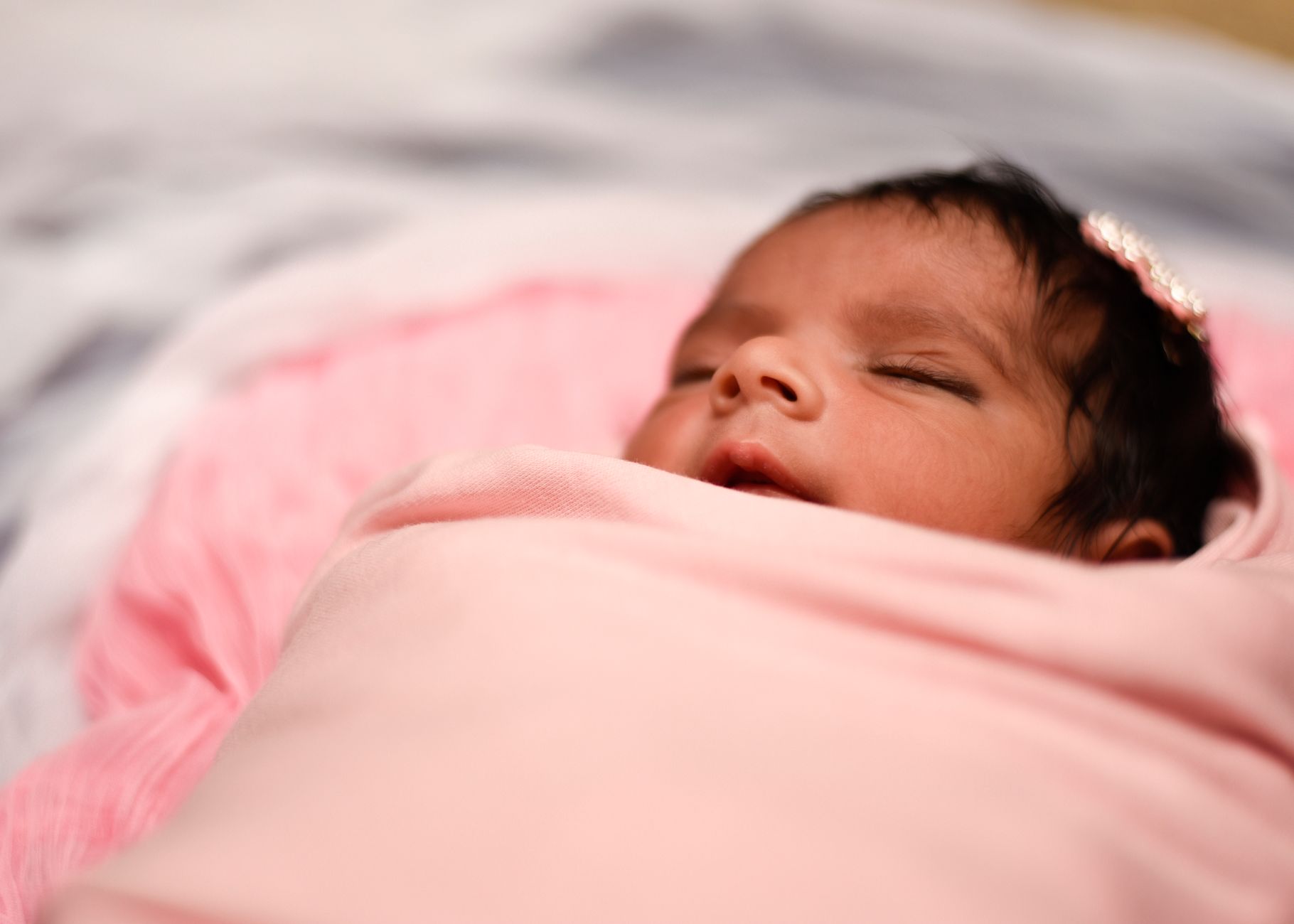
Overheating newborn signs include sweating, flushed skin, and rapid breathing, learn how to identify and prevent overheating in babies
By Shubhra Mishra — a mom of two who turned her own confusion during pregnancy into BumpBites, a global mission to make food choices clear, safe, and stress-free for every expecting mother. 💛
Check whether any food is safe during pregnancy with the BumpBites Food Safety Checker.
Quick take: Overheating in a newborn shows up as warm skin, rapid breathing, fussiness, or a dry mouth—not necessarily a fever. If the baby feels hot, check the temperature; a reading above 100.4°F (38°C) may signal fever and warrants a call to your pediatrician. Simple cooling steps—lighter clothing, a cooler room, and a gentle sponge bath—can safely bring the temperature down while you monitor for any warning signs.
It’s 2 a.m., you’re halfway through a diaper change, and you notice your newborn’s cheek feels unusually warm. Your mind races: “Is this a fever? Do I need to call the doctor?” You’re not alone—many new parents wonder if that extra warmth is a harmless hiccup or something that needs urgent care.
Below, we break down everything you need to know about overheating in newborns, from spotting the subtle signs to safely lowering a temperature at home, and when professional help is essential. By the end, you’ll have clear, evidence‑based steps you can trust, plus practical tips to keep your baby comfortably cool day and night.
We’ll cover the full spectrum of questions you might type into Google, so you can find the answer without scrolling through endless pages. Let’s start with the basics.
Keep the room comfortably cool and dress your baby in breathable layers to prevent overheating.
What are the signs of an overheating newborn?
Overheating isn’t always obvious, but a few physical cues reliably signal that a newborn’s body temperature is climbing. Look for these signs:
Skin that feels hot to the touch—especially on the forehead, chest, or back.
Flushed or reddened cheeks—the baby’s face may turn pink or rosy.
Rapid breathing (more than 60 breaths per minute) or short, shallow breaths.
Restlessness or irritability—the baby may be harder to soothe or cry more frequently.
Dry mouth or decreased saliva—a sign that the body is diverting fluids to cool down.
Excessive sweating—tiny beads of sweat on the scalp or upper chest.
Lethargy or unusually sleepy behavior—overheating can sap energy.
These cues differ from fever‑related symptoms, which often include a higher temperature reading and may be accompanied by chills, a loss of appetite, or a more pronounced feverish look.
One parent we spoke with described noticing a “warm pillow” feeling on her baby’s head during a summer night. She checked the temperature, found it was 99.8°F (37.7°C), and simply adjusted the room’s thermostat. Within minutes, the baby settled back into a calm sleep.
How can I tell if my baby is too hot versus having a fever?
D
istinguishing simple overheating from a fever is essential because the underlying causes differ. Here’s a quick decision‑tree you can use:
Touch test—Feel the baby’s forehead, chest, and back. If the skin feels hot but not sweaty, overheating is possible.
Measure temperature—Use a digital rectal thermometer (most accurate for newborns) or a temporal artery scanner if you prefer a non‑invasive method.
Interpret the reading:
Rectal ≤ 99.5°F (37.5°C) is generally normal.
Rectal 100.4°F (38°C) or higher meets the definition of fever in newborns, per the American Academy of Pediatrics (AAP).
Assess accompanying symptoms—Fever often brings chills, a change in appetite, or a sick‑looking demeanor, whereas overheating may present with only the signs listed above.
For example, a baby who feels hot and is sweating, but whose rectal temperature reads 99.8°F, is likely overheating. In contrast, a reading of 101°F with a flushed face and reduced feeding points toward fever.
Guidelines from the CDC and AAP agree that any temperature ≥ 100.4°F in a newborn under 28 days old should prompt a call to a healthcare professional, regardless of other symptoms.
What is the normal newborn temperature range compared to fever thresholds?
Newborns maintain a tighter temperature range than older children. Here’s a concise comparison:
Measurement site
Typical normal range (°F)
Fever threshold (°F)
Rectal
97.7 – 99.5
≥ 100.4
Axillary (underarm)
96.4 – 98.6
≥ 99.5
Temporal (forehead)
97.0 – 99.0
≥ 100.4
Eardrum (tympanic)
97.5 – 99.5
≥ 100.4
These ranges come from the National Institute for Health and Care Excellence (NICE) and the AAP. Remember that a newborn’s temperature can fluctuate by up to 0.5°F throughout the day, especially after feeding or a bath.
Below is a temperature chart for the first week of life, showing the typical rectal and axillary readings you might expect. This helps you spot outliers quickly.
Day of life
Typical rectal temperature (°F)
Typical axillary temperature (°F)
Day 1
98.0 – 99.5
97.0 – 98.6
Day 2–3
97.9 – 99.4
96.8 – 98.5
Day 4–5
97.8 – 99.3
96.7 – 98.4
Day 6–7
97.7 – 99.2
96.6 – 98.3
Any reading consistently above the upper end of these ranges should be discussed with a pediatrician, especially if other signs of illness appear.
When should I call a pediatrician for an overheated baby?
While many overheating episodes resolve with simple home measures, certain red‑flag signs mean you need professional help right away:
Temperature ≥ 100.4°F (38°C) in a baby under 28 days old.
Persistent rapid breathing (> 60 breaths per minute) lasting more than a few minutes.
Signs of dehydration (dry mouth, no wet diapers for > 4 hours, sunken fontanelle).
Lethargy, unresponsiveness, or difficulty waking the baby.
Seizure‑like activity, stiffening, or unusual twitching.
Any sudden change in skin color—especially bluish or gray tones.
Even if the temperature is below fever range, but the baby shows any of these symptoms, a prompt call to your pediatrician or a visit to urgent care is warranted. The NHS advises that any newborn under 1 month old with a temperature of 100.4°F should be evaluated immediately.
One mother shared that her baby’s temperature was 99.9°F, but the infant stopped feeding and became unusually quiet. She called her pediatrician, who instructed her to bring the baby in for a quick exam—turns out the infant had a urinary tract infection that required antibiotics.
How to safely lower a newborn's temperature at home?
When you determine the baby is overheating (but not febrile), gentle cooling measures are effective and safe. Follow these steps:
Remove excess clothing—Lay the baby in a light, breathable onesie or a cotton swaddle.
Adjust the environment—Set the room temperature between 68‑72°F (20‑22°C). Use a fan on low, directed away from the baby, to improve air circulation.
Offer a cool (not cold) sponge bath—Use lukewarm water (around 90°F/32°C) to gently wipe the torso, arms, and legs. Avoid submerging the baby in a tub unless you’re confident in safe handling.
Provide fluids if the baby is older than 2 months—For newborns under 2 months, breast milk or formula is the safest way to maintain hydration. Do not give water.
Monitor temperature—Re‑measure after 15‑20 minutes. If it drops into the normal range, continue regular care.
It is safe to give a newborn a cool bath, but the water should never be cold—cold water can cause a rapid drop in core temperature, which is stressful for a tiny body. The AAP confirms that a gentle sponge bath with lukewarm water is an appropriate method to lower temperature safely.
After cooling, keep the baby in a well‑ventilated area and avoid over‑bundling. A light cotton blanket is generally sufficient, even in cooler rooms.
What are common causes of newborn overheating during sleep?
Sleep is when babies are most vulnerable to overheating because they cannot regulate temperature as efficiently as older children. Typical culprits include:
Overbundling—Using multiple layers or heavy swaddles, especially with fleece or wool.
Room temperature that’s too high—A nursery set above 72°F (22°C) can quickly raise a baby’s core temperature.
Heavy bedding—Thick blankets, quilts, or plush toys can trap heat.
Clothing that’s too warm—Long‑sleeve onesies paired with a sleep sack in a warm room.
Direct sunlight or a window that lets in hot afternoon rays—Even a small amount of sun can raise ambient temperature.
To illustrate, a family we consulted shared that their newborn’s crib was next to a radiator. Although they thought the warmth would be comforting, the baby’s temperature consistently ran 0.5°F higher than normal. Moving the crib away from the heat source and using a breathable sleep sack solved the problem.
For a quick reference, the CDC recommends a room temperature of 68‑73°F (20‑23°C) for infants under 12 months, with a lightly dressed baby and no heavy blankets.
What are the differences between newborn fever and simple overheating?
Both conditions can make a baby feel hot, but the underlying physiology, causes, and treatment pathways differ:
Aspect
Overheating
Fever
Cause
External heat sources, overbundling, high ambient temperature
Immune response to infection (viral, bacterial) or inflammation
Temperature range
Usually < 100.4°F (38°C) rectally
≥ 100.4°F (38°C) rectally
Skin appearance
Warm, possibly sweaty, no rash
Warm, may be flushed, sometimes accompanied by rash
Associated symptoms
Restlessness, rapid breathing, dry mouth
Chills, reduced feeding, lethargy, possible vomiting
Medical evaluation, possible antipyretics (acetaminophen) under provider guidance
Understanding these differences helps you decide whether a simple home remedy will suffice or if a medical review is needed. If you ever feel unsure, err on the side of caution and contact your pediatrician.
Choosing a breathable mattress and light sleep sack reduces the risk of overheating while your baby naps.
Additional practical tips
Best room temperature for a newborn to prevent overheating
The sweet spot for a newborn’s nursery is between 68‑72°F (20‑22°C). Use a room thermometer to keep track, especially during seasonal changes. If you’re in a hot climate, a portable air‑conditioning unit or a fan set on low can help maintain this range without blowing directly on the baby.
How often should I check my newborn's temperature?
During the first month, checking once in the morning and once before bedtime is sufficient unless you notice any concerning signs. If you suspect overheating, a quick check after feeding or a diaper change can provide reassurance.
Signs of dehydration in an overheated infant
Dehydration can sneak up on a newborn. Watch for a dry mouth, lack of tears when crying, fewer than six wet diapers in 24 hours, and a sunken fontanelle (the soft spot on the head). If any of these appear, seek medical advice promptly.
Can a newborn get heat stroke and what are the symptoms?
Heat stroke is rare in newborns but possible in extreme conditions. Symptoms include a very high temperature (≥ 104°F/40°C), hot and dry skin, rapid heartbeat, confusion, or seizures. This is a medical emergency—call emergency services immediately.
What clothing is safe for newborns in hot weather?
Opt for single‑layer, breathable garments made of cotton or bamboo. A light onesie or a short‑sleeve sleeper paired with a thin swaddle is usually enough. Avoid polyester, fleece, or any clothing with a lot of padding.
How to prevent overheating while using a car seat or stroller?
Car seats and strollers can trap heat. Keep windows slightly open for airflow, avoid direct sunlight, and dress the baby in a lightweight outfit. If the seat has a built‑in blanket, remove it on warm days. Check the baby’s back of the neck for sweat before each outing.
Temperature chart for newborns during the first week of life
Refer to the table above for a quick visual guide. If a reading falls outside the typical range, note the time and conditions, then contact your pediatrician for advice.
From our medical team: Overheating is common and usually harmless if you act quickly. Trust your instincts—if the baby feels unusually warm or behaves differently, measure the temperature and use the cooling steps we’ve outlined. When in doubt, a brief call to your pediatrician can provide peace of mind and ensure your baby stays safe.
Myth vs. fact
Myth: A newborn can’t get a fever because their immune system is too immature.
Fact: Newborns can develop fever, often as an early sign of infection. Any temperature ≥ 100.4°F (38°C) in a baby under 28 days warrants medical evaluation (AAP).
Myth: Sweating means the baby is fine and doesn’t need any cooling.
Fact: While sweating shows the body is trying to cool, it can also indicate that the baby’s core temperature is already high. Check the thermometer and adjust the environment.
Myth: Adding extra blankets will keep a newborn comfortable in a cool room.
Fact: Overbundling is a leading cause of overheating. A light cotton blanket is sufficient; the room’s temperature should be the primary regulator.
Key takeaways
Normal newborn temperature is 97.7‑99.5°F rectally; fever starts at 100.4°F.
Watch for warm skin, rapid breathing, irritability, and dry mouth as overheating signs.
Keep the nursery at 68‑72°F, dress the baby in breathable layers, and avoid heavy blankets.
If temperature reaches fever range or red‑flag symptoms appear, call your pediatrician immediately.
Use a gentle sponge bath with lukewarm water and lighter clothing to lower temperature safely.
Regularly check the baby’s temperature—morning and bedtime checks are usually enough.
Frequently asked questions
What temperature is considered a fever in a newborn?
Any rectal temperature of 100.4°F (38°C) or higher in a baby under 28 days old is classified as a fever by the AAP.
Can a newborn's skin feel hot without having a fever?
Yes. External heat sources, overbundling, or a warm room can make a newborn’s skin feel hot while the core temperature stays within the normal range.
How quickly can a newborn develop heat exhaustion?
Heat exhaustion can develop within an hour of sustained exposure to a hot environment, especially if the baby is overdressed or the room temperature exceeds 75°F (24°C).
What should I do if my baby’s temperature is 100.4°F?
Contact your pediatrician right away. Even if the baby appears otherwise well, a fever in a newborn under one month old requires medical evaluation.
Are there specific signs that differentiate fever from overheating?
Fever is usually accompanied by a higher core temperature (≥ 100.4°F), possible chills, reduced feeding, and sometimes a rash. Overheating typically shows warm, sweaty skin, rapid breathing, and normal core temperature.
Is it safe to give a newborn a cool bath to lower temperature?
Yes, a sponge bath with lukewarm (not cold) water is safe and effective for gently reducing body heat. Avoid cold water, which can cause a rapid temperature drop and stress the baby.
When to call your doctor
If you notice any of the following, seek medical attention immediately: temperature ≥ 100.4°F (38°C) in a baby under 28 days, rapid breathing lasting more than a few minutes, signs of dehydration (dry mouth, fewer than six wet diapers in 24 hours, sunken fontanelle), lethargy or difficulty waking, seizures, or a sudden change in skin color. This article provides general information and does not replace personalized medical advice. Always consult your healthcare provider with specific concerns.
References
American Academy of Pediatrics. “Fever and Your Newborn.” AAP Clinical Guidelines, 2023.
American College of Obstetricians and Gynecologists (ACOG). “Temperature Management in Newborns.” ACOG Committee Opinion, 2022.
Centers for Disease Control and Prevention (CDC). “Infant Temperature Guidelines.” CDC Health Topics, 2023.
National Institute for Health and Care Excellence (NICE). “Temperature Measurement in Infants.” NICE Clinical Knowledge Summaries, 2022.
World Health Organization (WHO). “Thermal Protection of Newborns.” WHO Child Health Fact Sheet, 2021.
United Kingdom National Health Service (NHS). “When to Call a Doctor for a Fever in a Baby.” NHS Guidance, 2023.
U.S. Food and Drug Administration (FDA). “Safe Use of Thermometers for Infants.” FDA Consumer Health Information, 2022.
Not sure about the label on Overheating Newborn Signs products?
Snap the ingredients list and SafeFilter checks every ingredient for your stage — only 3 free scans this month, then you're locked until reset. Unlimited from $7/mo or $50/yr.
When Shubhra Mishra was expecting her first child in 2016, she was overwhelmed by conflicting food advice — one site said yes, another said never. By the time her second baby arrived in 2019, she realized millions of mothers face the same confusion.
That sparked a five-year journey through clinical nutrition papers, cultural diets, and expert conversations — all leading to BumpBites: a calm, compassionate space where science meets everyday motherhood.
Her long-term vision is to build a global community ensuring safe, supported, and free deliveriesfor every mother — because no woman should face pregnancy alone or uninformed. 🌿
🌍 Stand with mothers, shape safer guidance
Join a small circle of experts who review BumpBites articles so expecting parents everywhere can decide with confidence.