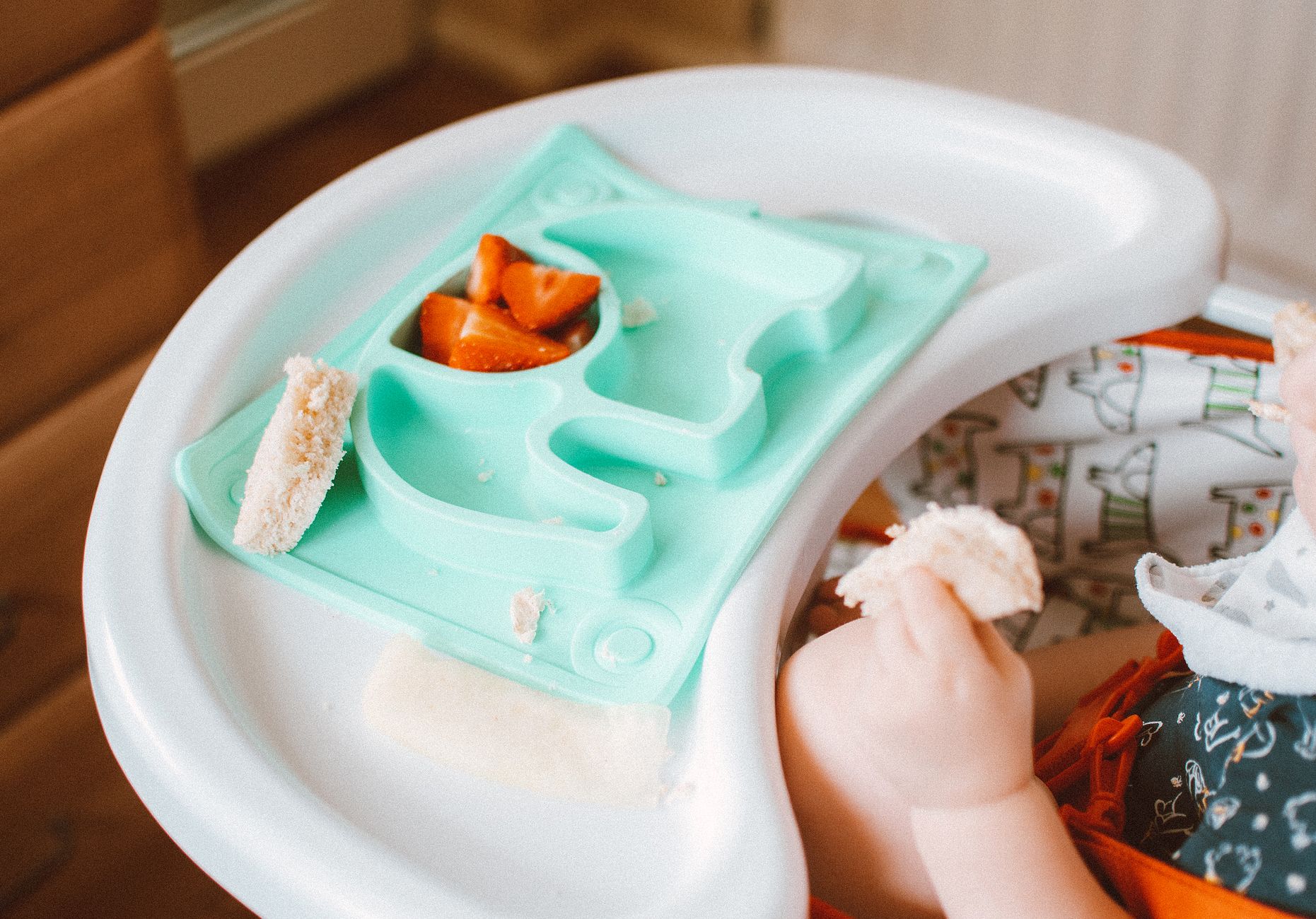
Your baby is ready for solids when they can sit up, coordinate hand-to-mouth, and swallow food. Learn the key NHS readiness signs to confidently know if your baby is ready for solids and starting their weaning journey safely. Get expert tips here.
By Shubhra Mishra — a mom of two who turned her own confusion during pregnancy into BumpBites, a global mission to make food choices clear, safe, and stress-free for every expecting mother. 💛
Check whether any food is safe during pregnancy with the BumpBites Food Safety Checker.
Quick take: The NHS recommends starting solids "around 6 months" when your baby shows all three key signs of readiness: sitting up independently with a steady head, coordinating their eyes, hands, and mouth, and losing their tongue-thrust reflex. Waiting for all these signs is crucial for your baby's safety, digestion, and development.
It's 2 AM, and your baby is stirring again. You've just fed them, but they seem hungrier than ever. Or maybe they're sitting in their high chair, eyes glued to your plate, little hands reaching for your toast. "Is it time?" you wonder, "Are they ready for solids?" This is a question that weighs heavily on the minds of many new parents, often accompanied by well-meaning advice from friends and family, and a confusing mix of information online.
🔢 Calculate it for your situation: Use our Weaning Readiness for a personalized result in seconds.
Deciding when to introduce your baby to solid foods, often called weaning, is a significant milestone. It marks a new phase in their development, but getting the timing right is crucial for their health and safety. Start too early, and you could face risks like choking or digestive issues. Wait too long, and they might miss important developmental windows.
Here at BumpBites, we understand your concerns. That's why we're breaking down the official guidance from the NHS (National Health Service) in the UK, a globally respected authority on health. We'll help you understand the clear, reliable signs that indicate your baby is truly ready for their first taste of food, why these signs are so important, and what to do if you're feeling unsure. Our goal is to empower you with confidence, so you can embark on this exciting journey when the time is truly right for your little one.
The Golden Rule: Around 6 Months and All Three Signs
When it comes to introducing solid foods, the official recommendation from the NHS, the World Health Organization (WHO), and other leading health bodies like the American Academy of Pediatrics (AAP) is clear: wait until your baby is "around 6 months old." But it's not just about the calendar age. The key phrase here is "around 6 months," which means the timing also depends on your baby showing specific developmental milestones.
Crucially, your baby needs to display all three of the key readiness signs we'll detail below. These aren't just suggestions; they are vital indicators that your baby's body and brain are sufficiently developed to safely handle solid foods. Think of it as a checklist: until all three boxes are ticked, their digestive system and motor skills aren't quite ready for the adventure of weaning.
The "around 6 months" guideline is rooted in extensive research regarding infant physiology and development. Before this age, a baby's digestive system is still maturing. Their gut lining is more permeable, meaning larger protein molecules can pass through, potentially increasing the risk of allergies. Their kidneys are also still developing, making it harder for them to process high levels of protein and sodium found in many solid foods.
Furthermore, breast milk or infant formula provides all the nutrition your baby needs for the first six months. Introducing solids earlier can displace these vital milk feeds, which are calorie-dense and packed with antibodies and essential nutrients tailored perfectly for their growth. By waiting until around 6 months, you ensure your baby continues to receive optimal nutrition from milk while allowing their digestive system to mature and their immune system to strengthen. This balanced approach sets the stage for a healthier, safer, and more successful weaning journey.
It's also important to remember that every baby is unique. While 6 months is the general guideline, some babies might be ready a little earlier (closer to 5.5 months if *all* signs are present), and others might need a little longer (closer to 7 months). The developmental signs are more important than an exact date on the calendar. This flexibility allows for individual differences in growth and maturation, ensuring that you introduce solids when your baby is truly prepared, rather than strictly adhering to an arbitrary date.
Observing your baby's posture and interest in food are key indicators of their readiness for solids.
The Three Essential Readiness Signs (and Why They Matter)
These
three signs are the gold standard for determining if your baby is developmentally ready for solid foods. They are not just about curiosity; they're about safety and physical capability. Let's break each one down in detail.
1. Can sit up independently and hold their head steady.
This is perhaps the most critical sign for safety. Imagine trying to eat while slumping over or with your head flopping around – it's incredibly difficult and dangerous. For babies, good head and neck control, along with the ability to sit upright without support (or with minimal support in a high chair), is fundamental to preventing choking.
When a baby has strong core muscles and can keep their head stable, they are better able to control the food in their mouth. They can move it from the front to the back of their mouth, chew (even without teeth!), and swallow effectively. If a baby is still wobbly or struggles to hold their head up, they are at a much higher risk of choking because their airway isn't adequately protected. They might accidentally inhale food into their lungs, which can be a serious medical emergency.
To assess this, observe your baby during playtime. Can they sit in their high chair or on the floor for a sustained period without tipping over or needing constant propping? Do they have good control over their head movements, able to look around without their head wobbling? If they're still slumping or constantly leaning, it's a clear sign they're not quite ready for solids. This developmental milestone also indicates a maturing nervous system, which is essential for the complex coordination required for eating.
2. Can coordinate their eyes, hands, and mouth.
This sign is all about your baby's ability to engage with food actively and safely. It's often referred to as "hand-to-mouth coordination" or demonstrating interest in food. It means your baby can:
See food: Their vision is developed enough to focus on small pieces of food.
Reach for food: They can intentionally extend an arm and grasp an object (like a piece of soft fruit or a spoon).
Bring food to their mouth: They can accurately guide the food from their hand into their mouth, rather than just fumbling around or hitting their cheek.
This coordination is vital whether you're planning to spoon-feed or try baby-led weaning. If you're spoon-feeding, your baby should be able to open their mouth willingly when the spoon approaches and show an interest in the food. If you're doing baby-led weaning, this skill is paramount, as your baby will be picking up and feeding themselves from the start.
You might notice your baby doing this with toys already – picking them up and putting them in their mouth to explore. When they start doing this with food, looking intently at what you're eating, reaching out, or leaning forward with an open mouth, these are strong signals that their fine motor skills and cognitive development are progressing to the point where they can manage self-feeding or actively participate in being fed. This also helps them learn about different textures and tastes through exploration, which is a key part of the weaning process.
3. Can swallow food (loss of tongue-thrust reflex).
This sign is perhaps the least obvious but one of the most important for safe eating. All babies are born with a protective reflex called the "tongue-thrust reflex" (also known as the extrusion reflex). This reflex causes them to push anything solid placed on their tongue out of their mouth. It's a natural mechanism designed to protect them from choking on foreign objects and ensures they primarily suckle milk from the breast or bottle.
As babies mature, typically around 4 to 6 months, this reflex naturally diminishes and disappears. When the tongue-thrust reflex is still present, trying to feed solids will often result in the food being pushed right back out, making feeding messy and frustrating. More importantly, it means your baby isn't yet able to move food to the back of their mouth and swallow it effectively.
How do I know if my baby has lost their tongue-thrust reflex?
You can gently test this by placing a tiny bit of soft purée or mashed banana on the tip of your baby's tongue. If they automatically push it out with their tongue, the reflex is still active. If they keep the food in their mouth, move it around, and then swallow it, it's a good sign the reflex has diminished. Don't worry if they make a bit of a mess or don't swallow perfectly the first time – it's a new skill! The key is that the food isn't immediately and forcefully expelled by their tongue.
The ability to swallow food indicates that your baby's oral motor skills have developed sufficiently. They can control their tongue and mouth muscles to manipulate food, form a bolus (a small ball of food), and then safely swallow it without it getting stuck or entering their airway. Without this ability, even soft purées can pose a choking risk. So, observing a reduction or absence of this reflex is a clear green light that their oral development is on track for solids.
Observe how your baby interacts with food. Can they pick it up, bring it to their mouth, and keep it there?
Why Waiting is Crucial: Risks of Starting Solids Too Early
While the excitement to start solids can be palpable, rushing the process can lead to several health and developmental risks for your baby. The "around 6 months" guideline isn't arbitrary; it's based on extensive research into infant physiology and development.
One of the primary concerns with early introduction is the immaturity of your baby's digestive system. Before 6 months, a baby's gut lining is often more permeable, meaning it has tiny gaps that allow larger, undigested protein molecules to pass through into the bloodstream. This can potentially increase the risk of developing food allergies or sensitivities. The digestive enzymes needed to break down complex carbohydrates, proteins, and fats in solid foods are also not fully present or active in sufficient quantities before this age. Introducing solids too soon can lead to digestive discomfort, gas, constipation, or diarrhoea, as their little tummies struggle to process unfamiliar ingredients.
Another significant risk is choking. As we discussed, the ability to sit upright with good head control and the loss of the tongue-thrust reflex are essential for safe swallowing. If these developmental milestones haven't been met, your baby is at a much higher risk of choking on even very soft or pureed foods. Their airway is smaller, and their ability to coordinate the complex movements of chewing and swallowing is still developing. Early introduction, especially with inappropriate textures, can quickly turn a mealtime into a frightening emergency.
Starting solids too early can also interfere with your baby's primary source of nutrition: breast milk or infant formula. For the first six months, milk provides all the essential nutrients, calories, and hydration your baby needs. Introducing solids prematurely can reduce their intake of milk, potentially leading to a deficiency in the vital nutrients that milk provides, such as specific antibodies, fatty acids, and vitamins that are perfectly formulated for their rapid growth and development. This is especially true if the solids offered are lower in nutritional density than milk.
Some studies have also suggested a potential link between early introduction of solids and an increased risk of obesity later in childhood. While the research is complex and multifactorial, one theory is that early exposure to solid foods, especially those high in calories but low in nutritional density, can disrupt the natural satiety signals in infants, leading to overfeeding. Additionally, the gut microbiome, which plays a role in metabolism, is still developing, and early exposure to different foods might alter its composition.
Finally, there's the practical aspect. Feeding a baby who isn't developmentally ready can be incredibly frustrating and messy for both parent and child. If your baby is constantly pushing food out with their tongue, refusing to open their mouth, or struggling to sit up, mealtimes can become a battleground rather than a joyful exploration. Waiting until they show all the signs ensures a smoother, more positive experience for everyone involved, setting the foundation for a healthy relationship with food.
The NHS and other health organizations are very clear on this: the benefits of waiting until around 6 months and observing all the readiness signs far outweigh any perceived advantages of an earlier start. Patience truly is a virtue when it comes to weaning.
Common Myths and Misleading Signs of Readiness
It's easy to get confused by what seems like "signs" that your baby is ready for solids, especially with so much anecdotal advice circulating. However, many common beliefs are actually myths and not reliable indicators of readiness. Relying on these can lead to starting solids too early, with the risks we've just discussed. Let's debunk some of the most prevalent ones:
Mythical Sign
Why it's NOT a reliable indicator
What it usually means
Waking more frequently at night
This is a very common developmental phase for babies, often related to growth spurts, sleep regressions, teething, or simply learning new skills. It does not mean they need solid food to "fill them up."
Normal infant sleep patterns, growth spurts, or a need for comfort/more milk. Continuing to offer breast milk or formula is usually the appropriate response.
Watching you eat intently or reaching for your food
Babies are naturally curious and imitative. They observe everything you do and are interested in new sights and sounds. This is a sign of social development and curiosity, not necessarily physiological readiness.
Curiosity, social learning, or simply wanting to explore new objects. It's a good sign of interest, but must be paired with physical readiness.
Chewing their fists or putting everything in their mouth
This is a normal part of oral exploration and teething. Babies learn about their world through their mouths and use chewing as a way to soothe sore gums.
Teething, oral exploration, or self-soothing. Offer a safe teething toy or continue with milk feeds.
Increased appetite / demanding more milk feeds
Babies go through growth spurts, especially in the first few months. During these times, they naturally need more milk to fuel their rapid development. Their bodies are telling them to take in more calories from their primary source of nutrition.
A growth spurt. Offer more frequent breastfeeds or larger formula bottles. Their milk intake should naturally increase to meet their needs.
Being 4 months old
While some older guidelines mentioned 4 months, current NHS and WHO advice states "around 6 months." Your baby's digestive system and protective reflexes are still developing at 4 months.
A baby at 4 months is generally not fully ready. While they might show *one* sign, they are unlikely to show *all three* essential developmental signs for safe weaning.
It's easy to misinterpret these common baby behaviours as signs of hunger for solids. Many parents tell us they've been advised to start solids early for these very reasons. However, health professionals emphasize that these are typical infant behaviours that don't indicate a physiological need or readiness for solid food. Always refer back to the three key developmental signs for a reliable assessment.
My Baby is 6 Months Old, But Not Showing All the Signs – What Now?
You've hit the 6-month mark, and while you might be eager to start, your little one still seems to be missing one or more of those crucial readiness signs. Perhaps their head control isn't quite steady, or they're still pushing food out with their tongue. This is perfectly normal, and there's no need to worry.
Remember, the "around 6 months" guideline means exactly that – it's an average. Every baby develops at their own unique pace. Just like some babies walk or talk earlier than others, the timing of readiness for solids can vary. Your baby isn't "behind" if they need a little more time; they're simply following their own developmental schedule.
Here’s what you can do:
Be patient: Continue to offer breast milk or formula as their primary source of nutrition. They are still getting everything they need from milk.
Keep observing: Continue to watch for the three key signs daily. They can emerge quite quickly! You might notice subtle improvements in their sitting posture or hand-to-mouth coordination.
Encourage development: Provide opportunities for them to develop the necessary skills. For example, give them plenty of floor time to practice sitting and strengthening their core muscles. Offer safe toys they can bring to their mouth to practice hand-eye-mouth coordination.
Involve them at mealtimes: Even if they aren't eating, have them join you at the table during family meals. Let them watch you eat, listen to the sounds, and experience the social aspect of mealtimes. This can foster curiosity and familiarity with food without the pressure to eat.
Talk to your health visitor or GP: If you're concerned, or if your baby is significantly past 6 months (e.g., 7 or 8 months) and still showing no signs of readiness, it's always a good idea to chat with your health visitor or general practitioner (GP). They can assess your baby's development, offer personalized advice, and rule out any underlying issues. They might suggest specific exercises or approaches to help your baby develop the necessary skills.
There is no rush to introduce solids. Waiting until your baby is truly ready will make the weaning process much smoother, safer, and more enjoyable for both of you. Trust your instincts, but always cross-reference them with the official developmental signs.
Taking the Plunge: What Happens When Your Baby IS Ready?
Once your baby is showing all three signs of readiness and is around 6 months old, congratulations! You're ready to embark on the exciting adventure of introducing solid foods. This new phase is about exploring tastes, textures, and developing new skills, not about replacing milk feeds immediately.
Initially, solid food will simply complement breast milk or formula, which should remain your baby's main source of nutrition until at least 12 months of age. The journey starts slowly, with small amounts of food, gradually increasing variety and quantity over time. There are generally two main approaches to introducing solids:
Purée/Spoon-feeding: This traditional method involves offering smooth, blended foods (purées) on a spoon. You control the pace and amount.
Baby-Led Weaning (BLW): This approach encourages your baby to self-feed with appropriately sized and textured finger foods from the very beginning. Your baby dictates what and how much they eat.
Many parents choose a combination of both methods, adapting to what works best for their baby and family. The most important thing is to offer a variety of healthy foods in a safe, supportive environment.
General principles for starting solids:
Start with single foods: Introduce one new food at a time, waiting a few days before introducing another. This helps you identify any potential allergies or sensitivities.
Offer iron-rich foods: By 6 months, your baby's iron stores from birth start to deplete. Iron-fortified baby cereals, puréed meat, poultry, fish, and lentils are excellent first choices.
Texture progression: Begin with very smooth purées or soft, easy-to-grasp finger foods. Gradually progress to mashed, lumpy, and finely chopped textures as your baby develops their chewing skills.
Safe environment: Always supervise your baby while they are eating. Ensure they are sitting upright in a high chair, not leaning back or lying down.
No added salt or sugar: Babies' kidneys cannot process excess salt, and sugar is detrimental to their developing teeth and promotes unhealthy eating habits. Avoid adding either to baby food.
Offer water: Once solids are introduced, you can offer small sips of water from an open cup or sippy cup with meals.
Remember, weaning is a learning process for both of you. There will be messes, rejections, and triumphs. Focus on making mealtimes enjoyable and stress-free. Your baby is learning to taste, touch, and explore, developing their motor skills and independence along the way.
A Quick Guide to Safe First Foods (and What to Avoid)
Once your baby is ready, the world of food opens up! The NHS advises starting with single-ingredient foods that are soft, easy to mash, and free from added salt or sugar. Exposure to a wide variety of flavours and textures early on can help develop healthy eating habits.
Good First Foods to Offer:
Vegetables: Cooked and mashed or soft-steamed sticks of carrot, sweet potato, broccoli florets, parsnip, courgette (zucchini), peas.
Fruits: Mashed ripe banana, avocado, cooked apple or pear purée, soft berries (mashed or quartered), melon sticks.
Starchy foods: Iron-fortified baby rice or cereal (mixed with breast milk/formula), mashed potato, well-cooked pasta shapes, toast fingers (no crust or hard bits initially).
Protein-rich foods: Cooked and puréed or finely shredded chicken, turkey, beef, lamb, fish (boneless, cooked), lentils, beans, chickpeas (all mashed).
Dairy alternatives: Full-fat plain yogurt (unsweetened), full-fat cream cheese (in small amounts, unsalted varieties).
Foods to Avoid in the First Year:
Some foods pose specific risks or are not suitable for babies under 12 months:
Honey: Never give honey to babies under 12 months due to the risk of infant botulism.
Whole nuts: A choking hazard. Nut butter can be offered if thinned and spread thinly, but whole nuts should be avoided.
Salt: Babies' kidneys can't cope with much salt. Avoid adding it to food and check labels on processed foods.
Sugar: No added sugar in any form, including fruit juice.
Cow's milk as a main drink: Can be used in cooking or on cereal from 6 months, but not as a main drink until 12 months as it doesn't provide the right balance of nutrients.
Shark, swordfish, marlin: Contain high levels of mercury.
Raw or lightly cooked eggs: Unless they have a red lion stamp (UK) or are otherwise certified for safe consumption by pregnant women and babies.
Unpasteurised cheeses: Such as soft mould-ripened cheeses (brie, camembert) or blue-veined cheeses, due to listeria risk.
Large, hard, or round foods: Grapes (unless quartered), whole cherry tomatoes, large pieces of meat, hot dogs, popcorn, marshmallows are all high choking risks.
Always prepare food safely, ensuring it's the right texture and temperature. A common mistake is to offer foods that are too hard or too large, leading to choking hazards. When in doubt, mash it more, cut it smaller, or steam it softer. This table summarizes some key considerations:
Avoid low-fat options; babies need healthy fats. Cow's milk only in cooking until 12 months.
Tracking Your Baby's Weaning Journey
Starting solids is a big step, and it can sometimes feel like there's a lot to keep track of—what foods you've introduced, any reactions, and if your baby is genuinely showing all the readiness signs. To help simplify this exciting process and ensure you're on the right track, you might find our Weaning Readiness calculator a helpful tool. It can guide you through the key indicators and help you feel more confident about when to start.
From our medical team: "As a healthcare professional, I often see parents feeling pressured to start solids early, whether from family advice or comparing their baby to others. It's crucial to remember that a baby's unique developmental timeline is paramount. Those three readiness signs – sitting, coordination, and the disappearing tongue-thrust reflex – are not just arbitrary rules. They are nature's way of telling us when their body is truly prepared to safely transition to solid foods. Trusting your baby's cues and the evidence-based guidelines ensures a healthier and happier start to their feeding journey. When in doubt, always have a chat with your health visitor or GP."
🔢 Ready to crunch your numbers? Use our Weaning Readiness for a personalized result in seconds.
Myth vs. Fact
Let's clarify some common misconceptions about starting solids:
Myth: Babies need solids to sleep through the night.
Fact: There's no scientific evidence that introducing solids helps babies sleep longer. Waking at night is normal for infants and often due to developmental changes, not hunger for solids.
Myth: Starting solids early will prevent allergies.
Fact: The NHS and other bodies recommend introducing common allergens (like nuts, eggs, dairy) *after* 6 months, alongside other solids, and one at a time. Starting generally too early can increase allergy risk due to an immature gut, not prevent it.
Myth: If my baby watches me eat, they're ready for solids.
Fact: Babies are naturally curious and love to mimic. Watching you eat is a sign of social development and interest, not physical readiness. They still need to show all three physical readiness signs.
Key Takeaways
The NHS recommends starting solids "around 6 months" of age.
Your baby must show ALL three key readiness signs for safe weaning: sitting up independently with a steady head, coordinating eyes, hands, and mouth, and losing the tongue-thrust reflex.
Starting solids too early can increase risks of choking, digestive issues, and allergies.
Common "signs" like waking at night or watching you eat are usually myths and not reliable indicators of readiness.
If your baby is 6 months but not ready, be patient and continue with breast milk or formula; consult your health visitor if concerned.
When ready, start with single, soft, iron-rich foods, avoiding added salt or sugar, and always supervise.
Frequently Asked Questions
What are the 3 main signs a baby is ready for solids?
The three main signs, according to the NHS, are that your baby can sit up independently and hold their head steady, can coordinate their eyes, hands, and mouth to pick up food and bring it to their mouth, and has lost their tongue-thrust reflex, allowing them to swallow food. All three signs must be present.
What age does the NHS recommend starting solids?
The NHS recommends starting solids "around 6 months" of age. This age is generally when babies are developmentally ready to safely handle solid foods, both in terms of their physical skills and the maturity of their digestive system.
What happens if you start solids before 6 months?
Starting solids before 6 months can increase risks such as choking due to underdeveloped motor skills, digestive problems like constipation or diarrhoea, and a potential increase in food allergies because the gut lining is still immature. It can also displace important breast milk or formula feeds.
How do I know if my baby has lost their tongue thrust reflex?
You can check for the loss of the tongue-thrust reflex by placing a tiny bit of soft puréed food on your baby's tongue. If they automatically push the food out, the reflex is still present. If they keep the food in their mouth, move it around, and then swallow it, the reflex has diminished.
Can a baby be ready for solids at 4 months?
While some babies may show one or two signs of readiness at 4 months, it is highly unlikely they will exhibit all three crucial developmental signs, particularly the loss of the tongue-thrust reflex. The NHS strongly advises waiting until "around 6 months" for safety and optimal development.
What are good first foods for baby weaning?
Good first foods are soft, mashed, or puréed single-ingredient options, especially those rich in iron. Examples include cooked and mashed sweet potato, avocado, banana, iron-fortified baby rice or cereal mixed with milk, and puréed chicken or lentils. Always avoid added salt or sugar.
When to Call Your Doctor
While introducing solids is an exciting time, it's important to know when to seek professional advice. Call your health visitor or GP if:
You are concerned your baby is significantly past 6 months (e.g., 7-8 months) and still shows no signs of readiness for solids.
Your baby consistently struggles with feeding, gags excessively, or frequently chokes on food.
Your baby develops a rash, swelling, vomiting, or diarrhoea after eating a new food, which could indicate an allergic reaction.
You have any concerns about your baby's growth or overall development.
You suspect your baby is not getting enough nutrition from milk or solids.
This article is for informational purposes only and is not a substitute for professional medical advice, diagnosis, or treatment. Always seek the advice of your physician or other qualified health provider with any questions you may have regarding a medical condition.
References
National Health Service (NHS) UK. When to start solid foods (weaning). Available at: www.nhs.uk/start4life/weaning/when-to-start/
World Health Organization (WHO). Infant and young child feeding. Available at: www.who.int/news-room/fact-sheets/detail/infant-and-young-child-feeding
American Academy of Pediatrics (AAP). Starting Solid Foods. Available at: www.healthychildren.org/English/ages-stages/baby/feeding-nutrition/Pages/Starting-Solid-Foods.aspx
Food Standards Agency (FSA) UK. Weaning your baby: What to feed, how much and what to avoid. Available at: www.food.gov.uk/safety-hygiene/weaning-your-baby
Royal College of Paediatrics and Child Health (RCPCH). Complementary feeding (weaning). Available at: www.rcpch.ac.uk/resources/complementary-feeding-weaning
Mayo Clinic. Solid foods: How to get your baby started. Available at: www.mayoclinic.org/healthy-lifestyle/infant-and-toddler-health/in-depth/healthy-baby/art-20046200
Not sure about the label on Is My Baby Ready For Solids Nhs Readiness Signs products?
Snap the ingredients list and SafeFilter checks every ingredient for your stage — only 3 free scans this month, then you're locked until reset. Unlimited from $7/mo or $50/yr.
When Shubhra Mishra was expecting her first child in 2016, she was overwhelmed by conflicting food advice — one site said yes, another said never. By the time her second baby arrived in 2019, she realized millions of mothers face the same confusion.
That sparked a five-year journey through clinical nutrition papers, cultural diets, and expert conversations — all leading to BumpBites: a calm, compassionate space where science meets everyday motherhood.
Her long-term vision is to build a global community ensuring safe, supported, and free deliveriesfor every mother — because no woman should face pregnancy alone or uninformed. 🌿
🌍 Stand with mothers, shape safer guidance
Join a small circle of experts who review BumpBites articles so expecting parents everywhere can decide with confidence.