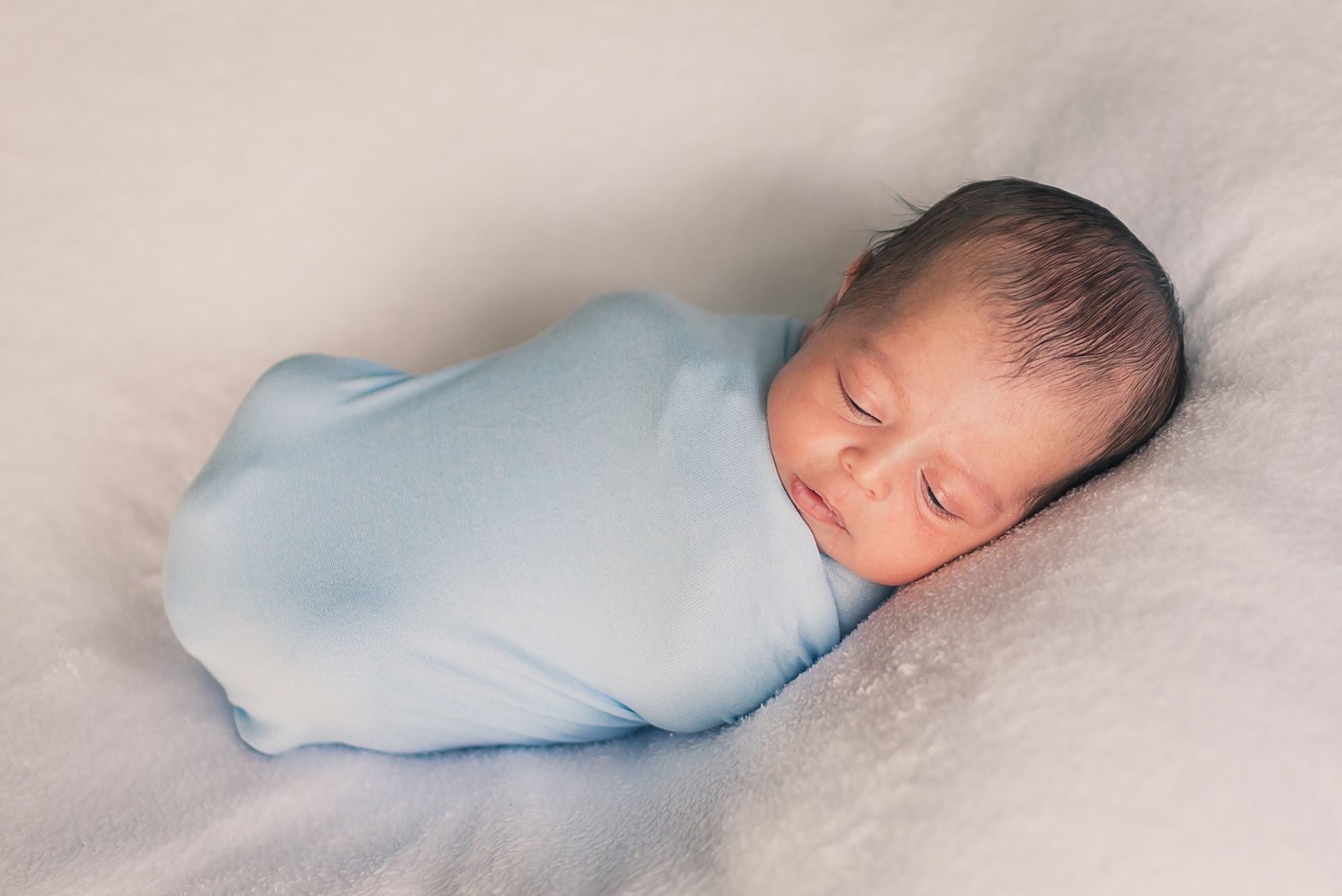
Swaddling a newborn involves wrapping them snugly in a blanket to mimic the womb, promoting better sleep. Learn how to swaddle your newborn safely and effectively with our easy, step-by-step guide, ensuring comfort and security for your baby.
By Shubhra Mishra — a mom of two who turned her own confusion during pregnancy into BumpBites, a global mission to make food choices clear, safe, and stress-free for every expecting mother. 💛
Check whether any food is safe during pregnancy with the BumpBites Food Safety Checker.
Quick take: Swaddling can help your newborn feel secure, calm the startle reflex, and promote better sleep during their first few months. It's essential to swaddle safely by ensuring proper hip development, placing your baby on their back to sleep, and stopping as soon as they show signs of rolling over.
The first few weeks with a newborn are a beautiful whirlwind, filled with tiny yawns, sweet coos, and a fair share of anxious questions. One common practice many new parents turn to is swaddling – wrapping your baby snugly in a blanket to help them feel safe and sleep soundly. It's a tradition passed down through generations, and for good reason: a well-swaddled baby often looks like a peaceful little burrito, content and comforted.
But if you're like most expecting or new parents, you're probably wondering: How exactly do I do it safely? What kind of blanket should I use? And when do I stop? We understand these worries, and we're here to guide you through the ins and outs of swaddling so you can feel confident and your baby can rest easy.
In this comprehensive guide, we'll walk you through the benefits of swaddling, provide a step-by-step guide to safe techniques, discuss crucial safety considerations like hip health and SIDS prevention, and explain when it’s time to transition out of the swaddle. Let's dive in and help you master this soothing art.
What are the benefits of swaddling a newborn?
Swaddling offers several wonderful benefits for newborns, primarily by mimicking the snug, secure environment they experienced in the womb. This can be incredibly comforting during what's often called the "fourth trimester" – the first three months of life outside the uterus, when babies are still adjusting to the world.
One of the biggest advantages of swaddling is its ability to help babies sleep better and for longer stretches. Newborns have an involuntary reflex called the Moro reflex, or startle reflex, which causes their arms and legs to flail out suddenly, often waking them up. A snug swaddle gently restricts these movements, preventing your baby from startling themselves awake, thus promoting more continuous sleep cycles. Many parents report that their babies are calmer and settle down more easily when swaddled, especially at bedtime.
Beyond sleep, swaddling can also help to soothe a fussy baby. The gentle pressure around their body can be incredibly calming, providing a sense of security that reduces crying and promotes relaxation. It can also help regulate your baby's body temperature, keeping them warm without the need for loose blankets in the crib, which are a SIDS risk. For parents, a well-swaddled baby means more predictable sleep patterns, which in turn can lead to more rest for you and a more peaceful household. It’s a win-win situation when done correctly and safely.
How do you swaddle a baby step by step using a blanket?
Learning to swaddle with a traditional square or rectangular blanket might seem tricky at first, but with a little practice, you'll be a pro. The goal is to create a snug, secure wrap that keeps your baby's arms close to their body while allowing their hips and legs to move freely. Here's a step-by-step guide:
Lay out your blanket: Choose a lightweight, breathable blanket (like muslin or a thin cotton knit) that is at least 40x40 inches (around 100x100 cm). Lay it flat on a firm, safe surface (like a changing table or the floor) in a diamond shape.
Fold the top corner down: Fold the top corner of the diamond down about 6-8 inches (15-20 cm) towards the center. This creates a straight edge where your baby's head will rest.
Position your baby: Gently place your baby on their back on the blanket, with their neck resting along the folded edge. Their body should be centered on the blanket. Make sure their shoulders are just below the fold.
Straighten their left arm: Gently straighten your baby's left arm and place it alongside their body. Take the left side of the blanket and bring it across your baby's body, tucking it snugly under their right armpit and around their back. Ensure it's snug but not restrictive around their chest.
Bring up the bottom: Take the bottom corner of the blanket and bring it up over your baby's feet and legs. Make sure there's plenty of loose fabric here – you should be able to easily place two to three fingers between the blanket and your baby's feet. This ensures their hips have room to move and flex, which is crucial for healthy hip development. Tuck this corner loosely behind their left shoulder.
Straighten their right arm: Gently straighten your baby's right arm and place it alongside their body. Take the remaining right side of the blanket and bring it across your baby's body, tucking it snugly under their left armpit and around to their back. This will secure the swaddle.
Check for snugness and hip health: The swaddle should be snug around the chest, preventing their arms from escaping, but loose around the hips and legs. Your baby's legs should be able to bend up and out at the hips, resembling a frog's position. You should also be able to fit two fingers between the swaddle and your baby's chest.
A well-executed swaddle should be snug around the upper body but loose enough for healthy hip movement.
What are the safest swaddling techniques for newborns?
Safety is paramount when swaddling. While the benefits are clear, improper swaddling can pose risks. Here are the key safety considerations and techniques recommended by experts like the American Academy of Pediatrics (AAP) and the National Health Service (NHS).
Always place your baby on their back to sleep
This is the most critical rule for safe sleep, whether your baby is swaddled or not. Swaddling should only be used for back sleeping. If a swaddled baby rolls onto their stomach, they may have difficulty breathing or returning to their back, significantly increasing the risk of Sudden Infant Death Syndrome (SIDS). Always put your baby to sleep on a firm, flat surface, free from loose blankets, bumpers, or toys.
Ensure hip-healthy swaddling
A common concern with swaddling is its potential impact on hip development. Swaddling too tightly around the hips and legs can force them into an extended position, which can lead to hip dysplasia – a condition where the hip joint doesn't form properly. The International Hip Dysplasia Institute (IHDI) and the AAP strongly recommend "hip-healthy" swaddling. This means:
Your baby's legs should be able to bend up and out at the hips, allowing for natural movement.
The bottom portion of the swaddle should be loose, giving their hips plenty of room to flex and extend.
You should be able to place two to three fingers between the swaddle and your baby's feet.
Think of it like a frog's natural resting position – bent and splayed. Avoid any swaddle that tightly constrains your baby's legs in a straight, extended position.
Prevent overheating
Babies can easily overheat when swaddled, especially if the room is too warm or the blanket material is too thick. Overheating is a risk factor for SIDS. To prevent it:
Use lightweight, breathable fabrics like cotton, muslin, or bamboo.
Dress your baby in light clothing underneath the swaddle – often just a diaper or a thin onesie is enough.
Monitor your baby for signs of overheating: sweating, damp hair, flushed cheeks, heat rash, or rapid breathing.
Keep the room temperature comfortable, generally between 68-72°F (20-22°C).
Keep arms in (initially)
For newborns, keeping their arms tucked in prevents the startle reflex from waking them. However, as they get a bit older, some babies prefer their arms out. We'll discuss transitioning to arms-out swaddling or sleep sacks later. For very young newborns, arms-in swaddling is generally recommended to help them feel more secure and prevent them from scratching their faces.
Avoid loose fabric
Ensure the swaddle is snug enough that no loose fabric can come undone and cover your baby's face, which could pose a suffocation risk. This is especially important around the neck and chin area.
By following these guidelines, you can ensure that swaddling remains a safe and comforting tool for your newborn.
When should you stop swaddling a baby?
Knowing when to stop swaddling is just as important as knowing how to swaddle safely. The general consensus among pediatric experts, including the American Academy of Pediatrics (AAP), is that you should discontinue swaddling as soon as your baby shows any signs of attempting to roll over.
Most babies start to show signs of rolling around 2 to 4 months of age, though some may do so earlier or later. Once your baby can roll from their back to their stomach, even just occasionally, swaddling becomes unsafe. If a swaddled baby rolls onto their tummy, they may not have the arm strength or mobility to roll back over, increasing their risk of suffocation and SIDS.
It's crucial not to wait until your baby is consistently rolling. Any indication – even a subtle shift or attempt – is your cue to stop swaddling. Many parents find this transition challenging because swaddling has become such an effective sleep aid. However, safety must always come first. Think of it as a developmental milestone; your baby is growing and learning new skills, and their sleep environment needs to adapt with them.
Some babies might also signal they're ready to stop swaddling by consistently breaking out of the swaddle, especially if they manage to get their arms free. If your baby is regularly escaping the swaddle, it’s a sign that it’s no longer effective and could potentially become a loose blanket in the crib, which is a hazard. Pay attention to these cues, and when in doubt, it’s always safer to stop swaddling.
What kind of swaddle blanket is best for newborns?
Choosing the right swaddle blanket can make a big difference in both your baby's comfort and your ease of use. There's a wide variety of options available, from traditional blankets to specialized swaddles, each with its own advantages.
Traditional Swaddle Blankets
These are typically large (at least 40x40 inches or 100x100 cm), square or rectangular blankets made from lightweight, breathable materials. Common choices include:
Muslin: Known for its open weave, muslin is incredibly breathable, soft, and becomes softer with each wash. It's excellent for preventing overheating and is versatile enough for other uses like nursing covers or burp cloths.
Cotton Knit: Soft, stretchy, and comfortable, cotton knit blankets provide a good snugness without being restrictive. They are also breathable and widely available.
Bamboo: Similar to muslin, bamboo fabric is exceptionally soft, breathable, and often has natural temperature-regulating properties, making it a luxurious and comfortable choice.
The main advantage of traditional blankets is their versatility and cost-effectiveness. However, they require you to master the wrapping technique to ensure a secure and safe swaddle.
Pre-made Swaddles
For parents who find traditional swaddling challenging or want more consistency, pre-made swaddles are a popular choice. These are designed with fasteners, zippers, or specific shapes to make swaddling easier and more foolproof. They come in various styles:
Velcro Swaddles: These feature wings with Velcro closures that wrap around your baby, making it simple to get a snug fit. They are often adjustable to accommodate growth and are great for quick changes.
Zipper Swaddles: These are essentially wearable blankets with a zipper closure. Your baby's arms are typically tucked inside, and the zipper ensures a secure fit. Some have two-way zippers for easy diaper changes.
"Arms Up" Swaddles: A newer style that allows babies to have their arms in a natural "arms up" position, which some babies prefer. These are often made with stretchy fabric and can also aid in the transition out of swaddling.
Pre-made swaddles are often celebrated for their ease of use, especially during those sleepy middle-of-the-night changes. They reduce the learning curve and can provide a more consistent, secure swaddle every time.
When choosing any type of swaddle, always prioritize breathable materials, ensure it allows for hip-healthy positioning, and check for any loose fasteners or embellishments that could be a hazard. Also, consider the TOG (Thermal Overall Grade) rating, especially for pre-made swaddles, which indicates the warmth of the fabric. A lower TOG (0.5-1.0) is better for warmer rooms or climates.
Swaddle Type
Pros
Cons
Best For
Traditional Blanket (Muslin, Cotton Knit)
Versatile, breathable, cost-effective, multi-use.
Requires practice to master technique, can come undone if not wrapped securely.
Parents comfortable with wrapping, warmer climates, versatile use.
Velcro Swaddle
Easy to use, secure fit, adjustable, quick diaper changes.
Velcro can be noisy (waking baby), may not fit all body types perfectly, can wear out over time.
Parents seeking ease and consistency, quick night-time changes.
Zipper Swaddle
Very secure, no loose fabric, often two-way zipper for easy changes, consistent fit.
Less adjustable than Velcro for different body types, some babies may dislike arms-in restriction.
Parents prioritizing security and ease, babies who sleep well with arms tucked.
"Arms Up" Swaddle
Allows natural arm position, promotes self-soothing, often aids transition.
May not prevent startle reflex as effectively for all babies, can be pricier.
Babies who prefer hands-to-mouth access, starting the transition out of swaddling.
How can you tell if a swaddle is too tight or too loose?
Getting the swaddle just right is key for both safety and effectiveness. A swaddle that's too tight can be uncomfortable or even dangerous, while one that's too loose won't provide the comforting snugness and could become a hazard. Here’s how to check if your swaddle is perfectly fitted:
Signs a Swaddle is Too Tight
Restricted Breathing: If you notice your baby's breathing seems shallow or labored, or if the swaddle is compressed around their chest, it's too tight. You should be able to fit two fingers comfortably between the swaddle and your baby's chest.
Circulation Issues: Check your baby's hands and feet. If they appear cold, blueish, or purplish, or if their fingers and toes are swollen, the swaddle might be restricting circulation.
Hip Restriction: As discussed, a swaddle that forces your baby's legs straight down or together is too tight for their hips. Their legs should be able to bend up and out freely.
Excessive Fussy or Discomfort: While some fussiness is normal, if your baby seems particularly distressed, overly warm, or cries inconsolably when swaddled, it might be too tight.
Skin Irritation: Red marks or chafing on your baby's skin, especially around the neck, chest, or armpits, indicate that the swaddle is too snug in those areas.
Signs a Swaddle is Too Loose
Arms Breaking Free: If your baby can easily wriggle their arms out of the swaddle, especially above the blanket, it's too loose. This defeats the purpose of preventing the startle reflex and could mean the blanket is becoming a loose item in the crib.
Loose Fabric Around Face: Any loose fabric around your baby's face, neck, or chin is a significant safety hazard as it could obstruct breathing. The top of the swaddle should be below their chin.
Ineffective Soothing: If your baby is still startling themselves awake or isn't settling down when swaddled, it might not be snug enough to provide the comforting pressure they need.
Bunches of Fabric: If the blanket bunches up around your baby's body rather than lying flat and smooth, it's likely too loose and could shift during sleep.
The ideal swaddle feels like a gentle hug. It should be snug around your baby's torso and arms to prevent the startle reflex, but always loose and roomy around their hips and legs to allow for natural movement. Always check these points after you've swaddled your baby, especially before putting them down for sleep.
What are common swaddling mistakes to avoid?
Even with the best intentions, it's easy to make common swaddling mistakes. Being aware of these pitfalls can help you ensure your baby's safety and comfort. Here are some of the most frequent errors parents make:
Swaddling Too Loosely: This is perhaps the most dangerous mistake. If the swaddle is too loose, the fabric can come undone and cover your baby's face, posing a suffocation risk. Always ensure the swaddle is snug around the upper body, especially the chest and arms.
Swaddling Too Tightly Around the Hips: As we've emphasized, restricting your baby's leg and hip movement can lead to developmental hip dysplasia. Always ensure there’s plenty of room for their legs to bend up and out in a natural frog-like position.
Overheating Your Baby: Dressing your baby in too many layers under a swaddle, using a too-thick blanket, or having the room too warm can cause overheating, which is a SIDS risk. Always opt for breathable fabrics and light layers.
Placing a Swaddled Baby on Their Stomach: A swaddled baby should *never* be placed to sleep on their stomach or side. Always put them on their back. If they roll onto their stomach while swaddled, they can't use their arms to push up or reposition themselves.
Continuing to Swaddle Once Baby Shows Signs of Rolling: This is a critical safety mistake. As soon as your baby can even attempt to roll, it's time to stop swaddling for sleep.
Using the Wrong Size Blanket: A blanket that's too small won't allow for a secure, hip-healthy swaddle, and one that's excessively large can create too much loose fabric. Aim for a blanket that's at least 40x40 inches (100x100 cm) for traditional swaddling.
Not Checking for Discomfort: Sometimes, babies just don't like being swaddled. If your baby consistently fusses, cries intensely, or struggles to break free, it might be a sign they're uncomfortable or simply prefer to sleep unswaddled. Don't force it.
Swaddling with Arms Out Too Early (for some babies): While some babies prefer arms out later on, for very young newborns, keeping arms tucked in helps prevent the startle reflex. If your baby is consistently startling themselves awake with arms out, try tucking them in.
By being mindful of these common mistakes, you can provide a safe, comforting, and effective swaddling experience for your little one. Remember, the goal is always to create a secure environment that supports healthy development and promotes peaceful sleep.
Always ensure your baby's hips have enough room to move freely within the swaddle.
How do you transition your baby out of a swaddle safely?
The day your baby starts showing signs of rolling is a major milestone, but it also means it's time to say goodbye to the swaddle. This transition can sometimes be challenging, as babies often become accustomed to the security of being wrapped. However, it's a crucial safety step. Here are a few strategies to help your baby transition out of the swaddle smoothly:
1. Go "One Arm Out"
This is a popular gradual approach. For a few nights or naps, swaddle your baby with one arm out of the blanket. This allows them to get used to having an arm free while still retaining some of the swaddle's comforting snugness around their body. After a few days, if they're adjusting well, you can move to both arms out.
2. Use an "Arms Up" Swaddle
Some specialized swaddles are designed to allow babies to sleep with their arms in a natural "arms up" position, which can be a good intermediate step. These often provide a snug fit around the body but give arms more freedom, allowing babies to self-soothe by bringing their hands to their mouth. Many of these swaddles are also designed to convert into sleep sacks.
3. Introduce a Sleep Sack or Wearable Blanket
Once your baby is no longer swaddled, a sleep sack (also called a wearable blanket) is the safest alternative to loose blankets in the crib. Sleep sacks provide warmth without the risk of suffocation. They come in various TOG ratings for different temperatures and allow your baby full freedom of movement for their arms and legs. Introduce a sleep sack for both naps and nighttime sleep so your baby gets used to the new feeling.
4. Try "Cold Turkey"
For some babies, a sudden change works best. If your baby is already showing strong signs of rolling, or if the gradual methods aren't working, you might need to stop swaddling entirely and switch directly to a sleep sack. Be prepared for a few restless nights as your baby adjusts to the freedom of movement and the absence of the swaddle's security. During this time, extra comfort and soothing from you can help.
5. Increase Tummy Time
During the day, increase supervised tummy time. This helps strengthen your baby's neck, shoulder, and core muscles, which are essential for developing the ability to roll over and move safely in their sleep space.
Remember that every baby is different. What works for one might not work for another. Be patient, consistent, and prioritize safety above all else. A few nights of disrupted sleep during the transition are a small price to pay for your baby's well-being.
Sleep sacks are a safe and comfortable alternative once your baby is no longer swaddled.
From our medical team: Swaddling can be a wonderful tool for calming newborns and promoting sleep, but it's crucial to follow safety guidelines diligently. Always prioritize back sleeping, ensure hip-healthy positioning, and stop swaddling the moment your baby shows any sign of rolling. When in doubt, it's always best to consult your pediatrician or midwife for personalized advice regarding your baby's sleep habits and development.
Myth vs. fact
There are many ideas floating around about swaddling. Let's separate fact from fiction to ensure you're making informed decisions.
Myth: Swaddling is outdated and restricts a baby's development.
Fact: When done correctly and for a limited period (until rolling), swaddling is a safe and effective practice supported by pediatric experts. It actually helps newborns feel secure, which can aid in their adjustment to the outside world. The key is to ensure hip-healthy swaddling that allows for proper leg movement, and to stop when they start rolling.
Myth: Swaddling causes overheating, so it should be avoided.
Fact: Overheating is a risk if not managed properly, but it's preventable. Using lightweight, breathable fabrics like muslin or cotton, dressing your baby in minimal layers underneath, and keeping the room at a comfortable temperature (68-72°F or 20-22°C) will prevent overheating. Always check your baby's neck or chest for sweat to monitor their temperature.
Myth: All babies love to be swaddled and will sleep better if you do it.
Fact: While many babies find swaddling comforting and sleep better, not every baby enjoys it. Some babies prefer to sleep with their arms free, or simply don't like the feeling of being restricted. If your baby consistently fusses or struggles intensely when swaddled, it's okay to explore other soothing methods or sleep solutions like a sleep sack from birth.
Key takeaways
Swaddling helps calm the newborn startle reflex and promotes better sleep for babies up to around 2-4 months of age.
Always place your swaddled baby on their back to sleep on a firm, flat surface, free from loose bedding.
Practice hip-healthy swaddling, ensuring your baby's legs can bend up and out naturally, with plenty of room around their hips and feet.
Use lightweight, breathable fabrics (like muslin or cotton) and dress your baby in minimal layers underneath the swaddle to prevent overheating.
Discontinue swaddling as soon as your baby shows any signs of attempting to roll over, typically between 2 and 4 months.
Transition your baby out of the swaddle gradually (e.g., one arm out) or directly to a sleep sack, which is the safest alternative to loose blankets.
Frequently asked questions
Is swaddling good for newborns?
Yes, swaddling can be very beneficial for newborns. It mimics the snug environment of the womb, which helps to calm their startle reflex, reduces fussiness, and promotes longer, more restful sleep. Many parents find it an effective way to soothe their baby during the "fourth trimester."
What is the proper way to swaddle a baby?
The proper way to swaddle involves laying a blanket in a diamond shape, folding the top corner down, placing your baby on their back with shoulders below the fold, tucking one arm in, then bringing the bottom corner up loosely over the feet (ensuring hip mobility), and finally tucking the other arm in with the remaining blanket. Ensure it's snug around the chest but loose at the hips.
How long should you swaddle a newborn?
You should stop swaddling your baby as soon as they show any signs of attempting to roll over, which typically occurs between 2 and 4 months of age. Continuing to swaddle once they can roll increases the risk of suffocation if they turn onto their stomach and cannot roll back.
Can a baby be swaddled too tightly?
Yes, a baby can be swaddled too tightly. If the swaddle is too tight around the chest, it can restrict breathing. If it's too tight around the hips, it can lead to hip dysplasia. Always ensure you can fit two fingers between the swaddle and your baby's chest, and that their legs have room to bend up and out.
What do you do if your baby hates being swaddled?
If your baby consistently fusses, struggles, or cries intensely when swaddled, they might simply not like it. Don't force it. You can try alternative soothing methods like skin-to-skin contact, gentle rocking, or using a safe sleep sack from birth. Every baby is different, and swaddling isn't for everyone.
What kind of blanket do you use to swaddle a baby?
For traditional swaddling, use a large (at least 40x40 inches), lightweight, and breathable blanket made of materials like muslin, cotton knit, or bamboo. Pre-made swaddles with Velcro or zippers are also popular, made from similar breathable fabrics, and offer an easier, more consistent wrap.
When to call your doctor
While swaddling is generally safe when done correctly, it’s always important to monitor your baby and seek medical advice if you have concerns. Call your doctor or midwife if:
Your baby shows signs of overheating (sweating, damp hair, flushed cheeks, heat rash, rapid breathing) despite appropriate swaddling.
You notice any unusual skin irritation, chafing, or discoloration on your baby's skin from the swaddle.
Your baby consistently struggles intensely or cries inconsolably when swaddled, suggesting discomfort.
You have concerns about your baby's hip development, especially if you notice clicking sounds, limited movement, or asymmetry in their legs.
You are unsure if your baby is ready to stop swaddling or if they are showing signs of rolling.
You have any other questions or concerns about your baby's sleep, development, or overall well-being.
This article provides general information and is not a substitute for professional medical advice. Always consult with your healthcare provider for personalized guidance regarding your baby's health and care.
Not sure about the label on How To Swaddle Newborn products?
Snap the ingredients list and SafeFilter checks every ingredient for your stage — only 3 free scans this month, then you're locked until reset. Unlimited from $7/mo or $50/yr.
When Shubhra Mishra was expecting her first child in 2016, she was overwhelmed by conflicting food advice — one site said yes, another said never. By the time her second baby arrived in 2019, she realized millions of mothers face the same confusion.
That sparked a five-year journey through clinical nutrition papers, cultural diets, and expert conversations — all leading to BumpBites: a calm, compassionate space where science meets everyday motherhood.
Her long-term vision is to build a global community ensuring safe, supported, and free deliveriesfor every mother — because no woman should face pregnancy alone or uninformed. 🌿
🌍 Stand with mothers, shape safer guidance
Join a small circle of experts who review BumpBites articles so expecting parents everywhere can decide with confidence.