Find the best diaper brand prices by size and store with our budget calculator and tracker, compare costs and save money on diapers
By Shubhra Mishra — a mom of two who turned her own confusion during pregnancy into BumpBites, a global mission to make food choices clear, safe, and stress-free for every expecting mother. 💛
Check whether any food is safe during pregnancy with the BumpBites Food Safety Checker.
Quick take: The average newborn uses 10-12 disposable diapers a day, costing roughly $0.20-$0.30 each, which translates to $150-$200 per month. By tracking unit price (CPU) across brands, sizes, and retailers—and using a diaper budget calculator—you can shave $30-$50 off your monthly bill without sacrificing comfort or safety.
It’s 3 a.m., you’re half-asleep, and the nursery light is on because the diaper pail is full. You glance at the growing stack of unopened boxes and wonder: “How much am I really spending on diapers?” You’re not alone. New parents often feel a pinch in the diaper budget, especially when the cost seems to climb with each growth spurt. The good news? You have more control over this expense than you might think.
🔢 Calculate it for your situation: Use our Diaper Budget Calculator for a personalized result in seconds.
Below, we break down everything you need to know about diaper pricing—from how to calculate cost per unit (CPU) to where you’ll find the deepest discounts. We’ll compare the most popular brands, explain how size, store, and bulk purchases shift the numbers, and give you a step-by-step guide for using a diaper budget calculator. By the end, you’ll have a clear picture of your monthly diaper expense and a toolbox of money-saving strategies.
Whether you’re shopping for Pampers, Huggies, an eco-friendly brand, or a store-brand alternative, the principles stay the same. We know you're busy, so we've packed this guide with actionable insights to help you make informed choices. Let’s turn those late-night worries into a confident, data-driven plan.
Understanding diaper cost per unit (CPU)
The most useful metric for budgeting is cost per unit (CPU), which is simply the price you pay divided by the number of diapers in the package. CPU lets you compare a 30-count box of one brand with an 84-count box of another, regardless of the price tag on the shelf. It's the true measure of value, cutting through marketing jargon and package size variations.
To calculate CPU, use this formula:
CPU = Total price ÷ Number of diapers
For example, if a 68-count pack of Brand A costs $28, the CPU is $28 ÷ 68 ≈ $0.41 per diaper. If Brand B’s 84-count pack is $30, the CPU is $30 ÷ 84 ≈ $0.36. Even though Brand B’s package is slightly more expensive, its CPU is lower, meaning you get a better value. This simple calculation empowers you to make smarter purchasing decisions instantly.
Why CPU matters: Babies use a lot of diapers. The American Academy of Pediatrics (AAP) estimates a newborn needs 10-12 diapers a day, tapering to 4-6 per day by the time they’re a year old. Small differences in CPU quickly add up to big differences in total spend over weeks and months. A $0.05 difference per diaper might seem negligible, but at 10 diapers a day, that's $0.50 daily, or $15 a month—which adds up to $180 a year! This is why consistent CPU tracking is your secret weapon.
Two additional metrics help you see the bigger picture:
Cost per day (CPD): CPU × diapers used per day.
Monthly cost: CPD × 30 days.
When you plug in your baby’s average daily usage, you can forecast your monthly diaper budget with surprising accuracy. This allows you to plan ahead and avoid last-minute panic purchases that often come with higher CPU.
Diaper Features: What You're Paying For (and How it Affects Price)
Beyon
d the basic function of absorbency, modern diapers come with a host of features that can influence their price. Understanding these can help you decide if a higher CPU is justified for your family's needs or if you can comfortably opt for a more budget-friendly option.
Premium brands often boast features like wetness indicators, which change color when the diaper is wet, making it easier to know when to change your baby without having to unfasten the diaper. While convenient, this technology adds to manufacturing costs. Similarly, hypoallergenic linings, made without fragrances, lotions, or chlorine bleaching, are designed for sensitive skin but come at a higher price point. These features are a trade-off between cost and convenience or specific health needs for your baby.
Other factors impacting price include the diaper's fit and flexibility, often achieved through advanced elastic waistbands and leg cuffs that prevent leaks and provide comfort. Some brands also invest heavily in cute designs and prints, which, while aesthetically pleasing, don't necessarily improve performance but can contribute to the overall brand perception and price. Eco-friendly brands, as discussed later, often use plant-based materials and sustainable manufacturing processes, which inherently increase their production cost and, consequently, their CPU. Consider which features genuinely add value for your family and which are nice-to-haves that you might be able to forgo to save money.
Comparing major diaper brands across sizes and stores
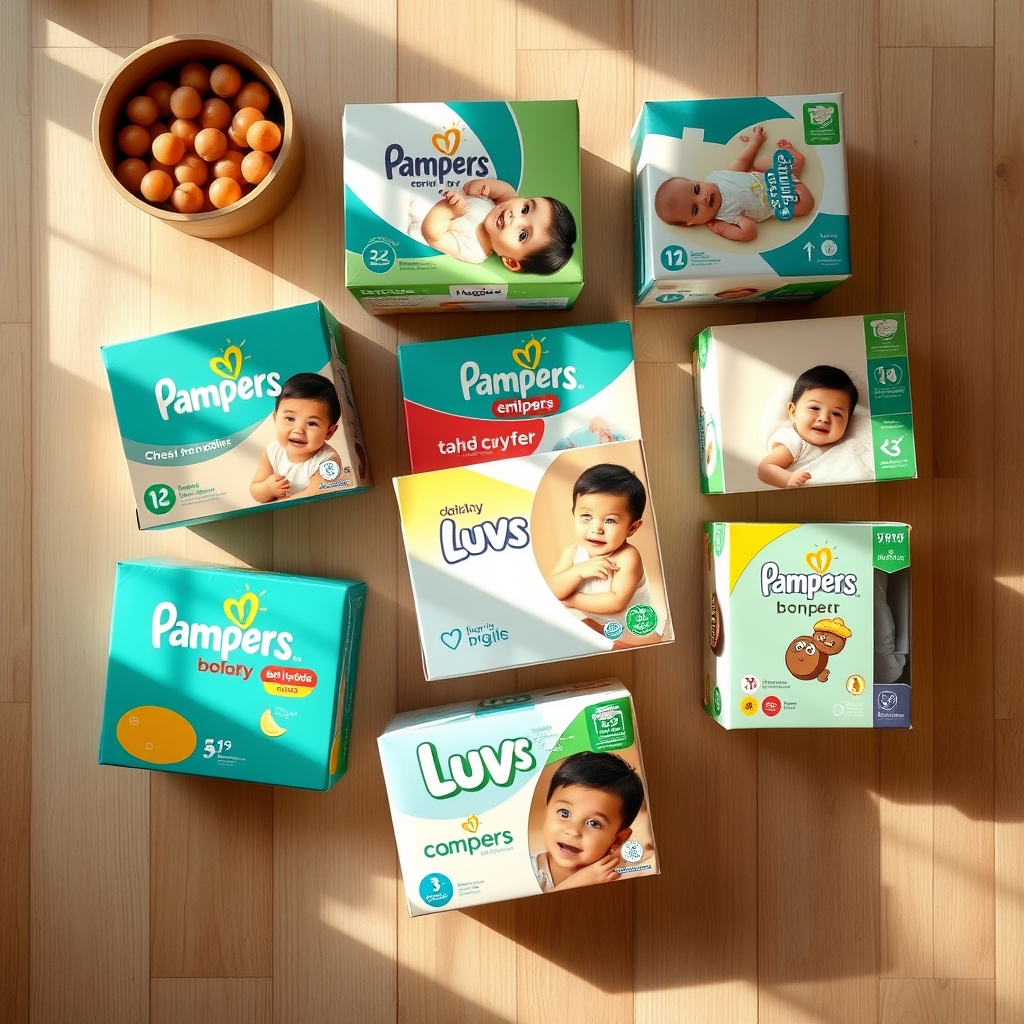
Below is a snapshot of 2024 pricing data from three major U.S. retailers—Target, Walmart, and Costco—combined with a leading UK retailer (Tesco) for perspective. Prices are listed as the “regular price” (non-sale) for the most common size for each brand. All figures are rounded to the nearest cent (U.S.) or penny (U.K.) and reflect the unit cost (CPU) after any manufacturer coupons are applied. This table illustrates how significantly prices can vary even for the same brand and size across different retailers.
Brand
Size (Typical newborn)
Retailer
Package count
Total price (USD)
CPU (USD)
Pampers
Newborn (NB)
Target
84
$33.99
$0.40
Pampers
Newborn (NB)
Walmart
84
$30.97
$0.37
Pampers
Newborn (NB)
Costco (bulk)
190
$58.99
$0.31
Huggies
Newborn (NB)
Target
84
$32.99
$0.39
Huggies
Newborn (NB)
Walmart
84
$29.99
$0.36
Huggies
Newborn (NB)
Costco (bulk)
190
$55.99
$0.29
Luvs (store brand)
Newborn (NB)
Walmart
84
$23.99
$0.29
Luvs (store brand)
Newborn (NB)
Target
84
$24.99
$0.30
Eco-Leaf (eco-friendly)
Newborn (NB)
Amazon
84
$38.95
$0.46
Eco-Leaf (eco-friendly)
Newborn (NB)
Direct-to-consumer
140
$59.99
$0.43
Key takeaways from the table:
Bulk purchases at wholesale clubs (Costco, Sam’s Club) consistently deliver the lowest CPU, often under $0.30 per diaper. This is especially true for larger sizes where the overall package count is much higher.
Store brands such as Luvs, Target's Up & Up, or Tesco's Fred & Flo often hover around $0.29-$0.30, making them competitive with name brands when you factor in performance and quality, which has improved significantly over the years.
Eco-friendly diapers tend to be 15-25% more expensive per unit, but many families accept the premium for reduced environmental impact or specific material preferences.
Retailer promotions (e.g., Target’s “Buy 2, Get 1 Free” or Amazon's "Clip Coupon") can dramatically lower CPU if you can store the extra boxes. Keep an eye out for these cyclical deals.
Comparing CPU across brands helps you spot the real deal, not just the lowest sticker price.
How size, store, and bulk affect diaper prices
Diaper pricing is not static; it shifts with the baby’s growth. Most brands label sizes by weight range (e.g., Newborn 0-10 lb, Size 1 8-14 lb). As the baby gains weight, the number of diapers per pack usually decreases for the same price point, but the CPU can either rise or fall depending on several factors. This dynamic means you can't assume a larger size is always a better value per diaper without checking the CPU.
Size impact: A Size 1 pack of 84 diapers often costs $2-$4 more than a Newborn pack, yet the CPU may be lower because the individual diapers are larger and contain more absorbent material, making them more cost-efficient to produce in bulk. As you move into larger sizes like Size 3 or 4, the CPU typically drops further, reflecting economies of scale in manufacturing and packaging. However, once you hit the largest sizes (Size 6 or 7), the demand is lower, and pack counts decrease, which can sometimes cause the CPU to creep back up. It’s a delicate balance of material cost, demand, and packaging efficiency.
Store influence: Big-box retailers (Walmart, Target) compete on price and frequently run coupons that shave $1-$3 off a pack, especially when tied to store loyalty programs. Membership clubs (Costco, Sam’s Club) require a yearly fee but reward bulk shoppers with the lowest CPU on large cases of diapers, making the membership worthwhile for many families. Online marketplaces (Amazon, Chewy) sometimes offer “Subscribe & Save” discounts—up to 15% off recurring orders—though shipping costs can offset savings if you’re not careful or if you don't have a Prime membership. Always factor in total cost, including shipping and membership fees.
Bulk buying: Buying a 190-count pack at Costco can cut your CPU by 20-30% compared with a standard 84-count pack. The trade-off is storage space; many families keep a rotating stock in a climate-controlled closet to avoid moisture damage. It's also wise to avoid buying too much of one size, as babies grow quickly. A good strategy is to buy one or two bulk packs of the *next* size up once your baby is comfortably in their current size, ensuring you’re ready for the growth spurt without over-investing in a size they might quickly outgrow.
A 2023 market analysis by Statista reported that the average U.S. household spends $1,500-$2,000 on diapers in the first year, with bulk shoppers saving roughly $300-$400 by purchasing larger packs early. In the U.K., a similar study from the Office for National Statistics (ONS) found that families buying store-brand diapers saved an average of £120 per year. Understanding these dynamics lets you plan purchases strategically: buy Newborn size in small packs while you’re still figuring out fit, then switch to larger, bulk packs once you know the baby’s weight range and preferred brand.
Navigating Diaper Registries and Funds
As expecting parents, the sheer volume of diapers your baby will need can feel overwhelming. Diaper registries and diaper funds offer fantastic ways to offset this significant expense, allowing friends and family to contribute to a practical and much-needed item. Planning for these early can make a substantial difference to your budget.
A diaper registry works much like a traditional baby registry, but it focuses specifically on diapers. You can list various brands, sizes, and types (disposable, cloth, eco-friendly) that you prefer. Many online retailers and baby stores offer this option. When setting one up, consider diversifying the sizes you register for. While newborns use a lot of diapers, they quickly grow out of the smallest sizes. Asking for a mix of Newborn, Size 1, and especially Size 2 and 3 can prevent you from being overstocked on one size and understocked on others. It's also helpful to include a note explaining your preference for CPU-conscious buying, guiding gift-givers towards value packs.
For those who prefer not to receive physical boxes of diapers, a "diaper fund" is an excellent alternative. This allows guests to contribute monetary gifts directly towards diaper purchases, giving you the flexibility to buy exactly what you need, when you need it, and from wherever offers the best CPU. Many baby registry platforms now integrate cash fund options, making it easy for friends and family to contribute. This approach is particularly useful if you're still exploring brands or if you live in an area where storage space for bulk diaper purchases is limited. It also empowers you to take advantage of sales and bulk discounts as they arise, maximizing every dollar contributed.
How to use a diaper budget calculator effectively
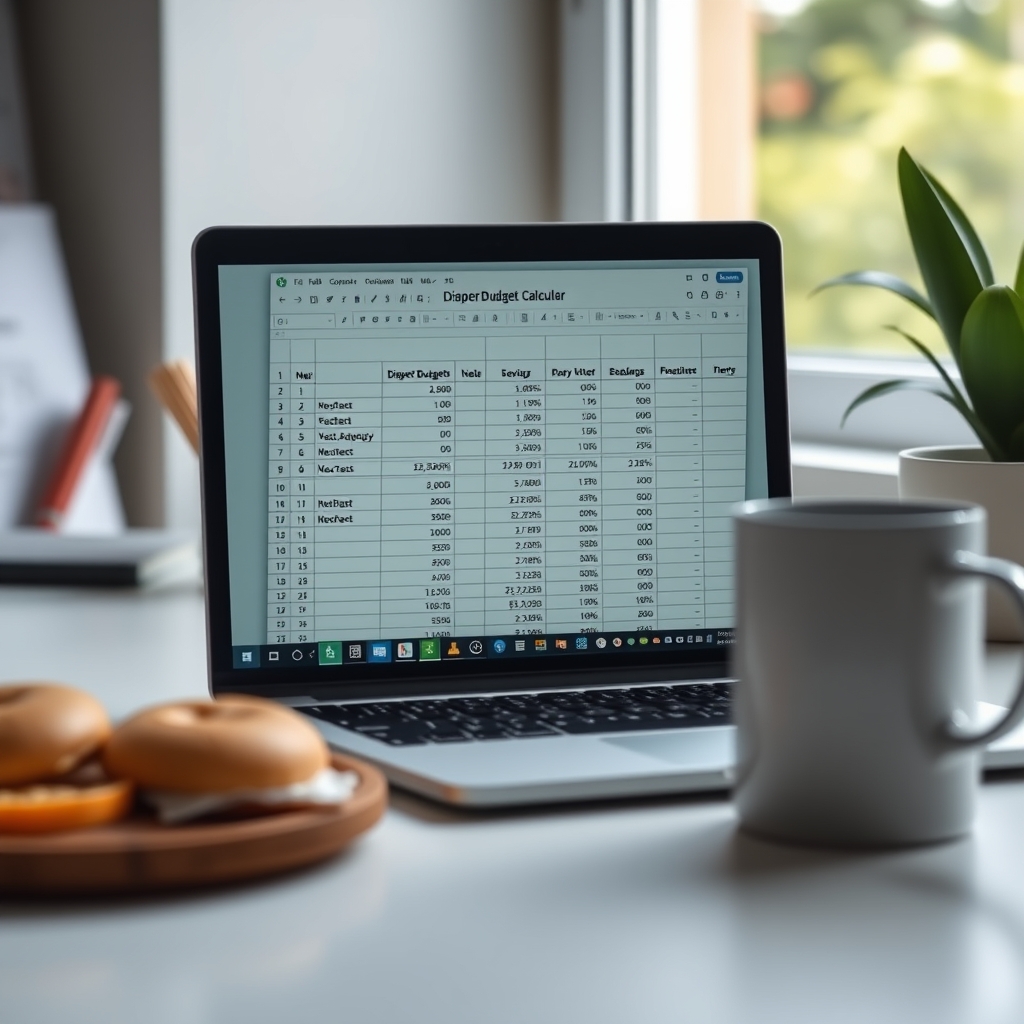
Numbers become meaningful when you feed them into a budgeting tool. Our Diaper Budget Calculator lets you input your baby’s age, daily diaper usage, preferred brand, and the store you shop at. The calculator instantly outputs:
Estimated monthly spend
Projected annual cost
Suggested bulk purchase schedule
Potential savings if you switch to a lower-CPU brand
Here’s a quick walk-through:
Enter your baby’s age. The tool uses AAP usage curves (newborn ≈ 10-12 diapers/day, 3-month ≈ 8-10, 6-month ≈ 6-8, 12-month ≈ 4-6) to estimate daily consumption. Adjust this if your baby's usage differs.
Select a brand and size. Choose from a dropdown that includes the CPU data shown in our table above. This step is crucial for comparing apples to apples.
Pick your retailer. The calculator stores average CPU for Target, Walmart, Costco, and an “online average” for Amazon. If your store isn't listed, you can input a custom CPU.
Adjust for coupons or subscriptions. Enter a percent discount (e.g., 10% off a manufacturer coupon) to see the immediate impact on monthly cost. This helps you factor in real-world savings.
Review the output. The calculator highlights the cheapest combination and flags when a bulk purchase could reduce your CPU by more than 15%. Pay attention to these alerts!
The tool also lets you export the data to a spreadsheet, making it easy to track price changes over time. If you notice a retailer’s CPU creeping upward, you can quickly re-run the calculation with an alternative store or brand. This proactive approach ensures you're always getting the best deal. Many parents find it helpful to check the calculator every few months as their baby grows and diaper needs change, or before major shopping trips.
Using a spreadsheet version of the calculator helps you spot trends and plan bulk purchases.
Average monthly diaper expenses by baby’s age and size
Below is a practical guide based on AAP usage estimates and the average CPU for a mid-range brand (≈ $0.35 per diaper). These figures are illustrative; your exact spend will vary with the brand you choose, the specific deals you capture, and your baby's individual needs. This table provides a useful benchmark for anticipating your monthly expenses as your baby grows.
Age (months)
Typical size
Diapers per day
CPU (USD)
Monthly cost (USD)
0-1
Newborn (NB)
10-12
$0.35
$105.00 - $126.00
2-3
Size 1
8-10
$0.35
$84.00 - $105.00
4-6
Size 2
6-8
$0.33
$59.40 - $79.20
7-9
Size 3
5-6
$0.32
$48.00 - $57.60
10-12
Size 4
4-5
$0.30
$36.00 - $45.00
13-18
Size 5
3-4
$0.28
$25.20 - $33.60
Even modest adjustments—switching from a $0.35 CPU to $0.30—can save $15-$20 per month during the newborn phase, a period when diaper usage is highest. That’s why many families prioritize finding the lowest-CPU options early on. As your baby transitions to fewer daily changes, the absolute savings per month decrease, but the percentage savings from smart shopping remain valuable. Consider these figures as a starting point for your personal budgeting, always aiming to optimize for both cost and comfort.
The Environmental Cost of Diapers: Disposables vs. Cloth
Beyond the financial implications, many parents weigh the environmental impact of their diaper choices. Both disposable and cloth diapers come with their own set of ecological footprints, and understanding these can help you align your budget with your values.
Disposable diapers, while convenient, contribute significantly to landfill waste. The average baby uses between 5,000 and 6,000 disposable diapers before potty training, most of which end up in landfills where they can take hundreds of years to decompose. The manufacturing process for disposables also consumes considerable resources, including wood pulp, plastics, and chemicals, and requires energy for production and transportation. While some brands are developing more biodegradable or plant-based options, these often come with a higher CPU, as noted in our comparison table.
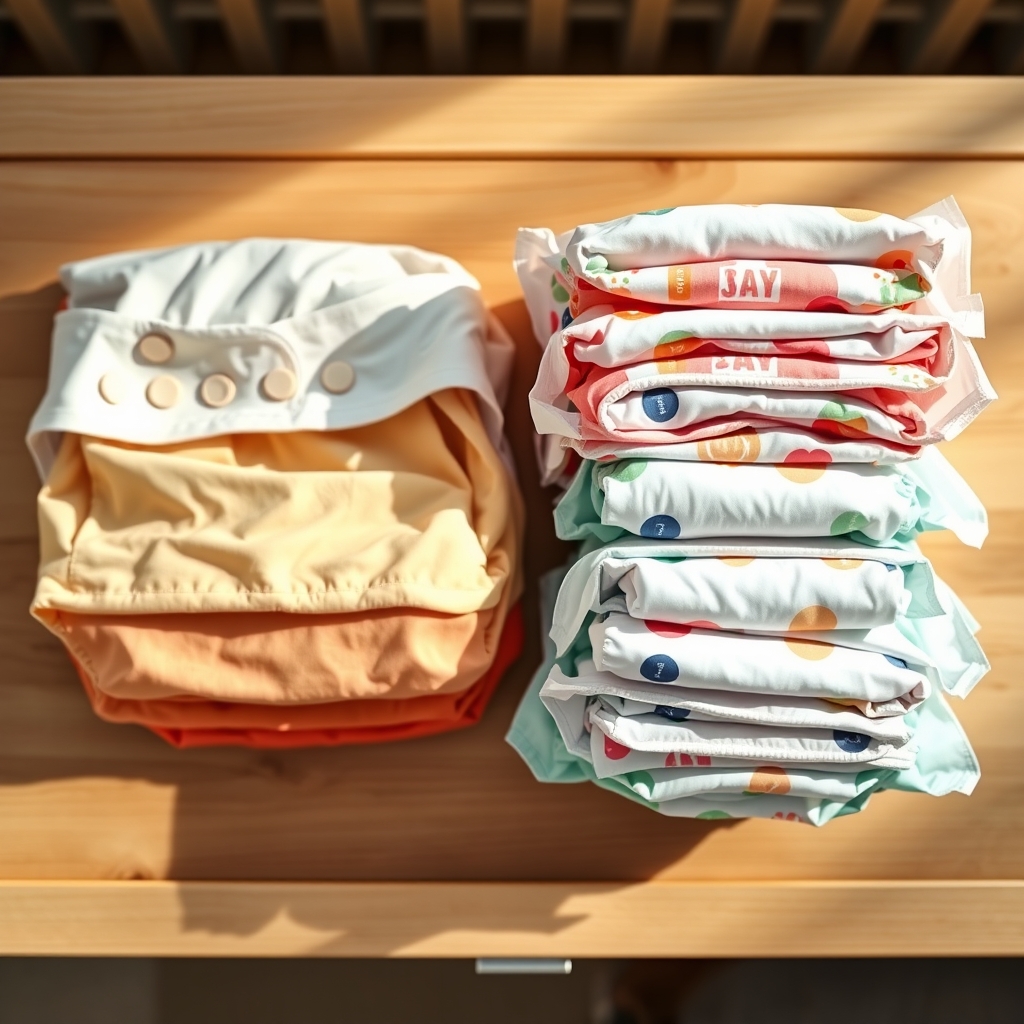
Cloth diapers, on the other hand, eliminate landfill waste from the diapers themselves but introduce other environmental considerations. The primary impact comes from the water and energy used for washing. A 2008 study by the UK Environment Agency suggested that, depending on washing habits, the environmental impact of cloth diapers could be comparable to or even higher than disposables if not managed efficiently (e.g., washing full loads at lower temperatures, air-drying). However, many modern cloth diapering practices, combined with eco-friendly detergents and energy-efficient machines, can significantly reduce this footprint. The upfront investment in cloth diapers (around $400-$600 for a full set) is substantial, but over time, they can be much more cost-effective than disposables, especially if used for multiple children. For families looking to reduce their environmental impact, a hybrid approach—using cloth at home and disposables for outings—can be a practical and budget-friendly compromise.
Consider both the financial and environmental costs when choosing between disposable and cloth diapers.
Tips for saving money on diapers
Saving on diapers isn’t just about buying the cheapest brand; it’s about combining smart shopping tactics with thoughtful product choices. By implementing a few key strategies, you can significantly reduce your monthly diaper expenses without compromising on quality or convenience.
1. Hunt for coupons and store promotions
Manufacturers issue weekly coupons that can be stacked with store sales. Apps like RetailMeNot or the store’s own loyalty program often feature “buy one, get one 50% off” offers for diaper packs. When you pair a 10% manufacturer coupon with a 20% store discount, you can shave up to $5 off an 84-count pack, sometimes even more. Always check the fine print for exclusions or limits, and remember that digital coupons are often loaded directly to your loyalty card, making them easy to use. Sign up for email newsletters from your favorite brands and stores to get alerts on new promotions.
2. Subscribe & Save or automatic re-order discounts
Amazon’s Subscribe & Save program gives a 15% discount on recurring diaper orders, plus free shipping for Prime members when you subscribe to 5 or more items. Similarly, Walmart’s “Auto-Ship” option offers 10% off each shipment. The key is to set a delivery cadence that matches your usage rate, so you avoid over-stocking or running out. You can typically adjust delivery dates and quantities easily, so monitor your baby’s growth and usage to keep your subscription optimized. Many parents find this a convenient way to lock in savings and avoid last-minute trips to the store.
3. Bulk purchase at wholesale clubs
Costco’s 190-count packs of Pampers and Huggies consistently deliver the lowest CPU. Even after accounting for the annual membership fee, the per-diaper savings outweigh the cost for most families. If you don’t have a membership, consider sharing a bulk purchase with a friend or neighbor and splitting the cost, or asking a member to buy for you. Sam's Club also offers similar bulk pricing. These clubs are particularly beneficial for larger sizes, where the total diaper count per box is much higher.
4. Explore store brands
Brands like Luvs (Walmart), Up & Up (Target), and Mama Bear (Amazon) are often praised for “good enough” absorbency at a lower price point. The Consumer Reports 2023 diaper test gave Luvs an “acceptable” rating for leakage and skin-friendliness, making it a safe budget option. Many store brands have significantly improved their quality and features over the years, often mimicking the technology of premium brands at a fraction of the cost. Don't be afraid to try a small pack of a store brand; you might be pleasantly surprised by the performance and the savings.
5. Consider eco-friendly alternatives wisely
Cloth diapers eliminate the per-diaper cost entirely but introduce laundry expenses and an upfront investment of $400-$600 for a full set. If you’re environmentally conscious, a hybrid approach—using cloth for nighttime and disposables for daytime—can reduce overall spend while still cutting landfill waste. Modern cloth diapers are far more user-friendly than their predecessors, with options like all-in-ones, pocket diapers, and covers that make washing and changing simpler. Research local cloth diaper services if you prefer not to do the laundry yourself, though these will add to your monthly cost.
6. Time your purchases
Major sales events—Black Friday, Cyber Monday, and post-holiday clearances—often include deep discounts on diaper bundles. Retailers also run “back-to-school” promotions in August that feature extra coupons. Mark your calendar and set price alerts so you can pounce when the price dips. Stocking up during these periods, especially on larger sizes your baby will eventually grow into, can lead to significant long-term savings. Just ensure you have adequate, dry storage space.
7. Use price-comparison apps
Apps like Flipp aggregate weekly flyers from multiple retailers, letting you compare CPU across stores without opening each website. Some apps even let you scan a barcode in-store to instantly see the online price, helping you decide whether to buy on the spot or wait for a sale. Google Shopping and other online comparison tools can also be invaluable for finding the lowest online CPU, especially for lesser-known or eco-friendly brands. Make this a quick habit before heading to the store.
Tracking diaper prices across retailers (online vs. in-store)
Consistency is key. Prices can vary dramatically between online listings and in-store shelf tags, especially when a retailer runs an “online-only” coupon or a flash sale. Developing a routine for tracking these fluctuations will ensure you’re always getting the best deal and making data-driven purchasing decisions.
Set a weekly price-check reminder. Spend 10-15 minutes on Sunday scanning the flyers of your top three stores (e.g., Target, Walmart, Costco) or checking their websites. Note the CPU for the size you need. This quick check can save you hours of driving around later.
Log the data. Use a simple spreadsheet with columns for date, retailer, brand, size, pack count, total price, and CPU. This creates a historical record you can reference later, helping you identify true sales versus regular pricing. Our Diaper Budget Calculator can help you start this process.
Cross-reference with coupons. When you receive a manufacturer coupon, update the total price column to reflect the discount, then recalculate CPU. This step is critical because a coupon can transform an average deal into a fantastic one.
Validate in-store before buying. Prices on flyers can differ from actual shelf prices due to regional pricing, expired promotions, or stock issues. A quick scan of the barcode with a price-check app or your retailer's app confirms the exact CPU at that moment.
Leverage online price-match policies. Some retailers (e.g., Walmart, Target) will match a lower online price from a competitor if you show proof at checkout. Keep a screenshot of the lower price on your phone and politely ask the associate to honor the match. This can save you a trip to another store.
Seasonal re-evaluation. After a major sale, revisit your spreadsheet to see if the new CPU justifies a bulk purchase. If the CPU stays low for at least three weeks, it’s usually safe to stock up. Also, re-evaluate your baby’s size needs every few months to ensure you're buying the correct size and not wasting money on diapers that are too small or too large.
By turning price monitoring into a routine habit, you’ll catch savings that many busy parents miss. The effort pays off quickly—most families report a 10-15% reduction in diaper spend after the first month of systematic tracking, freeing up funds for other baby essentials or family treats.
From our medical team: While saving money is important, never compromise on diaper fit or skin health. A diaper that’s too tight can cause irritation, chafing, and even contribute to yeast infections, while a diaper that leaks frequently may increase the risk of diaper rash and discomfort. Choose a brand that meets both your budget and your baby’s comfort needs, and always keep a few extra sizes on hand for rapid growth spurts. If you notice any persistent rash or skin irritation, consult your pediatrician.
🔢 Ready to crunch your numbers? Use our Diaper Budget Calculator for a personalized result in seconds.
Myth vs. fact
Myth: All disposable diapers cost the same per diaper, so the cheapest pack is always the best deal.
Fact: CPU varies widely by brand, size, and retailer. A larger pack with a higher sticker price often has a lower CPU, delivering better value. Always calculate the CPU to determine the true cost-effectiveness.
Myth: Eco-friendly diapers are prohibitively expensive for most families.
Fact: While eco-friendly disposables carry a modest premium (≈ 15-25% higher CPU), many families offset the cost by buying in bulk, using coupons, or mixing cloth and disposable options. The premium is often acceptable to those prioritizing sustainability or specific material sensitivities.
Myth: Store-brand diapers are low-quality and cause more diaper rash.
Fact: Independent testing (Consumer Reports 2023) shows several store brands perform comparably to name brands in leak protection and skin-friendliness, making them a safe budget choice. Many parents find they work just as well as premium brands for their baby.
Myth: Once my baby reaches a certain weight, I should immediately size up to the next diaper size.
Fact: Diaper sizing is more about fit than just weight. While weight ranges are a guide, a diaper should fit snugly around the waist and thighs without leaving red marks, and should cover the baby's bottom completely. If you're experiencing frequent leaks or red marks, it's time to size up, regardless of the stated weight range.
Key takeaways
Calculate cost per unit (CPU) to accurately compare packs of different sizes and brands.
Bulk purchases at wholesale clubs (Costco, Sam's Club) usually deliver the lowest CPU, often under $0.30 per diaper.
Use a diaper budget calculator to forecast monthly spend, identify savings opportunities, and plan for future purchases.
Take advantage of manufacturer coupons, store sales, and subscription discounts to further reduce CPU.
Track prices weekly in a simple spreadsheet or app to catch price drops and plan bulk buys strategically.
Explore store brands and consider a hybrid approach with cloth diapers to optimize both budget and environmental impact.
Prioritize diaper fit and skin health over absolute lowest cost; a comfortable baby means fewer issues like diaper rash.
Frequently asked questions
What is the average cost of diapers per month?
The average U.S. family spends $105-$126 per month on disposable diapers during the newborn stage (10-12 diapers/day), according to updated usage estimates and a 2023 Consumer Reports survey. This cost generally decreases as the baby grows and uses fewer diapers daily.
Which diaper brand offers the best value?
Best value is determined by CPU, not just brand name. Bulk-purchased Costco packs of Pampers or Huggies typically cost under $0.30 per diaper, making them among the most cost-effective options for many families. Store brands also offer competitive CPUs.
How can I calculate my monthly diaper budget?
Use the formula: CPU × diapers used per day × 30 days. Plug your baby’s daily usage (e.g., 10-12 diapers for a newborn) and the CPU of your chosen pack into a spreadsheet or a diaper budget calculator. Don't forget to factor in any discounts.
Are store-brand diapers cheaper than name-brand diapers?
Store brands like Luvs and Up & Up often have a CPU comparable to, or even lower than, name brands, especially when you factor in coupons and sales. They can be a cheaper alternative without sacrificing performance, as quality has significantly improved.
When is the best time to buy diapers on sale?
Major sales events—Black Friday, Cyber Monday, post-holiday clearances, and back-to-school promotions (August)—usually feature the deepest discounts on diaper bundles. Timing your bulk purchases around these events can lead to substantial savings.
How many diapers does a baby use per day by age?
Newborns (0-1 mo) use about 10-12 diapers per day; 2-3 mo babies use ~8-10; 4-6 mo babies use ~6-8; 7-9 mo babies use ~5-6; and 10-12 mo babies use ~4-5. These numbers decline gradually as the baby grows and approaches potty training.
Are larger diaper sizes always more expensive per unit?
Not necessarily. While the total price of a pack for a larger size might be higher, the CPU often decreases as diaper sizes increase due to economies of scale in manufacturing. However, for the very largest sizes (6 or 7), CPU can sometimes creep up again due to lower demand and smaller pack counts. Always check the CPU.
What's the difference between a "value pack" and a "jumbo pack"?
"Jumbo pack" typically refers to the smallest standard package size, often found in drugstores, while "value pack," "super pack," or "mega pack" indicates a larger package with more diapers, offering a better CPU. The largest packs are usually found at wholesale clubs.
When to call your doctor
If you notice persistent diaper rash that doesn’t improve after a few days of consistent diaper changes, airing, and appropriate creams, contact your pediatrician. Also seek medical advice if your baby develops skin irritation with blistering, open sores, or signs of infection (redness, swelling, warmth, pus, or fever). Additionally, if your baby’s diaper output (wet or dirty diapers) suddenly drops dramatically, as this could signal dehydration or other health concerns, it's important to contact your doctor immediately. This article provides general information and is not a substitute for personalized medical advice.
References
American Academy of Pediatrics. “Diaper Use and Skin Health.” AAP Clinical Guidelines, 2022.
Consumer Reports. “Best Diapers of 2023.” Independent testing of leak protection and skin friendliness, 2023.
Statista. “Average Monthly Diaper Spending in the United States, 2023.” Market analysis data, 2023.
Office for National Statistics (UK). “Household Expenditure on Baby Products, 2023.” Government statistical release, 2023.
US Consumer Product Safety Commission (CPSC). “Diaper Safety and Material Standards.” Regulatory overview, 2021.
RetailMeNot. “Manufacturer Coupon Aggregation for Diapers.” Industry resource, accessed 2024.
Amazon. “Subscribe & Save Program Details.” Service terms, 2024.
Costco Wholesale. “Bulk Diaper Pricing Overview.” Member pricing guide, 2024.
Eco-Leaf. “Sustainability Report and Pricing.” Company publication, 2024.
Flipp. “Price Comparison App for Diapers.” User guide, 2024.
UK Environment Agency. "An updated life cycle assessment study for disposable and reusable nappies." Report, 2008.
Not sure about the label on Diaper Brand Price Tracker Budget Calculator By Size And Store products?
Snap the ingredients list and SafeFilter checks every ingredient for your stage — only 3 free scans this month, then you're locked until reset. Unlimited from $7/mo or $50/yr.
When Shubhra Mishra was expecting her first child in 2016, she was overwhelmed by conflicting food advice — one site said yes, another said never. By the time her second baby arrived in 2019, she realized millions of mothers face the same confusion.
That sparked a five-year journey through clinical nutrition papers, cultural diets, and expert conversations — all leading to BumpBites: a calm, compassionate space where science meets everyday motherhood.
Her long-term vision is to build a global community ensuring safe, supported, and free deliveriesfor every mother — because no woman should face pregnancy alone or uninformed. 🌿
🌍 Stand with mothers, shape safer guidance
Join a small circle of experts who review BumpBites articles so expecting parents everywhere can decide with confidence.