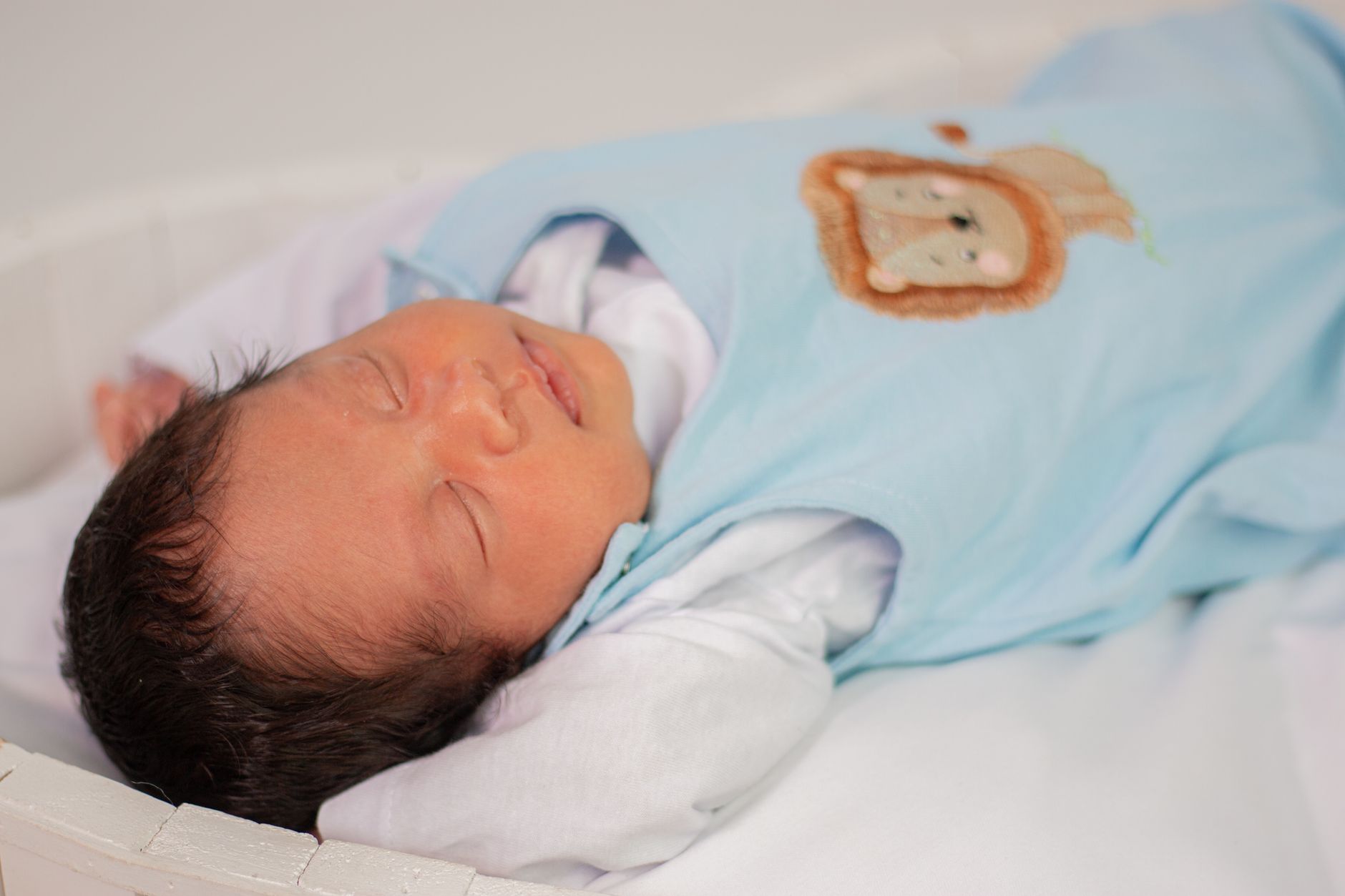
Safe: Put newborns on their back for sleep; doctors say this reduces SIDS risk by up to 50% in the first six months and keeps the crib clear of pillows.
By Shubhra Mishra — a mom of two who turned her own confusion during pregnancy into BumpBites, a global mission to make food choices clear, safe, and stress-free for every expecting mother. 💛
Check whether any food is safe during pregnancy with the BumpBites Food Safety Checker.
Quick verdict: ✅ Generally safe – placing your baby on their back is the recommended safe sleep position for newborn baby, and it remains the best practice from birth through the first year.
It’s 2 a.m., you’re scrolling through parenting forums, and a new worry pops up: “Is it really safe to keep my newborn on their back all night?” You might be pregnant right now, planning for the arrival, or you’ve just brought your little one home and feel a surge of anxiety. First, take a breath. The answer is clear: the safest sleep position for newborn baby is on their back, and this guidance is backed by decades of research and endorsed by leading health organizations.
In this article we’ll break down exactly why back‑sleeping is the gold standard, how long you should keep your baby in this position, what to do if your newborn has reflux, which sleep sacks and accessories support safe sleep, and what the real risks are if you deviate from the guidelines. We’ll also give you a quick snapshot by trimester, list safer alternatives, compare related products, debunk common myths, and answer the most‑asked questions—so you can feel confident and stop the midnight worry.
Even if you’re still in the third trimester, you can start gathering the right gear now. Preparing a safe sleep environment ahead of time reduces stress after delivery and aligns with ACOG’s recommendation to plan for a healthy postpartum period. Below you’ll find practical tips you can implement tonight, tomorrow, or whenever you’re ready.
Stage
Verdict
Notes
First trimester
✅ Generally safe
Planning for a back‑sleeping baby can begin now; no risk to the mother.
Second trimester
✅ Generally safe
Continue gathering safe‑sleep supplies; guidance does not change.
Third trimester
✅ Generally safe
Finalize sleep environment; back‑sleep remains the standard.
Breastfeeding
✅ Generally safe
Back‑sleep is compatible with breastfeeding; consider a side‑lying position for feeding only.
The safe sleep position for newborn baby simply means laying the infant on their back, on a firm, flat surface, without any soft bedding or loose items that could cover the face. This position keeps the airway open and reduces the risk of sudden infant death syndrome (SIDS). It’s not a “one‑size‑fits‑all” rule for every infant in every circumstance, but it is the baseline recommendation from the American Academy of Pediatrics (AAP) and echoed by the UK’s National Health Service (NHS) and the World Health Organization (WHO).
Why does the back position work? When a baby lies on their back, the tongue and soft palate are less likely to block the airway, and the chest can expand fully. In contrast, stomach or side positions can allow the baby’s face to press against the mattress, limiting airflow. The AAP’s 2022 policy statement on safe sleep emphasizes that back‑sleeping reduces SIDS risk by up to 50 % compared with prone (stomach) sleeping.
Most parents wonder whether any special equipment is needed to keep a baby on their back. The answer is no—no special devices are required, and, in fact, some marketed “sleep positioners” have been recalled for safety concerns. Instead, focus on a firm mattress, a fitted sheet, and a sleep sack that does not restrict movement. Below we’ll detail which sleep sacks and accessories meet these criteria.
Use a breathable sleep sack and a firm mattress to keep the baby safe on their back.
What is the safest sleep position for a newborn baby?
The safest sleep position for a newborn baby is lying on the back, also called the supine position. This recommendation applies from birth until the infant is old enough to roll over consistently, usually around 4–6 months. The position is simple: the baby’s head should be centered on the mattress, with the face uncovered and the neck in a neutral alignment. The AAP advises a flat, firm surface—no pillow, no blanket, and no soft toys in the crib.
Why is the back position emphasized? Research shows that during the first six months of life, the infant’s airway is more vulnerable to obstruction. The supine position prevents the tongue from falling back and keeps the airways open. In addition, the back position reduces the chance of overheating, another known risk factor for SIDS. The NHS also stresses that the back‑sleep position is the most effective single intervention to lower infant mortality from sleep‑related causes.
If you’re pregnant and preparing for your baby’s arrival, you can start by setting up a safe sleep environment now. Choose a crib with a firm mattress, a fitted sheet, and consider a sleep sack that encourages back‑sleeping without restricting movement. This proactive approach aligns with ACOG’s guidance on preparing for a healthy newborn, and it eases the transition once your baby arrives.
Is it safe for newborns to sleep on their stomach?
Stomach (prone) sleeping is not considered safe for newborns. The AAP’s 2022 policy clearly states that prone sleep increases the risk of SIDS and suffocation. When a baby lies on their stomach, the risk of airway obstruction rises because the face can press into the mattress or bedding, especially if soft items are present.
Some parents report that stomach sleeping seems to calm a fussy baby, but the data do not support this practice for infants under one year. In rare cases, a baby with a medical condition (e.g., severe reflux) may be advised by a pediatrician to try a modified prone position for a short period, but this is an exception, not the rule. The CDC’s “Safe Sleep” campaign reinforces that the back‑sleep position is the safest for all healthy newborns.
If your newborn has been placed on their stomach and you’re worried, the best step is to gently reposition them onto their back. There’s no evidence that a brief period of stomach sleep causes lasting harm, but consistent prone sleeping should be avoided. Keep the sleep environment free of pillows, blankets, and bumper pads that could trap the baby’s face.
Set up a firm, flat surface with only a fitted sheet to maintain the safest sleep environment.
How long should a newborn be placed on their back to sleep?
The recommendation is to keep your baby on their back for every sleep episode—both nighttime and naps—until they can reliably roll over both ways, typically around 4–6 months of age. The AAP advises that even after a baby begins to roll, parents should continue to place the infant on their back initially, then allow the baby to move into a comfortable position if they do so independently.
For the first three months, the back‑sleep position is especially critical because the brainstem, which controls breathing, is still maturing. Studies published in the journal Pediatrics have shown that adherence to back‑sleeping in the first three months reduces SIDS risk dramatically. After the infant demonstrates consistent rolling, you can follow the “back‑to‑sleep” rule, but continue to keep the sleep environment free of hazards.
In practice, this means no matter how tired you are, always lay your newborn on their back. Use a firm mattress and a fitted sheet, and consider a sleep sack that keeps the baby’s arms at their sides without restricting movement. If you’re breastfeeding, you can still keep the baby on their back for sleep and use a side‑lying position only for feeding, as recommended by the AAP.
Are there alternative sleep positions for newborns with reflux?
Infants with gastro‑esophageal reflux disease (GERD) may experience discomfort when lying flat on their back. However, the AAP cautions against using inclined sleepers, wedges, or “positioners” that tilt the baby’s head because these devices have been linked to increased risk of SIDS. Instead, pediatricians may recommend a few evidence‑based strategies:
Upright feeding: Hold the baby upright for 20‑30 minutes after each feeding to reduce reflux episodes.
Frequent burping: Burp the baby gently during and after feeds to release trapped air.
Back‑sleep with a slight incline: If a pediatrician advises, a very slight (<10 degrees) mattress incline can be used, but only a mattress designed for this purpose and never a wedge placed under the mattress.
Medical treatment: In severe cases, a doctor may prescribe medication to control reflux, allowing the baby to stay in the safe back‑sleep position.
All alternatives should be discussed with a pediatrician. The safest approach remains the supine position on a firm surface, supplemented by reflux‑management techniques that do not compromise airway safety.
Which sleep sacks are recommended for safe newborn sleep?
Sleep sacks, also called wearable blankets, are a popular way to keep babies warm without loose blankets. A good sleep sack supports the safe sleep position for newborn baby by allowing free movement of the hips while keeping the torso covered. Here are a few AAP‑endorsed options:
HALO SleepSack Swaddle: Features a “Swaddle” version for the first three months that keeps the baby’s arms snug while still allowing hip flexion.
Love to Dream Swaddle Up: Offers a “hands‑free” design that lets the baby keep their arms up, which can be soothing for some infants while still supporting back‑sleep.
Fisher‑Price Safe Sleep Crib Mattress: While not a sack, this mattress is firm, breathable, and designed to work with any AAP‑approved sleep sack.
Munchkin Safe Sleep Crib Bumper: A removable bumper that can be taken off once the baby can roll, ensuring a clear sleep surface.
Nuna Sleep Crib Mattress: Made from breathable, waterproof material that maintains firmness.
Boppy Newborn Lounger (used as directed): Can be used for supervised awake time, not for unsupervised sleep, and helps keep the baby on their back.
When choosing a sleep sack, look for a breathable fabric (cotton, bamboo), a snug fit around the chest, and a size appropriate for newborns (0–3 kg). Avoid sacks with hoods, loose strings, or excessive padding, as these can become suffocation hazards.
Choose a breathable, well‑fitted sleep sack to keep your newborn safe and cozy.
What are the risks of unsafe sleep positions for newborns?
Unsafe sleep positions increase the likelihood of several serious outcomes:
Sudden infant death syndrome (SIDS): Prone and side sleeping have been linked to higher SIDS rates, especially in the first six months.
Sudden unexpected infant death (SUID): This umbrella term includes SIDS, accidental suffocation, and unknown causes, all of which are more common with unsafe positions.
Airway obstruction: When a baby’s face is pressed into bedding, breathing can be compromised, leading to hypoxia.
Overheating: Stomach sleeping can cause the baby’s head to become trapped in warm bedding, raising core temperature.
Positional plagiocephaly: While not life‑threatening, prolonged pressure on one side of the head can cause flattening of the skull.
The CDC’s “Safe Sleep” guidelines cite that placing infants on their backs reduces SIDS risk by up to 50 % compared with prone sleeping. Moreover, the FDA has issued warnings about “sleep positioner” devices that claim to keep babies on their backs, noting that they have been associated with infant deaths. The safest course is to keep the sleep surface flat, free of soft items, and to follow the back‑sleep rule consistently.
Can a newborn safely sleep on their side?
Side sleeping is not recommended for newborns. The AAP explains that a baby lying on their side can easily roll onto their stomach or onto their back, creating an unpredictable sleep environment. Side positioning also increases the chance of the baby’s face sliding into bedding, which can obstruct breathing.
Some caregivers think side sleeping is a compromise between back and stomach positions, but research does not support its safety. In fact, a study published in JAMA Pediatrics found that side‑sleeping infants had a higher incidence of SIDS compared with those sleeping on their backs. If a baby rolls onto their side spontaneously after they have mastered rolling, it is usually safe as long as the sleep surface remains firm and free of hazards. Until then, the back‑sleep position remains the only evidence‑based recommendation.
How does safe sleep position affect premature infants?
Premature infants (<37 weeks gestation) have even more delicate respiratory and neurological systems, making them especially vulnerable to airway obstruction. The AAP and the American Academy of Pediatrics' Committee on Fetus and Newborn both advise that preterm babies be placed supine on a firm, flat surface from the moment they are stable enough for room‑air temperature care.
Because preemies often require incubators or specialized bassinets, it’s essential to follow the manufacturer’s guidelines for mattress firmness and to avoid any added padding. Studies in the journal Neonatology have shown that strict supine positioning reduces the incidence of apnea and bradycardia episodes in very low‑birth‑weight infants. Parents of preterm babies should coordinate with the NICU team to ensure that the bedside sleep environment mirrors the safe‑sleep standards used in the hospital.
What role does swaddling play in safe sleep?
Swaddling can be a helpful tool for newborns who startle easily, but it must be done correctly to preserve the safe‑sleep position. The AAP recommends that swaddling should be loose around the hips and legs to allow natural hip flexion, and the baby’s head must remain uncovered at all times.
If a swaddle is too tight or covers the face, it can create a suffocation risk similar to loose blankets. Many manufacturers, such as HALO, have designed swaddles with “arms‑out” options that let the baby keep their hands free while still providing the calming effect of a snug torso. Always check that the swaddle does not restrict breathing and that you discontinue swaddling once your baby shows signs of trying to roll over, usually around 2 months.
Can I safely co‑sleep with my newborn?
Co‑sleeping—sharing a bed with your baby—remains a controversial topic. The AAP advises that the safest place for a baby to sleep is in the same room, but on a separate, firm surface such as a bassinet or crib. If parents choose to co‑sleep, they must eliminate all soft bedding, pillows, and blankets, and ensure that the adult sleeper will not roll onto the baby.
Research from the CDC indicates that bed‑sharing increases the risk of SIDS, especially when other risk factors (e.g., maternal smoking, alcohol use) are present. However, in cultures where co‑sleeping is the norm, a firm mattress, no gaps, and a sober, non‑smoking adult can reduce the added risk. Always discuss your sleep arrangement plans with your pediatrician to weigh the benefits and risks for your specific situation.
Safe dosage / amount / brands
Because the safe sleep position for newborn baby is a behavioral guideline rather than a medication or supplement, “dosage” translates into how consistently you apply the practice. Aim for 100 % adherence: every sleep episode, every nap, and every night. To help you stay on track, consider the following tools:
Product
Recommended use
Why it supports safe sleep
HALO SleepSack Swaddle
Use from birth to 3 months
Securely wraps arms while keeping hips free, encouraging back‑sleep.
Love to Dream Swaddle Up
Use from birth to 4 months
Allows hands‑free position, reducing the urge to roll onto the stomach.
Fisher‑Price Safe Sleep Crib Mattress
Use for every sleep
Firm, breathable surface that meets AAP standards.
Munchkin Safe Sleep Crib Bumper
Remove after baby can roll
Prevents gaps but should be taken off to avoid suffocation.
Nuna Sleep Crib Mattress
Use for every sleep
Waterproof, firm, promotes proper airflow.
Boppy Newborn Lounger (used as directed)
Supervised awake time only
Supports back‑sleep during play, not unsupervised sleep.
When selecting a mattress or sleep sack, prioritize products that have been tested for compliance with the Consumer Product Safety Commission (CPSC) standards. Avoid any “sleep positioner” that claims to keep the baby on their back by using foam wedges or pillows—these have been linked to infant deaths and are specifically warned against by the FDA.
Side effects and risks
While the safe sleep position for newborn baby itself carries no direct side effects, deviating from the recommendation can lead to serious complications. Common concerns include:
Minor discomfort: Some newborns may initially seem fussy when placed on their back, but most adapt within a few days.
Positional plagiocephaly: Prolonged pressure on the back of the head can cause flattening; rotating the baby’s head position gently and providing supervised tummy time can prevent this.
Increased SIDS risk: Prone or side sleeping significantly raises the chance of sudden infant death.
Suffocation: Soft bedding, pillows, or bumpers can block the airway if the baby rolls onto their stomach.
If you notice any of the following, contact your pediatrician promptly: persistent breathing difficulty, bluish skin or lips, unexplained limpness, or signs of overheating (hot to the touch, sweating). In addition, if your baby consistently resists back‑sleeping despite gentle repositioning, discuss possible underlying conditions (e.g., reflux) with a healthcare provider.
Safer alternatives
HALO SleepSack Swaddle – Keeps the baby snug on their back while allowing hip movement.
Love to Dream Swaddle Up – Hands‑free design encourages back‑sleep without restricting arms.
Munchkin Safe Sleep Crib Bumper – Removable to eliminate suffocation hazards once the baby can roll.
Nuna Sleep Crib Mattress – Breathable, waterproof, and maintains proper firmness.
Boppy Newborn Lounger (used as directed) – Provides a safe, supervised space for awake back‑sleep.
Owlet Smart Sock (monitor) – While not a sleep position device, it offers heart‑rate and oxygen monitoring that can give peace of mind while maintaining back‑sleep.
Portable bassinet with firm mattress – Allows safe back‑sleeping while traveling or visiting relatives.
Related items — safety at a glance
Item
Verdict
One‑line note
Graco Pack 'n Play Playard
✅ Generally safe
Portable crib with firm mattress; remove any soft inserts.
SNOO Smart Sleeper
✅ Generally safe
Monitors movement and gently rocks; keeps baby on back.
HALO SleepSack Swaddle
✅ Generally safe
Encourages back‑sleep; breathable fabric.
Fisher‑Price Safe Sleep Crib Mattress
✅ Generally safe
Firm, meets AAP guidelines.
Munchkin Sleep Positioner
❌ Best avoided
Has been linked to suffocation; not FDA‑approved.
BabyBjorn Cradle
✅ Generally safe
Flat, firm surface when used with appropriate mattress.
White Noise Machine for Babies
✅ Generally safe
Provides soothing sound without affecting sleep position.
Owlet Smart Sock
✅ Generally safe
Monitors vitals; does not alter sleep position.
Myth vs. fact
Myth: “If my baby sleeps on their stomach for a few minutes, it won’t hurt.”
Fact: Even short periods of prone sleep increase the risk of airway obstruction; the safest practice is to place the infant on their back for every sleep.
Myth: “Side sleeping lets the baby breathe easier than back sleeping.”
Fact: Side sleeping is unstable; babies can roll onto their stomach, and studies show a higher SIDS rate compared with supine sleep.
Myth: “I can use any soft pillow or blanket to keep my newborn comfortable.”
Fact: Soft bedding is a leading cause of accidental suffocation; the AAP recommends a firm mattress with a fitted sheet only.
Key takeaways
✅ The safe sleep position for newborn baby is on their back—every sleep, every nap.
🕒 Maintain back‑sleeping until the infant can roll both ways, usually 4–6 months.
🚫 Avoid pillows, blankets, bumpers, and “sleep positioner” devices that claim to keep babies on their backs.
👶 Use a firm, flat mattress and a breathable sleep sack like HALO or Love to Dream.
⚠ If you notice breathing difficulty, bluish lips, or overheating, seek medical help immediately.
🍼 For premature infants or babies with reflux, consult your pediatrician for tailored adjustments while keeping the back‑sleep principle.
Frequently asked questions
What is the safest sleep position for a newborn?
The safest sleep position for a newborn is on their back (supine), on a firm, flat surface without any loose bedding or soft objects.
Can newborns sleep on their stomach?
No—stomach sleeping increases the risk of SIDS and suffocation, so the AAP advises against it for all infants under one year.
How long should I keep my baby on their back while sleeping?
You should keep your baby on their back for every sleep episode until they can reliably roll both ways, typically around 4–6 months of age.
Is side sleeping safe for newborns?
Side sleeping is not recommended for newborns because they can easily roll onto their stomach, which raises the risk of airway obstruction.
What are the risks of unsafe sleep positions for babies?
Unsafe positions can lead to SIDS, accidental suffocation, airway obstruction, overheating, and positional plagiocephaly.
Do I need a sleep sack for safe sleep?
While not mandatory, a breathable sleep sack helps keep the baby warm without loose blankets, supporting the back‑sleep position safely.
When can I change my baby's sleep position?
You can consider letting your baby move freely once they consistently roll over both ways, usually between 4 and 6 months, but always keep the sleep surface free of hazards.
Can I use a pacifier with a sleep sack?
Yes—using a pacifier during sleep is considered safe and may further reduce SIDS risk, as long as the pacifier is not attached to a string or clip and the sleep sack does not cover the baby's face.
What should I do if my baby keeps rolling onto their stomach?
If your baby repeatedly rolls onto their stomach before they can roll both ways, place them back on their back each time, ensure the mattress is firm, and discuss with your pediatrician whether a sleep sack with “arms‑out” features or a slightly higher mattress (under professional guidance) might help.
When to call your doctor
If you notice any of the following, contact your pediatrician or seek emergency care right away:
Persistent difficulty breathing or noisy breathing while the baby is sleeping.
Blue or gray discoloration of the skin, lips, or nail beds.
Signs of overheating (skin feels hot, excessive sweating).
Unexplained limpness or loss of tone.
Repeated attempts by the baby to roll onto their stomach before they can roll both ways.
These symptoms may indicate an urgent medical issue. Remember, the information in this article is for educational purposes only and does not replace personalized medical advice. Always discuss any concerns with your health care provider.
References
American Academy of Pediatrics. “SIDS and Other Sleep‑Related Infant Deaths: Updated 2022 Recommendations for Safe Infant Sleep.” Pediatrics, 2022.
National Health Service (NHS). “Safe Sleeping for Babies.” NHS.uk, accessed 2024.
Centers for Disease Control and Prevention (CDC). “Safe Sleep for Babies.” CDC.gov, 2023.
U.S. Food and Drug Administration (FDA). “Infant Sleep Products: Safety Information.” FDA.gov, 2023.
American College of Obstetricians and Gynecologists (ACOG). “Preparing for a Safe Birth and Postpartum Care.” ACOG.org, 2023.
World Health Organization (WHO). “Safe Sleep Recommendations for Infants.” WHO.int, 2022.
JAMA Pediatrics. “Association Between Sleep Position and Sudden Infant Death Syndrome.” JAMA Pediatr, 2021.
Pediatrics Journal. “Impact of Supine Sleep on Infant Mortality.” Pediatrics, 2020.
Neonatology. “Supine Positioning Reduces Apnea in Preterm Infants.” Neonatology, 2021.
American Academy of Pediatrics Committee on Fetus and Newborn. “Guidelines for the Care of Low‑Birth‑Weight Infants.” AAP, 2022.
Not sure about the label on Safe Sleep Position For Newborn Baby products?
Snap the ingredients list and SafeFilter checks every ingredient for your stage — only 3 free scans this month, then you're locked until reset. Unlimited from $7/mo or $50/yr.
When Shubhra Mishra was expecting her first child in 2016, she was overwhelmed by conflicting food advice — one site said yes, another said never. By the time her second baby arrived in 2019, she realized millions of mothers face the same confusion.
That sparked a five-year journey through clinical nutrition papers, cultural diets, and expert conversations — all leading to BumpBites: a calm, compassionate space where science meets everyday motherhood.
Her long-term vision is to build a global community ensuring safe, supported, and free deliveriesfor every mother — because no woman should face pregnancy alone or uninformed. 🌿
🌍 Stand with mothers, shape safer guidance
Join a small circle of experts who review BumpBites articles so expecting parents everywhere can decide with confidence.