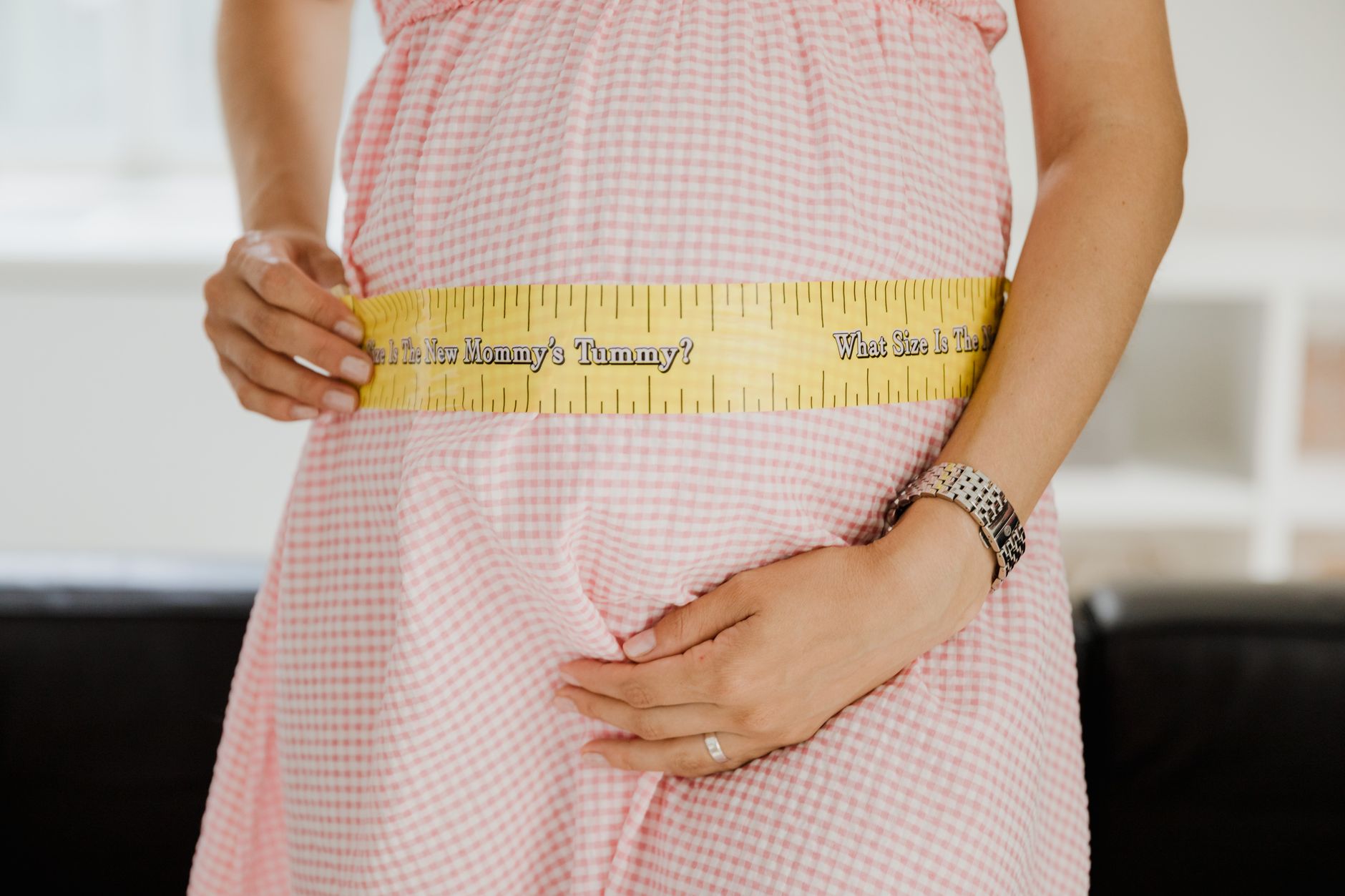
At 7 weeks pregnant, belly size varies, but most women experience a small bump, find out what to expect with your 7 weeks pregnant belly size
By Shubhra Mishra — a mom of two who turned her own confusion during pregnancy into BumpBites, a global mission to make food choices clear, safe, and stress-free for every expecting mother. 💛
Check whether any food is safe during pregnancy with the BumpBites Food Safety Checker.
Quick take: At seven weeks pregnant, most uteruses are the size of a small orange and measure roughly 2–3 cm in length, but the belly often remains flat and may not be visible yet. Size varies with body type, first‑time pregnancies, and weight‑gain patterns. If you’re worried about a lack of bump or notice sudden swelling, pain, or bleeding, call your provider.
It’s 2 a.m., you’re curled up with a warm mug of tea, and a sudden wave of nausea makes you wonder: “Is my belly supposed to be showing yet?” You’re not alone. Many early‑pregnancy moms ask the same question, and the answer isn’t one‑size‑fits‑all. At seven weeks, the uterus has just begun its quiet climb out of the pelvis, and most bumps are still subtle.
Below we break down exactly what a seven‑week pregnant belly looks like, how big it typically is, how to measure it, and why some bumps appear sooner than others. We’ll also explore how belly size relates to fetal growth, weight gain, and common symptoms like morning sickness. By the end you’ll have a clear picture of what’s normal, what to track, and when a quick call to your provider is warranted.
What size is a 7‑week pregnant belly?
At seven weeks gestation, the uterus is roughly the size of a small orange, measuring about 2–3 cm (0.8–1.2 in) in length from fundus to cervix. This tiny organ sits deep in the pelvic cavity, so the external belly often looks unchanged. Most women describe the belly as “flat” or “soft,” with only a subtle firmness when you press gently just above the pubic bone.
Because the uterus is still low, the abdominal wall doesn’t stretch noticeably. In clinical terms, the fundal height (the distance from the pubic symphysis to the top of the uterus) is usually 2–3 cm. This measurement aligns with guidance from the American College of Obstetricians and Gynecologists (ACOG) for the first trimester.
Factors such as a higher body mass index (BMI), strong abdominal muscles, or a previous pregnancy can make the belly appear slightly larger or smaller. First‑time (nulliparous) moms often have a flatter appearance because the abdominal wall hasn’t been “pre‑stretched.”
Think of your uterus at seven weeks as the size of a small orange—tiny but growing.
How big does a belly get at 7 weeks pregnant?
While the uterus measures about 2–3 cm, the external belly may not grow noticeably until weeks 9–12. When a bump does start to appear around seven weeks, it’s usually a very gentle rounding of the lower abdomen, often described as a “baby‑bump feel” rather than a visible protrusion.
Typical external measurements (when you do a tape‑measure assessment) range from 0 cm to 2 cm increase over pre‑pregnancy baseline. For most women, the belly’s circumference remains within a few centimeters of their non‑pregnant measurement at this stage.
Why the variation? Body composition matters. Women with higher abdominal fat may see a slight bulge earlier, while those with leaner builds or strong core muscles may not notice any change until later. A previous pregnancy can also “prime” the abdomen, making the bump appear sooner.
7‑week pregnancy belly measurement in centimeters
If you want a concrete number, the uterine fundal height at seven weeks is generally 2–3 cm. To measure:
Lie down on a flat surface or sit with a straight back.
Place a flexible tape measure at the top of the pubic bone (symphysis).
Run the tape upward to the top of the uterus—feel for a firm, round area.
Read the measurement; it should be around 2–3 cm.
Because the uterus is still low, many clinicians use ultrasound rather than tape measurement for accuracy. The National Health Service (NHS) in the UK recommends confirming uterine size with an early scan, especially if the bump feels atypical.
Is a 7‑week pregnant belly supposed to be visible?
Most experts agree: a visible bump at seven weeks is uncommon. The American Pregnancy Association states that the “baby bump” typically becomes noticeable around week 12. However, a faint outline or a subtle firmness can be present in some women, especially those with higher BMI or a prior pregnancy.
If you’re not seeing any change, it’s usually nothing to worry about. The uterus is still nestled deep in the pelvis, and the abdominal wall hasn’t been stretched enough to show a clear silhouette. That said, a sudden, pronounced swelling or asymmetry should be evaluated.
Average uterine size at 7 weeks pregnant
Across large studies, the average uterine size at seven weeks is:
Gestational Age
Uterine Length (cm)
Uterine Width (cm)
Typical Description
7 weeks
2–3
2–3
Size of a small orange, still in pelvis
8 weeks
3–4
3–4
Beginning to rise above pubic bone
9 weeks
4–5
4–5
Visible slight rounding
These averages come from ACOG’s early‑pregnancy growth charts and are consistent with data from the Mayo Clinic. Individual measurements can vary by a centimeter or more without indicating a problem.
When will I see my 7‑week pregnancy bump?
Most first‑time moms report seeing a noticeable bump between weeks 10 and 12. If you’re seven weeks, you’re likely still in the “quiet” phase. However, you may feel a slight “balloon‑like” firmness when you press just above your pubic bone.
Key signs that a bump is beginning:
Gentle, round sensation under the skin.
Small increase in waist circumference (1–2 cm).
Feeling of pressure as the uterus starts to lift out of the pelvis.
If you’ve never been pregnant before, give yourself extra patience. Many women with a previous pregnancy notice a bump earlier because the abdominal wall has already been stretched.
7‑week pregnant belly size vs weight gain
Weight gain at seven weeks is typically modest—about 0.5–2 lb (0.2–0.9 kg) above pre‑pregnancy weight. This gain is mostly due to increased blood volume, breast tissue, and fluid retention, not uterine expansion. Consequently, belly size does not correlate tightly with overall weight gain.
Guidelines from the Institute of Medicine (IOM) suggest a total first‑trimester gain of 1–5 lb (0.5–2.3 kg) for most women, depending on BMI. If you’re gaining more than 5 lb by week 7, it’s worth discussing with your provider, but it doesn’t automatically mean a larger bump.
7‑week pregnant belly size compared to 6 weeks
Between six and seven weeks, the uterus grows from roughly 1.5 cm to 2–3 cm. Visually, the difference is subtle—most women still feel a soft, rounded area just above the pubic bone. The change in external belly size is usually less than a centimeter.
Ultrasound measurements illustrate the growth: at six weeks the crown‑rump length (CRL) averages about 4 mm; by seven weeks it reaches 8–10 mm. While the embryo doubles in size, the external belly remains largely unchanged because the uterus is still low in the pelvis.
7‑week pregnancy belly growth timeline
Understanding the broader timeline helps set realistic expectations:
Weeks 4–5: Implantation; uterus begins to thicken, but no visible change.
Weeks 6–7: Uterus size ~2 cm; slight firmness may be felt.
Weeks 8–9: Uterus rises above the pubic bone; a faint curve appears.
Weeks 10–12: Most women notice a small, rounded bump.
Weeks 13–14: Bump becomes more pronounced; fundal height ~5 cm.
This timeline follows ACOG and NHS recommendations and reflects the average experience of thousands of pregnant people.
How to measure belly size at 7 weeks
Accurate measurement can be reassuring and useful for tracking changes. Here’s a step‑by‑step guide you can try at home:
Prepare: Use a soft, flexible tape measure and wear a thin shirt or nothing at all.
Find the landmarks: Locate the top of the pubic bone (the symphysis) and the top of the uterus—feel for a firm, rounded area a few centimeters above.
Take the measurement: Place the tape at the symphysis and gently pull it upward to the top of the uterus. Record the length.
Repeat: Take the measurement three times and use the average for consistency.
Document: Write the number in a journal or pregnancy app, noting the date and any symptoms.
Remember, early‑pregnancy measurements can be tricky. If you’re uncertain, schedule an ultrasound—most clinics offer a dating scan between 8–12 weeks that will confirm uterine size accurately.
Measuring your belly can be a simple way to track growth, especially when combined with regular ultrasound checks.
What does a 7‑week pregnant belly look like?
Visually, most seven‑week bellies appear flat with a subtle “balloon‑like” firmness just above the pubic bone. The skin may feel slightly tighter, but you won’t see a pronounced curve. Some women notice a faint contour when wearing fitted clothing, while others need to press gently to feel the uterus.
Photographs from early‑pregnancy diaries often show a slim waistline with a barely perceptible bulge. If you compare side‑by‑side photos taken at weeks 6, 7, and 8, the change is usually a slight widening of the lower abdomen rather than a dramatic swell.
7‑week pregnant belly size and baby development
Even though the belly itself is small, the embryo is undergoing rapid development. By week 7, the embryo’s major organ systems—heart, brain, and spinal cord—are forming, and the CRL is roughly 8–10 mm. The uterus’s modest size accommodates this growth while still nestled deep in the pelvis.
Because fetal size is tiny, the external belly does not reflect embryonic development. Instead, the growth of the uterus and the increase in maternal blood volume drive the subtle changes you might feel.
Why is my 7‑week belly not showing?
There are several common reasons a bump isn’t visible at seven weeks:
Body type: Higher body fat or strong abdominal muscles can mask early growth.
First‑time pregnancy: Nulliparous women often have a flatter appearance because the abdominal wall hasn’t been stretched before.
Uterine position: A retroverted uterus (tilted toward the spine) may stay lower for longer.
Timing of implantation: If implantation occurred later in the two‑week window, the embryo may be slightly younger.
All of these are normal variations. If you’re otherwise feeling well and have a confirmed positive test, there’s usually no cause for alarm.
7‑week pregnant belly size and morning sickness correlation
Morning sickness peaks around weeks 6‑9, when hormonal changes are most intense. Some studies suggest that women with more severe nausea may have slightly higher hCG levels, but there’s no consistent link between the severity of morning sickness and belly size. In other words, a larger‑looking bump does not mean you’ll feel less nausea, and vice versa.
Both the American College of Obstetricians and Gynecologists (ACOG) and the UK’s NHS note that nausea is driven by hormonal shifts, not uterine size. If you’re struggling with vomiting, focus on dietary strategies and hydration rather than belly measurements.
Differences in belly size at 7 weeks for first‑time moms
First‑time (nulliparous) moms often report a flatter belly compared with women who have been pregnant before. A previous pregnancy stretches the abdominal wall and connective tissue, allowing the uterus to rise higher sooner.
Research from the Royal College of Obstetricians and Gynaecologists (RCOG) indicates that women with one prior birth may notice a visible bump up to two weeks earlier on average. However, the absolute size of the uterus at seven weeks remains the same—about 2–3 cm—regardless of parity.
Understanding this distinction helps set realistic expectations and reduces unnecessary worry for first‑time parents.
From our medical team: “A seven‑week bump is usually subtle, and that’s perfectly normal. If you’re tracking size, focus on how the uterus feels rather than outward appearance. Any sudden swelling, pain, or bleeding should prompt a call to your provider.”
Myth vs. fact
Myth: You should see a big baby bump by seven weeks.
Fact: Most bumps become noticeable around weeks 10‑12; at seven weeks the uterus is still low in the pelvis.
Myth: A flat belly means the pregnancy isn’t progressing.
Fact: Belly size varies with body type, previous pregnancies, and uterine position; a flat appearance is common and not a sign of trouble.
Myth: Gaining a lot of weight early means a larger bump.
Fact: Early weight gain reflects fluid and blood volume changes, not uterine size; belly size is driven by uterine growth, not maternal weight.
Key takeaways
At seven weeks, the uterus is about the size of a small orange (2–3 cm) and sits low in the pelvis.
Most women will not see a visible bump until weeks 10‑12; a flat belly is normal.
Measure fundal height with a tape measure or, better yet, confirm with an early ultrasound.
Body type, parity, and uterine position influence how early a bump appears.
Weight gain in the first trimester does not directly dictate belly size.
Call your provider if you notice sudden swelling, pain, or bleeding.
Frequently asked questions
How big is a 7‑week pregnant belly?
The uterus measures roughly 2–3 cm (the size of a small orange), and most external bellies remain flat or show only a subtle firmness.
Can you see a baby bump at 7 weeks?
Usually not; the bump typically becomes noticeable around weeks 10‑12, though a faint curve may appear in some women.
What should a 7‑week pregnancy belly look like?
It often looks flat with a gentle, rounded firmness just above the pubic bone; there’s rarely a pronounced curve.
Is it normal for a 7‑week belly to be flat?
Yes—flatness at this stage is common, especially for first‑time moms or those with strong abdominal muscles.
How do I measure my belly at 7 weeks?
Use a soft tape measure from the pubic symphysis to the top of the uterus, aiming for a 2–3 cm reading, or confirm with an early ultrasound.
When will my baby bump appear?
Most women notice a visible bump between weeks 10 and 12, though the exact timing varies by body type and pregnancy history.
When to call your doctor
If you experience any of the following, contact your provider promptly: sudden or severe abdominal pain, rapid swelling of the abdomen, spotting or bleeding, fever above 100.4 °F (38 °C), or a decrease in fetal movement after the first trimester.
This article is for informational purposes only and does not replace personalized medical advice. Always consult your health care provider with any concerns.
References
American College of Obstetricians and Gynecologists (ACOG). “Early Pregnancy: What to Expect.” Clinical Guidance, 2023.
National Health Service (NHS). “Pregnancy week by week.” Patient Information, 2022.
Mayo Clinic. “First trimester: What’s normal?” Health Articles, 2024.
World Health Organization (WHO). “Guidelines on Antenatal Care for a Positive Pregnancy Experience.” 2022.
Institute of Medicine (IOM). “Weight Gain During Pregnancy: Reexamining the Guidelines.” 2021.
Royal College of Obstetricians and Gynaecologists (RCOG). “Parity and Early Pregnancy Changes.” Clinical Review, 2023.
American Pregnancy Association. “Morning Sickness and Hormones.” Patient Resources, 2023.
Centers for Disease Control and Prevention (CDC). “Pregnancy and Birth.” National Data, 2023.
Not sure about the label on 7 Weeks Pregnant Belly Size products?
Snap the ingredients list and SafeFilter checks every ingredient for your stage — only 3 free scans this month, then you're locked until reset. Unlimited from $7/mo or $50/yr.
When Shubhra Mishra was expecting her first child in 2016, she was overwhelmed by conflicting food advice — one site said yes, another said never. By the time her second baby arrived in 2019, she realized millions of mothers face the same confusion.
That sparked a five-year journey through clinical nutrition papers, cultural diets, and expert conversations — all leading to BumpBites: a calm, compassionate space where science meets everyday motherhood.
Her long-term vision is to build a global community ensuring safe, supported, and free deliveriesfor every mother — because no woman should face pregnancy alone or uninformed. 🌿
🌍 Stand with mothers, shape safer guidance
Join a small circle of experts who review BumpBites articles so expecting parents everywhere can decide with confidence.