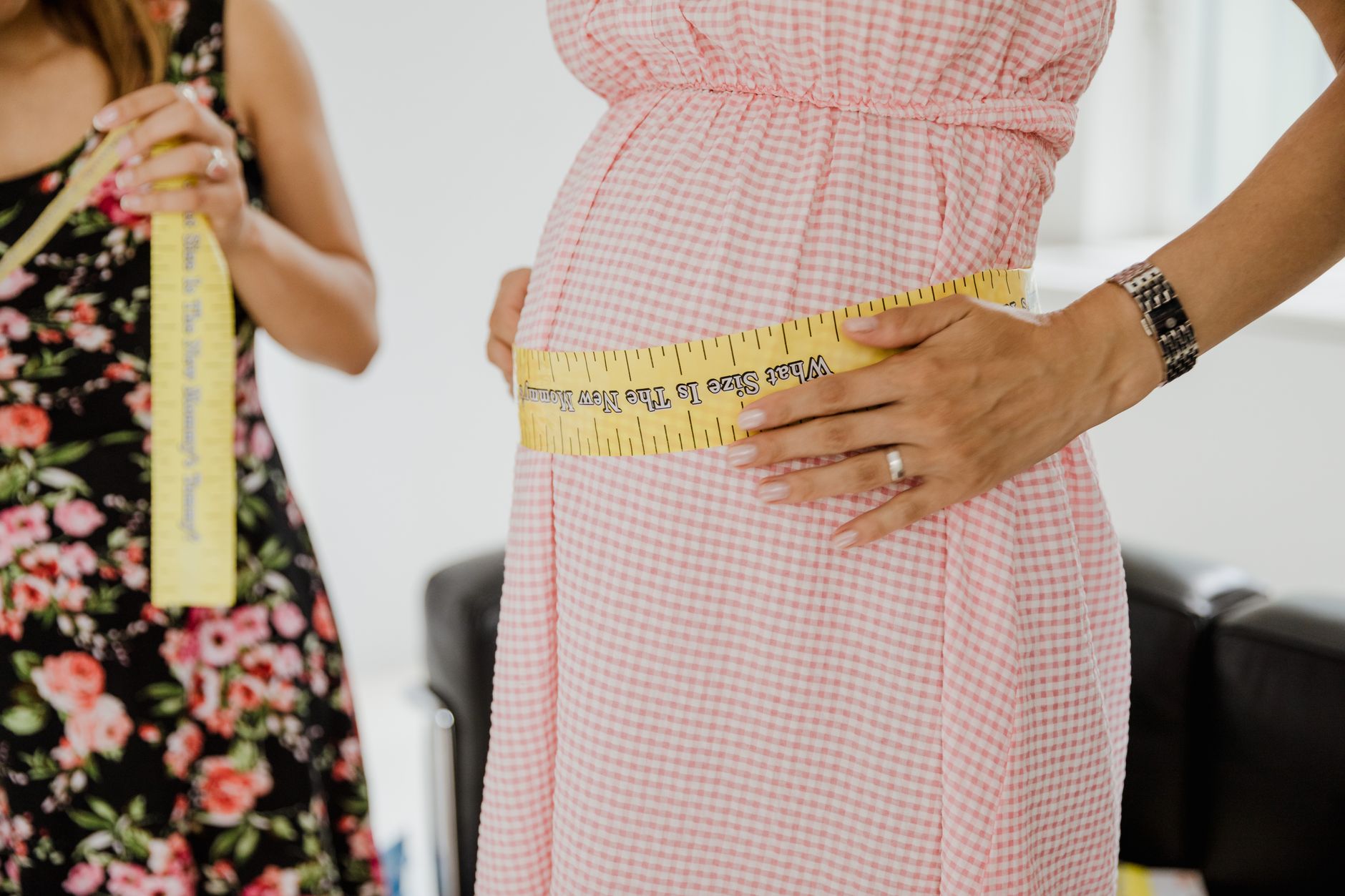
At 39 weeks, the average pregnant belly measures about 36‑38 inches (91‑97 cm) around the fullest part, but size varies with body type, baby position, and weight gain.
By Shubhra Mishra — a mom of two who turned her own confusion during pregnancy into BumpBites, a global mission to make food choices clear, safe, and stress-free for every expecting mother. 💛
Check whether any food is safe during pregnancy with the BumpBites Food Safety Checker.
Quick take: At 39 weeks, a typical belly measures about 35 – 38 cm (14 – 15 in) from the top of the uterus to the pubic bone, but “normal” covers a range. Size depends on baby growth, fluid levels, and your own body. If the belly feels suddenly much larger or much smaller, or is accompanied by pain, bleeding, or reduced fetal movement, call your provider right away.
It’s 2 a.m., you’re curled up on the couch, and a sudden stretch in your lower belly makes you wonder, “Is my baby getting too big?” You’re not alone. Many expectant parents reach for their phones at the last minute of pregnancy, scared that a growing belly means something is wrong. The good news is that there’s a wide “normal” window, and simple measurements can tell you whether you’re on track or need a quick check‑in with your provider.
In this article we’ll break down everything you need to know about a 39‑weeks‑pregnant belly size: what the average measurement looks like, how it changes in the final weeks, how to measure it yourself, why a larger or smaller belly isn’t automatically a problem, and when rapid growth should raise a red flag. We’ll also cover special situations like twins, give you practical tips to ease discomfort, and answer the most common follow‑up questions.
What is the average belly size at 39 weeks pregnant?
When doctors talk about “fundal height,” they’re referring to the distance from the top of the uterus (the fundus) down to the pubic bone. In the third trimester the measurement is usually taken in centimeters with a soft tape measure, and it correlates fairly well with gestational age.
Typical range: For a single baby, the average fundal height at 39 weeks is roughly 35 – 38 cm (14 – 15 in). This corresponds to a belly that sits just a few centimeters above the rib cage and often feels firm but not hard.
Because the measurement can vary by a couple of centimeters, clinicians also look at the range rather than a single number. Below is a quick reference that many obstetric guidelines (e.g., ACOG and NICE) use to gauge normal growth:
Gestational Age
Average Fundal Height (cm)
Typical Range (cm)
Notes
36 weeks
33
31 – 35
Start of late‑third‑trimester monitoring
37 weeks
34
32 – 36
Growth usually steady
38 weeks
35
33 – 37
Most babies gain 150‑200 g per week
39 weeks
36
34 – 38
Typical for singleton pregnancies
39 weeks (twins)
38
36 – 42
Higher range due to two fetuses
When you hear “average belly size,” remember that “average” is a statistical midpoint. Your personal measurement may sit at the lower or higher end of the range and still be perfectly healthy. The American College of Obstetricians and Gynecologists notes that fundal height is a screening tool; it is not a diagnostic measurement, but it is reliable enough to flag when an ultrasound is warranted.
Maternal factors such as pre‑pregnancy body‑mass index (BMI) can shift the expected range slightly. Women with higher BMI often have a modestly larger abdominal circumference because of additional sub‑cutaneous tissue, while those with lower BMI may measure toward the lower end of the range. This variation is normal and accounted for in most clinical guidelines.
Measuring fundal height is a quick way to gauge growth in the final weeks.
How does belly size change in the last weeks of pregnancy?
From week 36 onward, most babies add roughly 150‑200 g (0.3‑0.4 lb) each week. That translates to a modest increase in belly size—usually about 0.5 – 1 cm (0.2 – 0.4 in) per week. However, the exact change depends on several factors, including the baby’s position, the amount of amniotic fluid, and your own weight gain.
Growth pattern: In the first two weeks after 36 weeks, the belly often feels tighter as the uterus expands to accommodate the growing head. By week 38‑39, many women notice a “plateau” where the belly doesn’t seem to get much larger, even though the baby is still gaining weight. The reason is that the uterus reaches its maximal stretch and the baby’s head begins to descend into the pelvis, a process called “lightening.” Lightening can make the abdomen feel slightly lower, which some people interpret as the belly “shrinking,” even though internal growth continues.
Because the uterus is a muscular organ, it can accommodate extra weight without a dramatic change in outward size. That’s why a baby can gain a pound while the belly looks almost the same. Hormonal changes that increase fluid retention can temporarily make the belly feel puffier after a salty meal or a long day on your feet. These fluctuations are normal and usually resolve within 24‑48 hours.
Tips to reduce discomfort during this period:
Wear a supportive maternity belt that lifts the abdomen and eases pressure on the lower back.
Practice gentle “pelvic tilts” or “cat‑cow” stretches to encourage the baby’s descent and relieve tension.
Stay hydrated and eat small, frequent meals to avoid bloating that can make the belly feel larger.
Sleep on your left side with a pillow between your knees to improve circulation and reduce swelling.
Remember, a gradual increase of half a centimeter per week is normal. Sudden jumps of several centimeters in a single day should be discussed with your provider.
Is a large belly at 39 weeks a sign of trouble?
A larger‑than‑average belly can be reassuring (your baby might be thriving) or a signal that something needs attention. The key is to look for accompanying symptoms.
Potential benign reasons for a larger belly:
Ample amniotic fluid (polyhydramnios) – often harmless, but requires monitoring.
Higher maternal weight gain – if you’ve followed your provider’s recommended gain curve, the extra tissue is expected.
Multiple gestation – twins naturally produce a bigger abdomen.
When a large belly may indicate a problem (and warrants a call to your provider):
Sudden, rapid expansion of > 3 cm (1 in) over a few days.
Severe abdominal pain, especially if it’s constant or sharp.
Decreased fetal movement (fewer than 10 kicks in a two‑hour period).
Bleeding, leaking fluid, or a fever above 38 °C (100.4 °F).
Signs of pre‑eclampsia: swelling of the face or hands, sudden weight gain, or high blood pressure.
When a provider suspects polyhydramnios or another issue, they will usually order an ultrasound to assess fluid volume and fetal size. In many cases, the cause is benign, but the imaging helps rule out complications such as fetal growth restriction or placental insufficiency.
Even if a large belly feels alarming, most concerns turn out to be harmless. Still, a quick professional check gives you peace of mind and ensures that any needed monitoring is started early.
How do you measure your belly size at 39 weeks?
Measuring fundal height at home is simple, and it gives you a baseline to discuss with your provider during prenatal visits.
Step‑by‑step guide:
Gather a soft measuring tape. A cloth or flexible plastic tape works best; avoid metal tapes that can dig into the skin.
Find a comfortable position. Sit upright on a chair or stand with your back against a wall. Relax your abdominal muscles.
Locate the top of the uterus. For most people, this is the highest point of the belly—usually near the bottom of the rib cage. You can feel a firm, rounded area that rises above the softer skin.
Place the tape at the top. Hold the zero end of the tape at the fundus, then let the tape run down the front of your abdomen toward the pubic bone.
Read the measurement. The tape should rest snugly but not press into the skin. Note the number in centimeters; you can convert to inches by dividing by 2.54.
Record the result. Write down the date, the measurement, and any notes about how you felt (e.g., “tight” or “relaxed”).
For most clinicians, a reading of 35 – 38 cm (14 – 15 in) at 39 weeks falls within the normal range. If your measurement is consistently below 34 cm or above 39 cm, bring it up at your next appointment.
Common pitfalls include measuring over tight clothing or after a large meal, both of which can add a centimeter or two. The ACOG recommends measuring on an empty bladder and in a relaxed state for the most accurate reading.
Below is a quick conversion table you can keep handy:
Centimeters
Inches
34 cm
13.4 in
35 cm
13.8 in
36 cm
14.2 in
37 cm
14.6 in
38 cm
15.0 in
While home measurement is useful, it does not replace the professional ultrasound that can assess fetal size, fluid volume, and placenta location with greater precision.
What’s the difference between belly size and baby size at 39 weeks?
It’s easy to think that a bigger belly automatically means a bigger baby, but the relationship isn’t one‑to‑one. The uterus is a flexible container, and several variables shape how big it looks on the outside.
Baby size indicators:
Estimated fetal weight (EFW) from ultrasound – usually 3.2 – 3.5 kg (7 – 7.7 lb) for a singleton at 39 weeks.
Head circumference – the head is the largest part; a bigger head can push the belly outward.
Position – If the baby’s head is tucked down (occiput posterior), the belly may appear larger even though the baby isn’t heavier.
Reasons a belly can be larger without a larger baby:
Extra amniotic fluid (polyhydramnios) increases volume.
Maternal factors such as increased abdominal fat or bloating from digestion.
Multiple gestations – twins add extra mass, often leading to a belly that’s 2 – 4 cm larger than a singleton’s.
Can a small belly mean low birth weight? Not necessarily. Some women naturally have tighter abdominal muscles or less sub‑cutaneous fat, which can make the belly appear smaller. Low birth weight (< 2.5 kg) is more reliably identified through ultrasound measurements and growth charts rather than external size alone.
For twins, the “normal belly size range at 39 weeks” shifts upward: the average fundal height is about 38 cm (15 in), with a typical range of 36 – 42 cm. However, each twin’s growth can differ, so the belly size is a rough guide, not a diagnostic tool.
What factors affect belly size in the third trimester?
Understanding why your belly looks the way it does helps you separate normal variation from warning signs.
Key influencers:
Fetal growth – Larger babies (especially those with higher birth‑weight percentiles) expand the uterus more.
Amniotic fluid volume – Both too much (polyhydramnios) and too little (oligohydramnios) change the outward shape.
Baby’s position – A breech or transverse lie can make the belly appear more rounded, while a head‑down (vertex) position may create a slightly flatter look.
Maternal weight gain – Excess adipose tissue adds to the circumference, but staying within the recommended gain range (based on pre‑pregnancy BMI) is healthy.
Uterine tone – Some women have tighter abdominal muscles, giving a “smaller” look despite a normal‑sized baby.
Guidelines from the American College of Obstetricians and Gynecologists (ACOG) advise that any sudden, unexplained increase in fundal height should be evaluated with an ultrasound to rule out excess fluid or a growth‑related issue.
In addition to medical factors, lifestyle choices play a role. A diet high in sodium can cause swelling, making the belly feel tighter. Regular gentle exercise helps maintain muscle tone, which can keep the abdomen from feeling overly stretched. Hormonal shifts that promote fluid retention are normal, but if you notice persistent edema, discuss it with your provider.
When should I be concerned about rapid belly growth at 39 weeks?
Most of the time, a gradual increase of a half‑centimeter per week is perfectly normal. However, rapid expansion—especially when paired with any of the symptoms below—signals that you should contact your provider promptly.
Red‑flag signs:
Sudden increase of > 3 cm (1 in) over 48 hours.
Severe, persistent abdominal pain or cramping.
Noticeable swelling of the hands, face, or feet that wasn’t present before.
Bleeding, leaking fluid, or a fever.
Reduced fetal movement (fewer than 10 kicks in two hours).
New onset of hypertension (≥ 140/90 mm Hg) after 20 weeks.
If you notice any of these, it’s safest to call your obstetrician, midwife, or go to the nearest labor‑and‑delivery unit. Even if the issue turns out to be benign, early evaluation can prevent complications and give you peace of mind.
Typical next steps from your provider include a bedside ultrasound to check fluid levels and fetal size, and a non‑stress test (NST) to monitor the baby’s heart rate pattern. These quick, non‑invasive assessments help determine whether the growth pattern is simply a normal variation or requires closer surveillance.
Comfort‑focused habits can ease the feeling of a large belly in the final weeks.
From our medical team: A belly that feels larger than you expected is often just a sign of normal growth. However, keep an eye on any abrupt changes, pain, or reduced baby movement, and don’t hesitate to call your provider. Simple home measurements paired with regular prenatal visits give you the clearest picture of how both you and your baby are doing.
How does a previous pregnancy affect belly size at 39 weeks?
Women who have been pregnant before often notice that their belly feels different the second (or third) time around. The abdominal wall stretches during the first pregnancy, and many find that the uterus expands a bit more quickly in subsequent pregnancies because the tissue is “pre‑stretched.” This can make the fundal height feel larger earlier, even though the baby’s growth trajectory is typical.
Research from the NHS indicates that multiparous women (those who have given birth before) may record fundal heights that are 0.5–1 cm higher on average at the same gestational age compared with first‑time mothers. The difference is usually not clinically significant, but it’s something to mention during your prenatal visits so your provider can interpret the measurements in context.
If you’re concerned that the belly feels unusually large, let your provider know about your obstetric history. They may adjust the expected growth curve slightly, but they will still rely on ultrasound if the measurement falls far outside the adjusted range.
Can clothing and posture help you gauge belly size comfortably?
Clothing can be a discreet ally when you want to feel aware of your belly without the “measuring tape” routine every day. Maternity leggings or stretchy waistbands that sit just above the fundus can give you a visual cue—if the fabric feels snug and begins to stretch, you’re likely approaching the upper end of the normal range.
Posture also influences how the belly appears. Standing upright with shoulders back pulls the uterus slightly upward, making the belly seem higher. Conversely, slouching can compress the abdomen, giving the impression of a smaller fundal height. Practicing a gentle “pelvic tilt” while seated—tilting the pelvis forward and engaging the core—helps you feel the belly’s true contour without exaggeration.
When you shop for maternity wear, look for breathable fabrics like bamboo or cotton blends. These materials reduce swelling caused by heat and allow you to notice subtle changes in tightness, which can be an early sign of rapid growth.
Nutrition, hydration, and fluid retention: impact on belly size in late pregnancy
What you eat and drink can subtly affect how big your belly feels. High‑sodium meals promote water retention, which can add a centimeter or two to your waist measurement. The FDA recommends limiting sodium intake to less than 2,300 mg per day for pregnant people, mirroring general adult guidelines.
Conversely, staying well‑hydrated helps maintain a healthy balance of amniotic fluid. Dehydration can lead to oligohydramnios (low fluid), which may make the belly feel flatter. Aim for at least 8‑10 cups of water daily, and consider electrolyte‑balanced beverages if you’re active.
Protein‑rich foods such as lean meats, beans, and dairy support fetal growth, but they also increase metabolic waste that the kidneys must filter, influencing fluid balance. Including potassium‑rich foods like bananas, sweet potatoes, and leafy greens can help counteract sodium‑induced swelling.
If you notice sudden swelling after a salty snack or a day of standing, a short walk and a glass of water often help. Persistent edema, especially in the hands and face, should be discussed with your provider as it can signal pre‑eclampsia.
Myth vs. fact
Myth: A belly that’s over 38 cm at 39 weeks always means the baby is too big.
Fact: While a larger fundal height can indicate a bigger baby, it also reflects fluid volume, maternal tissue, and baby position. Only an ultrasound can confirm fetal size.
Myth: If my belly looks small, my baby must be underweight.
Fact: A smaller‑looking belly is often due to tighter abdominal muscles or less abdominal fat. Low birth weight is diagnosed through growth charts and ultrasound, not external size.
Myth: I don’t need to measure my belly because the doctor will tell me everything.
Fact: Tracking fundal height at home helps you notice trends and gives you concrete information to discuss with your provider, especially if you feel something has changed suddenly.
Key takeaways
Typical fundal height at 39 weeks is 35 – 38 cm (14 – 15 in) for a singleton pregnancy.
Measure yourself with a soft tape, noting the top of the uterus to the pubic bone.
Growth of 0.5 – 1 cm per week after 36 weeks is normal; rapid jumps merit a call.
Baby size, fluid volume, position, and maternal weight all influence belly appearance.
Twins naturally add a few centimeters to the average measurement.
Seek medical advice for sudden swelling, pain, reduced fetal movement, or any red‑flag symptom.
Use supportive belts, gentle stretches, and side‑sleeping to ease discomfort.
Multiparous women may notice a slightly larger belly earlier; share your birth history with your provider.
Mindful clothing choices and upright posture give a clearer sense of belly size.
Balanced nutrition and adequate hydration help manage fluid retention that can affect measurements.
Frequently asked questions
What is a normal belly size at 39 weeks?
Most clinicians consider a fundal height of 35 – 38 cm (14 – 15 in) normal for a singleton pregnancy at 39 weeks.
How many inches is a 39‑week pregnant belly?
A typical belly measures about 14 – 15 inches from the top of the uterus to the pubic bone, which equals roughly 35 – 38 cm.
Can a large belly at 39 weeks indicate a problem?
Usually not, but if the increase is sudden, accompanied by pain, swelling, reduced fetal movement, or fluid leakage, you should contact your provider right away.
How do I measure my belly at 39 weeks?
Use a soft measuring tape: locate the highest point of the uterus, place the zero end there, and run the tape down to the pubic bone, recording the centimeter reading.
Does the baby's position affect belly size?
Yes. A head‑down position often makes the belly appear flatter, while a breech or transverse lie can add a rounder look, even if the baby’s weight is unchanged.
When should I call my doctor about belly size changes?
Call immediately if you notice rapid growth (> 3 cm in 48 hours), severe pain, bleeding, fluid leakage, fever, high blood pressure, or a sudden drop in baby kicks.
Can I safely do gentle abdominal exercises at 39 weeks?
Gentle core‑engaging moves like pelvic tilts or seated “cat‑cow” stretches are usually safe and can relieve tension, but avoid any exercise that puts pressure on the abdomen or causes pain. Always check with your provider before starting a new routine.
Is it normal for my belly to feel tighter after a big meal?
Yes. A large meal can cause temporary bloating, making the abdomen feel tighter and sometimes a little larger. This usually resolves within a few hours. If the tightness persists or is accompanied by pain, let your provider know.
When to call your doctor
If you experience any of the following, seek medical attention promptly: sudden belly expansion, persistent abdominal pain, bleeding or fluid loss, fever, high blood pressure, or a noticeable decrease in fetal movement. This article provides general information only and does not replace personalized medical advice from your provider.
References
American College of Obstetricians and Gynecologists (ACOG). “Routine Prenatal Care.” Clinical Guidance, 2023.
National Institute for Health and Care Excellence (NICE). “Antenatal Care for Healthy Women.” Guideline NG192, 2022.
World Health Organization (WHO). “Recommendations on Antenatal Care for a Positive Pregnancy Experience.” 2021.
Royal College of Obstetricians and Gynaecologists (RCOG). “Fundal Height Measurement.” Clinical Practice Guidelines, 2022.
Centers for Disease Control and Prevention (CDC). “Pregnancy Weight Gain.” Maternal Health Resources, 2023.
Mayo Clinic. “Polyhydramnios.” Patient Care & Health Information, 2024.
National Health Service (NHS). “Twins: What to Expect.” Pregnancy & Childbirth, 2023.
Food and Drug Administration (FDA). “Sodium in the Diet.” Nutrition Guidance for Pregnant People, 2022.
American Academy of Pediatrics (AAP). “Guidelines for Non‑Stress Testing.” 2023.
National Health Service (NHS). “Managing Swelling in Pregnancy.” 2022.
Not sure about the label on 39 Weeks Pregnant Belly Size products?
Snap the ingredients list and SafeFilter checks every ingredient for your stage — only 3 free scans this month, then you're locked until reset. Unlimited from $7/mo or $50/yr.
When Shubhra Mishra was expecting her first child in 2016, she was overwhelmed by conflicting food advice — one site said yes, another said never. By the time her second baby arrived in 2019, she realized millions of mothers face the same confusion.
That sparked a five-year journey through clinical nutrition papers, cultural diets, and expert conversations — all leading to BumpBites: a calm, compassionate space where science meets everyday motherhood.
Her long-term vision is to build a global community ensuring safe, supported, and free deliveriesfor every mother — because no woman should face pregnancy alone or uninformed. 🌿
🌍 Stand with mothers, shape safer guidance
Join a small circle of experts who review BumpBites articles so expecting parents everywhere can decide with confidence.