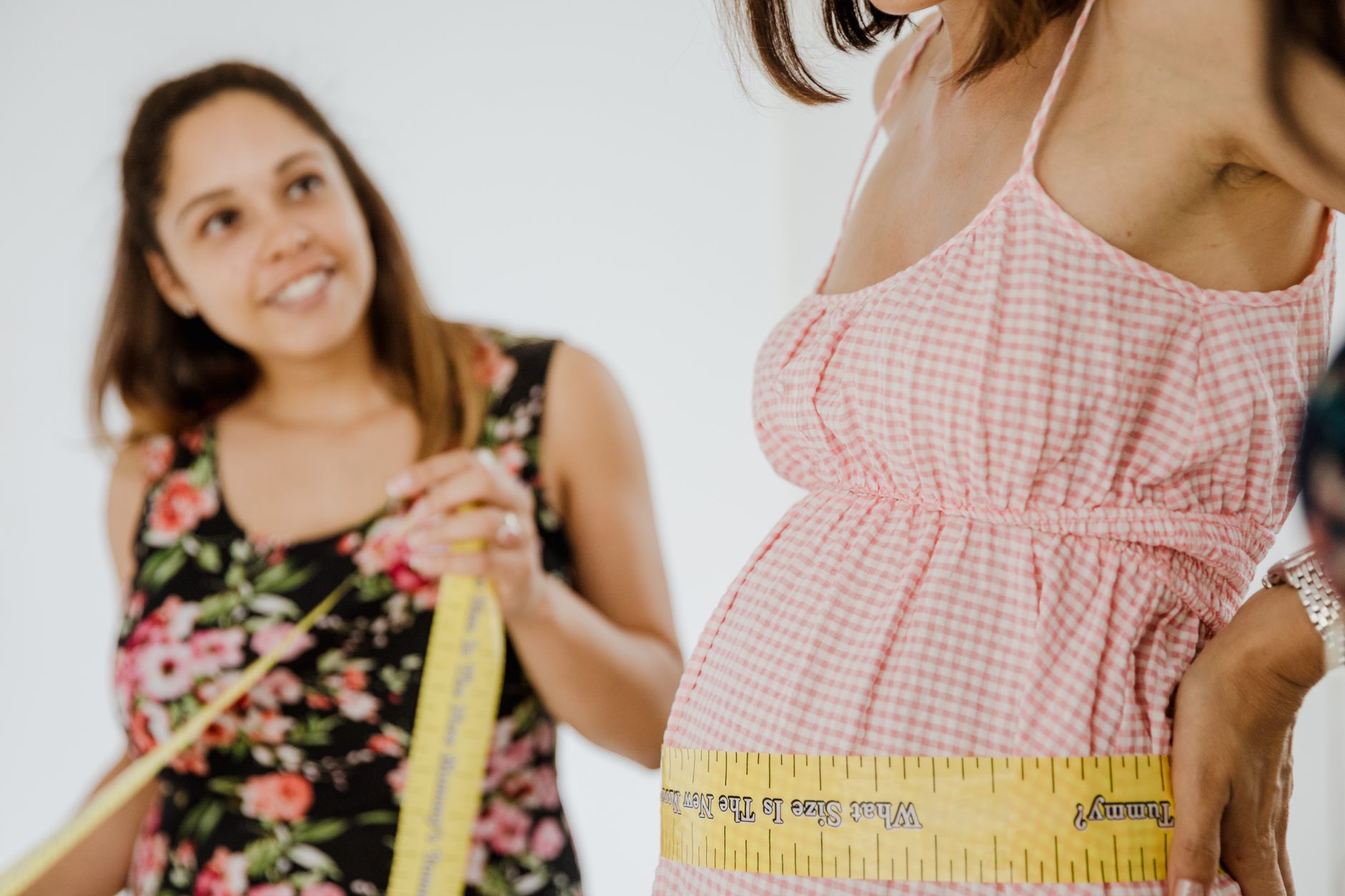
At 36 weeks pregnant, baby size is approximately 6 pounds and 18 inches long, with development focused on fat layers and final preparations for birth
By Shubhra Mishra — a mom of two who turned her own confusion during pregnancy into BumpBites, a global mission to make food choices clear, safe, and stress-free for every expecting mother. 💛
Check whether any food is safe during pregnancy with the BumpBites Food Safety Checker.
Quick take: At 36 weeks, the average baby measures about 18½ inches (47 cm) long and weighs roughly 5½ lb (2,500 g). Most babies this size are considered “late‑preterm” and are well on their way to full term, but growth can vary. If your baby’s size falls far outside the typical range, or you notice unusual symptoms, contact your provider.
It’s 2 a.m., you’ve just felt a flutter and are scrolling through your phone, wondering whether the bump you can feel is “big enough.” You’re not alone—many expectant parents reach that same moment of curiosity and concern around the 36‑week mark. The good news is that by now doctors have a solid idea of what a baby usually looks like, and you have several ways to gauge growth.
In this article we’ll break down the average length and weight of a 36‑week baby, compare those numbers to a full‑term newborn, explain why some babies grow faster or slower, and show you how size can influence the delivery plan. We’ll also walk through the measurements taken during a 36‑week ultrasound, how to estimate size without imaging, and what red‑flag signs mean you should call your provider right away.
All of the information is based on guidance from the American College of Obstetricians and Gynecologists (ACOG), the UK’s National Health Service (NHS), and the World Health Organization (WHO). Keep reading for a complete, step‑by‑step look at what “36 weeks pregnant baby size” really means for you and your little one.
How many inches is a baby at 36 weeks?
Most clinicians report that a baby at 36 weeks measures about 18½ inches (47 cm) from crown to heel. This length is measured using the femur length (FL) on ultrasound and correlates closely with the external measurement of the baby’s head‑to‑buttocks distance.
36‑week fetal length in centimeters
In metric terms, the average crown‑to‑heel length is roughly 47 cm. The head‑to‑body ratio at this stage is still slightly larger than at term because the head grows faster than the body in the last weeks of pregnancy.
How does baby size at 36 weeks compare to 38 weeks?
By 38 weeks, the average length increases to about 19½ inches (49 cm), adding roughly an inch (2 cm) in the final two weeks. This incremental growth reflects rapid brain and lung development that continues up to term.
Ultrasound at 36 weeks highlights the femur length, a key indicator of overall fetal size.
What is the average weight of a 36‑week fetus?
According to ACOG, the typical weight for a baby at 36 weeks is 5½ lb (2,500 g). This weight places most babies in the “large for gestational age” (LGA) category only if they exceed the 90th percentile, which is roughly 6 lb (2,700 g) at this gestational age.
Average head circumference at 36 weeks pregnancy
The head circumference (HC) averages around 13.5 cm (5.3 in). The HC measurement is taken at the level of the thalami and cavum septi pellucidi on ultrasound and helps assess brain growth.
Is it normal for a 36‑week baby to be under 5 pounds?
Yes. Babies can weigh as low as 4 lb (1,800 g) and still be healthy. A weight under 5 lb may place the baby in the “small for gestational age” (SGA) category if it falls below the 10th percentile. SGA is often linked to maternal nutrition, smoking, or placental insufficiency, and warrants closer monitoring.
How does a 36‑week baby size compare to full‑term size?
Full‑term (40‑week) babies typically measure about 20 inches (50 cm) and weigh around 7½ lb (3,400 g). Below is a quick side‑by‑side comparison:
Gestational Age
Average Length
Average Weight
Average Head Circumference
36 weeks
18½ in (47 cm)
5½ lb (2,500 g)
5.3 in (13.5 cm)
38 weeks
19½ in (49 cm)
6½ lb (2,950 g)
5.6 in (14.2 cm)
40 weeks (full term)
20 in (50 cm)
7½ lb (3,400 g)
5.9 in (15 cm)
The incremental growth between 36 and 40 weeks shows why many providers still monitor babies closely at this stage—there’s still meaningful weight gain, especially in the brain and lungs.
What size baby at 36 weeks means for due date
If the baby’s measurements are significantly larger or smaller than the averages, clinicians may re‑estimate the gestational age using growth charts such as the WHO fetal growth standards. A discrepancy of more than two weeks could suggest an inaccurate due date, prompting a review of the mother’s last menstrual period and early‑pregnancy scans.
Can a baby be larger than average at 36 weeks, and what does that mean?
Yes—some babies exceed the 90th percentile, weighing over 6 lb (2,700 g) or measuring longer than 19 in (48 cm). This “large for gestational age” (LGA) status can be caused by maternal diabetes, excessive weight gain, or genetic factors.
Signs that baby is growing too fast at 36 weeks
Fundal height markedly above the expected 36 cm (e.g., >38 cm).
Excessive amniotic fluid (polyhydramnios) on ultrasound.
Maternal blood glucose levels that are consistently high.
When LGA is identified, providers may discuss delivery options, including the possibility of a planned cesarean if the estimated fetal weight is >9 lb (4,100 g) at term, to reduce the risk of shoulder dystocia.
Difference between baby size and weight at 36 weeks
“Size” often refers to linear measurements—length, head circumference, and abdominal circumference—while “weight” is the overall mass. A baby can be relatively long but not heavy if, for example, there’s less subcutaneous fat. Both dimensions are plotted on growth charts to assess whether growth is proportionate.
What does a 36‑week ultrasound show about baby size?
A standard 36‑week anatomy scan focuses on confirming growth trends and identifying any concerns that could affect delivery. Key measurements include:
Biparietal diameter (BPD): width of the head.
Head circumference (HC): overall head size.
Abdominal circumference (AC): proxy for weight.
Femur length (FL):** used to estimate crown‑to‑heel length.
These numbers are entered into growth charts to calculate an estimated fetal weight (EFW). The EFW at 36 weeks is typically between 2,300 g and 2,800 g, aligning with the average weight range.
Interpreting growth charts for 36‑week gestation
The INTERGROWTH‑21st standards provide percentile curves for each measurement. If your baby’s BPD, HC, AC, or FL falls between the 10th and 90th percentiles, growth is considered appropriate for gestational age (AGA). Values outside this range may prompt closer surveillance.
How does baby size at 36 weeks affect the delivery method?
While most babies at 36 weeks will be delivered vaginally, size can influence the decision. A larger baby (especially >6 lb) may increase the chance of a cesarean or instrumental delivery because of potential shoulder dystocia. Conversely, a very small baby can increase the risk of breech presentation, which sometimes leads to a planned cesarean if the baby does not turn.
Impact of a large baby on labor
Large‑for‑gestational‑age infants can cause prolonged second stage of labor and a higher likelihood of birth‑related injuries. Obstetricians often monitor labor progress closely, and some may recommend early induction if the estimated fetal weight surpasses 9 lb at term.
Impact of a small baby on labor
Smaller babies may tolerate labor well, but if the size suggests intrauterine growth restriction (IUGR), providers might opt for earlier delivery—sometimes via cesarean—to protect the baby’s health.
How to estimate baby size at 36 weeks without an ultrasound?
If an ultrasound isn’t available, clinicians rely on fundal height—the distance from the pubic bone to the top of the uterus measured in centimeters. At 36 weeks, the fundal height usually measures about 36 cm, give or take a couple of centimeters.
Using fundal height to gauge growth
Fundal height is a quick, low‑cost way to check whether the baby’s size aligns with gestational age. A measurement that consistently exceeds the expected range may hint at a larger baby, while a lower measurement could suggest slower growth.
Estimating length and weight from clinical measurements
Providers can apply formulas such as the Hadlock equation, which combines BPD, HC, AC, and FL (or substitutes AC with fundal height) to generate an estimated fetal weight. While less precise than a detailed ultrasound, these estimates are useful for tracking trends.
Measuring fundal height is a simple way to track baby growth between appointments.
Myth vs. fact
Myth: All babies are the same size at 36 weeks.
Fact: While averages exist, healthy babies can range from about 4 lb to over 6 lb and still be normal for their individual growth patterns.
Myth: A larger baby always means a harder delivery.
Fact: Size is one factor among many; maternal pelvis shape, labor dynamics, and fetal position also play crucial roles.
Myth: If the baby feels big, it must be large.
Fact: Maternal perception is subjective; objective measurements (ultrasound, fundal height) provide a reliable assessment.
Key takeaways
At 36 weeks the average baby is about 18½ in (47 cm) long and weighs 5½ lb (2,500 g).
Growth can vary; LGA or SGA status is determined by percentile charts, not by feeling alone.
Ultrasound measurements (BPD, HC, AC, FL) give the most accurate estimate of size.
Fundal height offers a quick, non‑invasive check when imaging isn’t possible.
Large babies may increase the chance of cesarean or shoulder dystocia, while small babies may raise concerns about growth restriction.
Any sudden changes in fundal height, unusual pain, or concerns about fetal movement should prompt a call to your provider.
Frequently asked questions
How big is a baby at 36 weeks?
On average, a 36‑week baby is about 18½ inches (47 cm) long and weighs roughly 5½ pounds (2,500 g).
What is the average weight of a 36‑week fetus?
Most sources, including ACOG, list the mean weight at 36 weeks as approximately 5½ pounds (2,500 g), though healthy ranges can span 4–6 pounds.
Can a baby be too big at 36 weeks?
Yes—if the estimated fetal weight exceeds the 90th percentile (around 6 lb or 2,700 g) doctors may monitor for macrosomia and discuss delivery options, especially if maternal diabetes is present.
How does baby size affect labor at 36 weeks?
A larger baby can increase the risk of prolonged labor, instrumental delivery, or shoulder dystocia, while a smaller baby may raise concerns about growth restriction and might influence the decision to induce labor.
What measurements are taken at a 36‑week ultrasound?
Key measurements include biparietal diameter (BPD), head circumference (HC), abdominal circumference (AC), and femur length (FL), which together generate an estimated fetal weight.
Is it normal for a baby to be smaller than expected at 36 weeks?
Yes—a baby below the 10th percentile (often under 4 lb) can still be healthy, but it warrants closer monitoring for possible growth restriction or other underlying issues.
When to call your doctor
If you notice any of the following, reach out to your provider right away: sudden decrease in fetal movements, persistent abdominal pain, bleeding, fluid leaking, fundal height that diverges by more than 3 cm from your expected measurement, or signs of pre‑eclampsia such as severe headaches or swelling.
This article is for informational purposes only and does not replace personalized medical advice. Always discuss your individual situation with a qualified health professional.
References
American College of Obstetricians and Gynecologists (ACOG). “Estimated Fetal Weight.” Obstetric Care Consensus, 2022.
National Health Service (NHS). “Fetal growth charts and measurements.” UK Guidelines, 2023.
World Health Organization (WHO). “INTERGROWTH‑21st fetal growth standards.” International Report, 2021.
Centers for Disease Control and Prevention (CDC). “Preterm birth.” Fact Sheet, 2022.
Mayo Clinic. “Fundal height measurement.” Patient Education, 2023.
Royal College of Obstetricians and Gynaecologists (RCOG). “Management of suspected fetal macrosomia.” Green‑top Guideline No. 55, 2022.
Not sure about the label on 36 Weeks Pregnant Baby Size products?
Snap the ingredients list and SafeFilter checks every ingredient for your stage — only 3 free scans this month, then you're locked until reset. Unlimited from $7/mo or $50/yr.
When Shubhra Mishra was expecting her first child in 2016, she was overwhelmed by conflicting food advice — one site said yes, another said never. By the time her second baby arrived in 2019, she realized millions of mothers face the same confusion.
That sparked a five-year journey through clinical nutrition papers, cultural diets, and expert conversations — all leading to BumpBites: a calm, compassionate space where science meets everyday motherhood.
Her long-term vision is to build a global community ensuring safe, supported, and free deliveriesfor every mother — because no woman should face pregnancy alone or uninformed. 🌿
🌍 Stand with mothers, shape safer guidance
Join a small circle of experts who review BumpBites articles so expecting parents everywhere can decide with confidence.