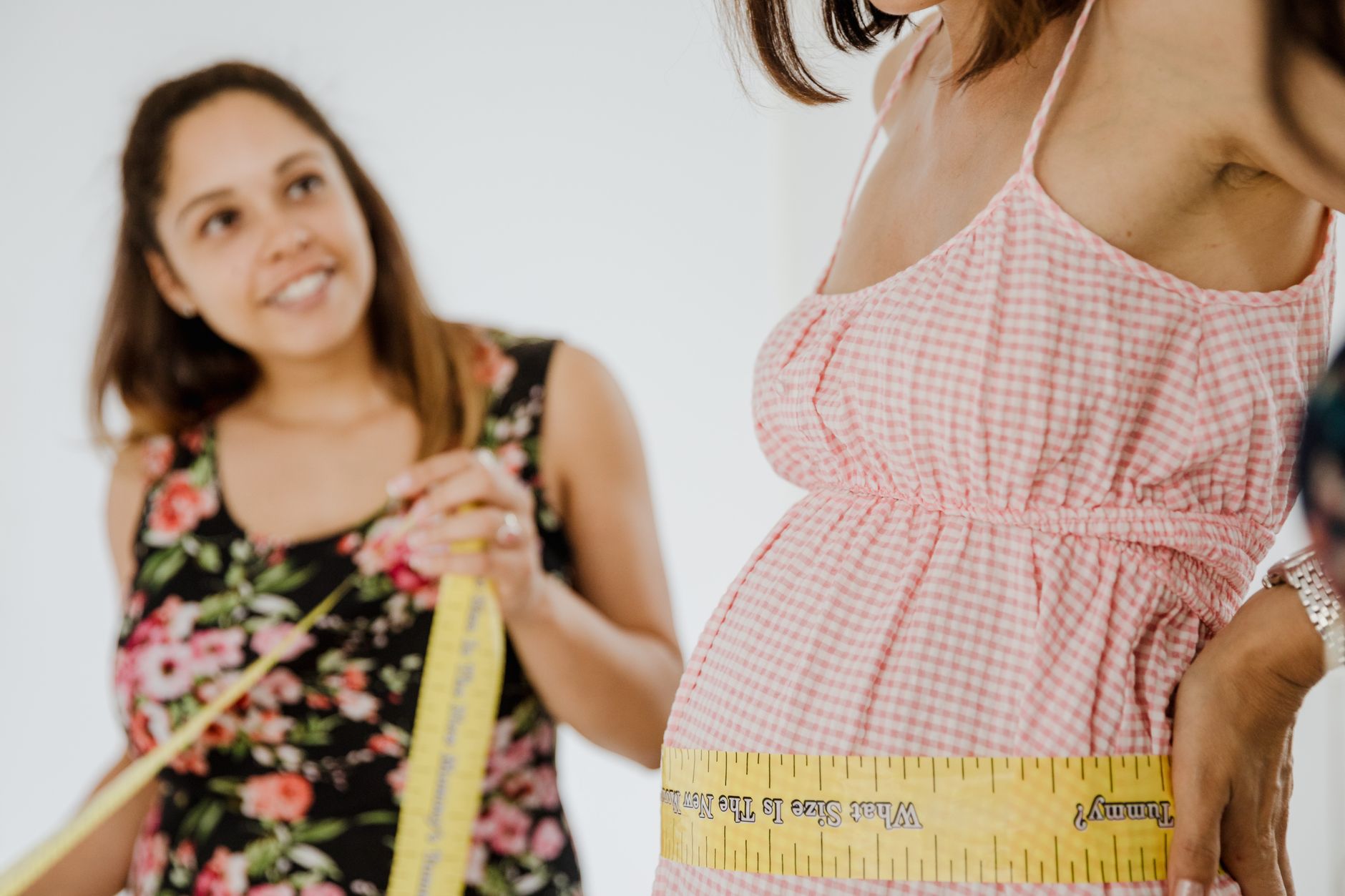
At 33 weeks pregnant, your belly size typically measures 32-34 cm from pubic bone to top. Learn why size varies, what’s normal, and signs to watch for.
By Shubhra Mishra — a mom of two who turned her own confusion during pregnancy into BumpBites, a global mission to make food choices clear, safe, and stress-free for every expecting mother. 💛
Check whether any food is safe during pregnancy with the BumpBites Food Safety Checker.
Quick take: At 33 weeks pregnant, most bellies measure about 20–22 inches (51–56 cm) around the widest part, but a healthy range spans roughly 18–24 inches (46–61 cm). Your size depends on baby size, fluid level, and body shape—so a modest difference is usually normal.
It’s 2 a.m., you’ve just felt a gentle stretch in your lower belly and wonder, “Is my bump supposed to be this big?” You’re not alone. By the third trimester, many expectant parents start tracking belly size as a way to gauge growth, and the numbers can feel like a secret code.
In this guide we’ll break down exactly what “33 weeks pregnant belly size” means, give you the average measurements in both inches and centimeters, explain why yours might be a little larger or smaller, and show you how to measure it reliably. We’ll also compare it to the previous week, discuss factors like baby weight and amniotic fluid, and tell you when a rapid change deserves a call to your provider.
Whether you’re shopping for maternity jeans, wondering if a 20‑inch belly is normal, or just looking for reassurance, read on. We’ll cover the numbers, the science, and practical tips for staying comfortable as you finish the final stretch of pregnancy.
What is the average belly size at 33 weeks pregnant?
Across large U.S. and U.K. cohorts, the median abdominal circumference (the distance around the widest part of the belly) at 33 weeks is roughly 20–22 inches (51–56 cm). This figure comes from routine obstetric measurements recorded in the American College of Obstetricians and Gynecologists (ACOG) guidelines and the UK’s National Health Service (NHS) pregnancy charts. The “average” is a statistical midpoint; most women fall within a normal range of about 18–24 inches (46–61 cm).
Why the range? Genetics, body type, and the amount of amniotic fluid all play a role. A taller mother with a broader torso often measures a few centimeters larger than a petite mother with a slender frame, even if the babies are the same size. The key is that your measurement stays close to the growth curve established by your provider.
Below is a quick reference chart that many clinicians use to compare your measurement with typical values at 33 weeks:
Measurement (inches)
Measurement (cm)
Typical baby weight range
18–19
46–48
5.0–5.5 lb (2.3–2.5 kg)
20–22
51–56
5.5–6.5 lb (2.5–3.0 kg)
23–24
58–61
6.5–8.0 lb (3.0–3.6 kg)
Keep in mind that the chart is a guide, not a diagnostic tool. Your provider will also consider uterine height (the distance from the pubic bone to the top of the uterus) and ultrasound findings when assessing fetal growth.
Measuring your belly each week can help you notice patterns and share accurate data with your caregiver.
How many inches should a 33‑week pregnant belly measure?
The simple answer is that most clinicians expect a measurement between 20 and 22 inches (51–56 cm) at 33 weeks. However, “should” is a moving target because the measurement changes day by day as the baby grows, fluid shifts, and your own weight fluctuates.
Here’s a practical way to think about it:
18–19 inches (46–48 cm): On the smaller side, often seen in women with a lean build or in pregnancies where the baby is slightly lighter than average.
20–22 inches (51–56 cm): The most common range, aligning with the median growth curve used in ACOG and NHS charts.
23–24 inches (58–61 cm): Larger but still normal, frequently linked to higher maternal weight, twins, or a baby that is gaining weight quickly.
For a quick mental check, compare your measurement to the width of a standard sheet of paper (about 11 inches). If you’re measuring about two paper widths across, you’re likely within the typical range.
Is a 33‑week pregnant belly size of 20 inches normal?
Yes—20 inches is right in the middle of the expected range. In fact, many providers use a 20‑inch measurement as a benchmark for “average” at this stage. If your belly measures exactly 20 inches, it probably means your baby is growing at a typical rate, your amniotic fluid level is within normal limits, and there’s no immediate cause for concern.
That said, every pregnancy is unique. A 20‑inch belly could accompany a baby that weighs as little as 5 lb or as much as 6.5 lb, depending on other factors such as maternal height and the amount of extra fluid. If you have any lingering worries—like sudden swelling or a feeling of heaviness—bring them up at your next prenatal visit.
Factors that affect belly size at 33 weeks pregnancy
Several variables influence how big your bump looks and feels. Understanding them can help you interpret your own measurement without unnecessary alarm.
Baby’s size and weight
The most direct contributor is the baby’s growth. By 33 weeks, the average fetal weight is about 5.5–6 lb (2.5–2.7 kg). If your baby is larger or smaller than average, the belly will reflect that difference. Ultrasound estimates of fetal weight are the most reliable way to know the baby’s size.
Amniotic fluid volume
Amniotic fluid cushions the baby and fills the uterine cavity. A higher fluid volume (polyhydramnios) can add a few centimeters to your measurement, while low fluid (oligohydramnios) can make the belly appear smaller. Both conditions are monitored by ultrasound and, if needed, managed by your provider.
Maternal weight gain
Weight gain from fat stores, blood volume, and placenta growth adds to the overall circumference. The Institute of Medicine (IOM) recommends a total gain of 25–35 lb (11–16 kg) for women with a normal pre‑pregnancy BMI. Gaining within this range typically results in belly sizes that stay within the normal chart.
Fetal position
Whether the baby is head‑down (cephalic) or breech can shift the belly’s shape. A breech baby may cause the belly to look slightly higher or more rounded, while a head‑down baby often creates a smoother curve.
Uterine tone and muscle strength
Strong abdominal muscles can make the belly feel firmer and sometimes appear slightly smaller, whereas a more relaxed uterine wall may give a softer, larger look.
Multiple pregnancies
Twins or triplets add extra volume. At 33 weeks, a twin pregnancy typically measures 22–25 inches (56–64 cm), while triplets can exceed 26 inches (66 cm). If you’re expecting multiples, your provider will track growth with more frequent ultrasounds.
Swelling (edema)
Fluid accumulation in the legs and feet can also affect abdominal measurements, especially if the swelling is generalized. If you notice a sudden increase in size accompanied by swelling in hands or face, it could signal pre‑eclampsia—a condition that requires immediate medical attention.
Factors like fluid levels and fetal position can subtly change the circumference from week to week.
How does baby growth impact belly size at 33 weeks?
The baby’s growth is the centerpiece of the third‑trimester size change. From weeks 30 to 36, the fetus gains roughly 0.5 lb (≈230 g) per week. This rapid weight gain, combined with the development of fat layers, makes the belly feel noticeably larger.
Specific milestones that affect belly size include:
Brain development: The brain’s rapid expansion adds to head size, influencing how the uterus expands upward.
Lung maturation: The lungs fill with fluid, contributing to overall fetal volume.
Body fat deposition: Around week 30, the baby begins storing fat, making the belly feel rounder.
When a baby’s weight jumps ahead of the growth curve, the belly may increase a centimeter or two within a week. Conversely, if the baby’s growth slows, the measurement may plateau. Your provider uses ultrasound to differentiate between normal growth variance and potential concerns such as intrauterine growth restriction (IUGR).
When should I be concerned about rapid belly growth at 33 weeks?
Most changes are harmless, but certain patterns merit a prompt call to your obstetrician or midwife.
Sudden increase of more than 2 cm (≈0.8 in) in a day: This could signal excess amniotic fluid (polyhydramnios) or rapid fetal growth.
Accompanying swelling of hands, face, or sudden weight gain: May indicate pre‑eclampsia.
Severe abdominal pain, contractions, or fluid leaking: Requires immediate evaluation.
Persistent feeling that the baby is “too big” for your due date: Ask for an ultrasound to confirm fetal size and fluid levels.
If any of these red flags appear, schedule a prenatal visit or call your provider’s urgent line. Early assessment can prevent complications and give you peace of mind.
How to measure your belly size at 33 weeks accurately
Accurate measurement helps you track growth and provides useful data for your prenatal appointments. Follow these simple steps:
Gather a flexible measuring tape: A cloth or soft plastic tape works best.
Stand upright: Keep your back straight and relax your abdominal muscles. Measuring while sitting can compress the belly and give a lower reading.
Find the widest point: This is usually a few centimeters above the belly button, where the curve feels most pronounced.
Wrap the tape around gently: It should be snug but not tight—enough to stay in place without indenting the skin.
Read the measurement: Look at the number where the tape meets the zero mark. Record the result in both inches and centimeters.
Repeat twice: Take two readings and average them for consistency.
Note the date and time: Consistency matters; try to measure at the same time of day (morning after bathroom use is ideal).
Tip: Keep a small notebook or a notes app on your phone dedicated to “Pregnancy Measurements.” Jot down each reading and any accompanying symptoms (e.g., “felt a stretch” or “mild swelling”). This log becomes a handy reference for your next check‑up.
33 weeks pregnant belly size vs. 32 weeks comparison
On average, the abdominal circumference grows about 0.5–1 inch (1.3–2.5 cm) per week between weeks 32 and 34. This reflects the baby’s rapid weight gain and the increasing volume of amniotic fluid.
Below is a side‑by‑side comparison of typical measurements:
Week
Average measurement (inches)
Average measurement (cm)
32
19.5
49.5
33
20.5
52
34
21.0
53.5
If your personal growth curve follows a similar pattern—gradual, steady increase—you’re likely on track. A jump of more than 2 cm in a single week, however, should be discussed with your provider.
Additional considerations for 33 weeks pregnant belly size
Beyond the core measurements, several related topics often surface in searches. Below we address them briefly, so you have a well‑rounded picture.
33 weeks pregnant belly size chart
Many health portals provide printable charts that list expected belly sizes by week. These charts align with ACOG’s growth standards and can be a handy visual aid. Look for a chart that includes both inches and centimeters, and keep it in your pregnancy binder.
33 weeks pregnant belly size in centimeters
If you prefer metric units, remember that 1 inch equals 2.54 cm. The typical range of 18–24 inches translates to 46–61 cm. Use a conversion calculator or a dual‑unit measuring tape for ease.
33 weeks pregnant belly size and baby weight
While belly size gives a rough sense of fetal size, ultrasound‑estimated weight is more precise. A 20‑inch belly often correlates with a baby weighing 5.5–6 lb, but variations are common. Your provider will compare both data points during the visit.
33 weeks pregnant belly size and uterine height
Uterine height (fundal height) is measured from the pubic bone to the top of the uterus. At 33 weeks, the fundal height usually matches the gestational age in centimeters (≈33 cm). Discrepancies between fundal height and belly circumference can signal measurement error or a growth issue, prompting further evaluation.
33 weeks pregnant belly size and amniotic fluid level
Excess fluid (polyhydramnios) can add 1–2 cm to your belly measurement. Conversely, low fluid (oligohydramnios) may make it seem smaller. Ultrasound is the definitive test; a routine scan at 32–34 weeks often includes a fluid assessment.
33 weeks pregnant belly size and fetal position
A breech baby may cause a higher bump, while a head‑down baby creates a smoother curve. Your provider can feel the fetal position during a Leopold maneuver, and an ultrasound will confirm it.
33 weeks pregnant belly size and swelling
Generalized swelling (edema) can increase abdominal girth. Distinguish this from normal growth by checking for puffiness in the ankles, hands, or face. If swelling is sudden or severe, contact your healthcare team.
Practical tips for comfort at 33 weeks
Choose stretchy maternity leggings: Look for high‑waist styles that accommodate a growing belly without digging in.
Mind your posture: Use a small pillow behind your lower back when sitting to reduce strain.
Gentle belly massage: Light circular motions can ease itching and improve skin elasticity.
Sleep on your left side: This promotes optimal blood flow to the baby and reduces pressure on major vessels.
From our medical team: “A single measurement doesn’t tell the whole story. We look at growth trends, ultrasound findings, and how you feel. If you’re tracking your belly size weekly and notice a gradual increase within the typical range, that’s reassuring. Sudden jumps, especially with pain or swelling, deserve a prompt call.”
Myth vs. fact
Myth: “If my belly is larger than the chart, something is wrong.”
Fact: Belly size varies widely. A measurement a few centimeters above the average is often normal, especially in taller women or those carrying twins.
Myth: “A small belly means the baby is tiny and at risk.”
Fact: Some women naturally have a slimmer build, and a smaller circumference can still be compatible with healthy fetal growth confirmed by ultrasound.
Myth: “Measuring the belly once a month is enough.”
Fact: Weekly measurements help you notice trends and give your provider precise data for monitoring growth, especially after 30 weeks.
Key takeaways
At 33 weeks, the average belly measures 20–22 inches (51–56 cm); a normal range spans 18–24 inches (46–61 cm).
Factors such as baby weight, amniotic fluid, maternal weight, and fetal position drive size differences.
Measure weekly with a soft tape while standing upright, recording both inches and centimeters.
Rapid growth (>2 cm in a day) or accompanying swelling, pain, or fluid leakage should prompt a call to your provider.
Twins and triplets typically add a few centimeters to the average measurement.
Use comfortable maternity clothing, maintain good posture, and stay hydrated to ease third‑trimester discomfort.
Frequently asked questions
What is the normal belly size at 33 weeks of pregnancy?
The typical range is 18–24 inches (46–61 cm), with most women measuring around 20–22 inches (51–56 cm).
How many inches should a pregnant belly be at 33 weeks?
Most clinicians expect a circumference of about 20–22 inches (51–56 cm); anything within 18–24 inches is generally considered normal.
Can a small belly size at 33 weeks indicate a problem?
A smaller-than-average measurement alone isn’t a red flag, but if it’s accompanied by low fetal weight on ultrasound or other symptoms, your provider may investigate further.
How do I measure my belly size correctly at 33 weeks?
Use a flexible tape, stand upright, wrap it snugly around the widest part of your belly, and record the reading in both inches and centimeters, repeating twice for accuracy.
Why does my belly size increase faster after 32 weeks?
Between weeks 32 and 36, the baby gains roughly half a pound per week, and amniotic fluid volume rises, both contributing to a quicker increase in abdominal circumference.
When should I call my doctor about belly size changes at 33 weeks?
Contact your provider if you notice a sudden increase of more than 2 cm in a day, experience swelling, severe pain, contractions, or any fluid leakage.
When to call your doctor
If you experience any of the following, reach out to your obstetrician, midwife, or labor‑and‑delivery nurse right away:
Sudden increase of >2 cm in belly circumference within 24 hours.
Rapid swelling of hands, face, or feet.
Severe abdominal pain, persistent contractions, or a feeling of pressure.
Noticeable fluid leaking from the vagina.
Fever, chills, or unusual discharge.
This article provides general information and is not a substitute for personalized medical advice. Always discuss any concerns with your healthcare provider.
References
American College of Obstetricians and Gynecologists (ACOG). “Routine Prenatal Care.” 2023 clinical guidance.
National Health Service (NHS). “Fundal height measurement.” Updated 2022.
World Health Organization (WHO). “Maternal health and nutrition.” 2021.
Institute of Medicine (IOM). “Weight Gain During Pregnancy.” 2009.
Centers for Disease Control and Prevention (CDC). “Pregnancy and Birth Statistics.” 2022.
Royal College of Obstetricians and Gynaecologists (RCOG). “Management of polyhydramnios.” 2020.
Mayo Clinic. “Third trimester: What to expect.” 2023.
National Institute for Health and Care Excellence (NICE). “Antenatal care guidelines.” 2022.
Not sure about the label on 33 Weeks Pregnant Belly Size products?
Snap the ingredients list and SafeFilter checks every ingredient for your stage — only 3 free scans this month, then you're locked until reset. Unlimited from $7/mo or $50/yr.
When Shubhra Mishra was expecting her first child in 2016, she was overwhelmed by conflicting food advice — one site said yes, another said never. By the time her second baby arrived in 2019, she realized millions of mothers face the same confusion.
That sparked a five-year journey through clinical nutrition papers, cultural diets, and expert conversations — all leading to BumpBites: a calm, compassionate space where science meets everyday motherhood.
Her long-term vision is to build a global community ensuring safe, supported, and free deliveriesfor every mother — because no woman should face pregnancy alone or uninformed. 🌿
🌍 Stand with mothers, shape safer guidance
Join a small circle of experts who review BumpBites articles so expecting parents everywhere can decide with confidence.