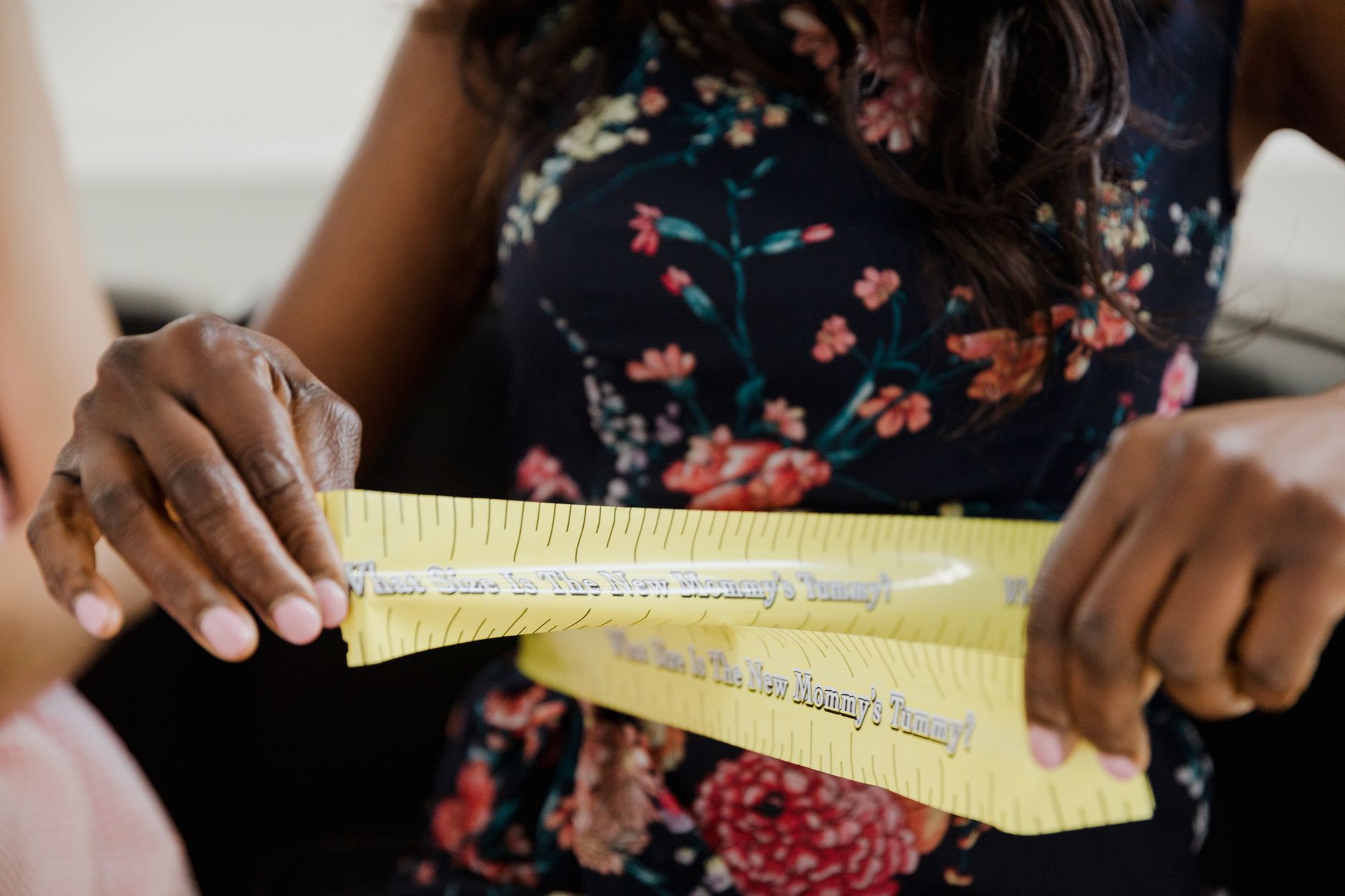
At 31 weeks, the pregnant belly usually measures 34‑36 inches, but size varies. Learn how to measure correctly, what’s normal, and when to see a doctor.
By Shubhra Mishra — a mom of two who turned her own confusion during pregnancy into BumpBites, a global mission to make food choices clear, safe, and stress-free for every expecting mother. 💛
Check whether any food is safe during pregnancy with the BumpBites Food Safety Checker.
Quick take: At 31 weeks pregnant, the average belly measures about 30–34 centimeters (12–13.5 inches) from the top of your pubic bone to the top of your uterus. But your bump could be smaller or larger—and still perfectly normal. Belly size depends on factors like your body type, baby’s position, and amniotic fluid levels. If you’re worried, your provider can measure it at your next visit. Most of the time, a bigger or smaller bump just means your baby is growing in their own unique way.
You’re scrolling through your phone at 2 a.m., comparing your 31-week belly to every pregnancy bump you see online. One photo shows a tiny, neat bump; another looks like a basketball under a shirt. Your mind races: Is mine too big? Too small? What’s normal?
Here’s the truth: there’s no single “right” size for a 31-week belly. What matters is that your baby is growing steadily—and your provider is tracking that growth at every visit. Still, it’s natural to wonder. This guide will walk you through what’s typical, how to measure your bump at home, and when to check in with your doctor.
Your 31-week belly is as unique as your pregnancy—what matters is steady growth, not the number on the tape measure.
What is the average belly size at 31 weeks pregnant?
At 31 weeks, most healthcare providers measure your fundal height—the distance from the top of your pubic bone to the top of your uterus. This measurement helps track your baby’s growth. On average, the fundal height at 31 weeks is about 30–34 centimeters (12–13.5 inches).
But here’s the thing: averages are just a starting point. Your belly could measure a little smaller or larger and still be completely normal. For example, if you’re petite, your bump might look smaller than a friend’s who’s the same number of weeks along. Or if this is your second pregnancy, your belly might “pop” earlier because your abdominal muscles are more relaxed.
One mom we spoke with, Sarah, shared her experience: “At my 31-week appointment, my fundal height was 32 centimeters—right in the average range. But I still felt like my belly was tiny compared to my sister’s when she was pregnant. My provider reassured me that as long as my baby was growing steadily, the size didn’t matter. And sure enough, my little one was born at a healthy 7 pounds, 2 ounces.”
How many inches is a 31-week pregnant belly?
If you’re measuring in inches, the average fundal height at 31 weeks is about 12–13.5 inches (30–34 centimeters). But remember, this is just a rough guideline. Your belly’s size in inches doesn’t tell the whole story—it’s just one piece of the puzzle.
For example, if your belly measures 11 inches at 31 weeks, it might seem small, but it could be because your baby is positioned lower in your pelvis or you have a smaller frame. On the other hand, a 14-inch belly might seem large, but it could simply mean you’re carrying extra amniotic fluid or your baby is in a breech position (feet or bottom down).
Here’s a quick reference for what to expect:
Measurement (inches)
Measurement (centimeters)
What it might mean
10–11 inches
25–28 cm
Smaller frame, baby positioned low, or first pregnancy
12–13.5 inches
30–34 cm
Average range for most women at 31 weeks
14+ inches
35+ cm
Taller frame, extra amniotic fluid, or baby in breech position
If your measurement falls outside the average range, don’t panic. Your provider will consider other factors, like your baby’s growth on ultrasound and your overall health, before deciding if anything needs further attention.
31 weeks pregnant belly measurement guide
Your healthcare provider measures your fundal height at every prenatal visit, but you can also check it at home if you’re curious. Here’s how to do it safely and accurately:
Gather your tools: You’ll need a soft tape measure (the kind used for sewing) and a helper if possible. Measuring alone can be tricky, especially as your belly grows.
Empty your bladder: A full bladder can push your uterus upward, making your measurement slightly larger than it really is.
Lie down comfortably: Lie on your back on a flat surface, like your bed or the floor. Bend your knees slightly to relax your abdominal muscles.
Find your pubic bone: Locate the top of your pubic bone (the hard bone just above your pubic hair). This is your starting point.
Measure to the top of your uterus: Place the start of the tape measure at your pubic bone and stretch it upward to the top of your uterus (the firm, rounded part of your belly). The tape should follow the natural curve of your bump—don’t pull it tight or let it sag.
Record the measurement: Note the number in inches or centimeters. You can track this over time to see how your belly is growing.
Keep in mind that home measurements aren’t as precise as those taken by your provider. If you’re concerned about your belly size, it’s always best to bring it up at your next appointment.
Measuring your belly at home can help you track growth, but your provider’s measurements are the most accurate.
Is my 31-week belly size normal compared to my due date?
Your due date is calculated based on the first day of your last menstrual period, but it’s just an estimate. Babies grow at their own pace, and your belly size at 31 weeks doesn’t always match up perfectly with your due date. What’s more important is that your belly is growing steadily over time.
For example, if your due date suggests you’re 31 weeks pregnant but your belly measures closer to 29 centimeters, it might mean your baby is growing a little more slowly—or it could just mean your dates are slightly off. Your provider will likely order an ultrasound to check your baby’s growth and adjust your due date if needed.
On the other hand, if your belly measures larger than expected, it could be due to factors like:
Extra amniotic fluid (a condition called polyhydramnios)
A larger-than-average baby
More than one baby (if you’re carrying twins or triplets)
A baby in the breech position (feet or bottom down)
Most of the time, these variations are nothing to worry about. But if your provider notices a significant difference between your belly size and your due date, they may recommend additional monitoring to make sure everything is on track.
Factors that affect belly size at 31 weeks pregnant
Your belly size at 31 weeks isn’t just about how big your baby is. Several other factors can influence how your bump looks and feels:
1. Your body type and shape
If you’re petite or have a shorter torso, your belly might appear smaller because there’s less room for your uterus to expand upward. Conversely, if you’re taller or have a longer torso, your bump might look more spread out. Women with a wider pelvis may also carry their baby lower, making their belly appear smaller from the side.
2. Baby’s position
Your baby’s position can change how your belly looks from day to day. If your baby is facing your spine (a position called occiput posterior or “sunny-side up”), your belly might look flatter. If your baby is in a breech position (feet or bottom down), your bump might appear higher and rounder.
3. Amniotic fluid levels
The amount of amniotic fluid surrounding your baby can affect your belly size. Too much fluid (polyhydramnios) can make your bump look larger, while too little fluid (oligohydramnios) can make it appear smaller. Both conditions are usually temporary and can be managed with monitoring.
4. Muscle tone and previous pregnancies
If this is your first pregnancy, your abdominal muscles are likely tighter, which can make your bump appear smaller. In subsequent pregnancies, your muscles are more relaxed, so your belly might “pop” earlier and look larger.
5. Weight gain during pregnancy
Your total weight gain can influence your belly size, but it’s not the only factor. Some women gain weight mostly in their belly, while others gain it more evenly throughout their body. The American College of Obstetricians and Gynecologists (ACOG) recommends a weight gain of 25–35 pounds for women with a normal pre-pregnancy BMI, but this varies based on your starting weight.
6. Baby’s growth rate
Some babies grow faster or slower than others, and this can affect your belly size. Your provider will track your baby’s growth at each visit to make sure they’re on the right trajectory. If there are concerns, they may order an ultrasound to get a more precise measurement.
One mom, Maria, shared her story: “At 31 weeks, my belly was measuring on the smaller side, and I was convinced something was wrong. My provider explained that my baby was just growing at her own pace—and she was right. My daughter was born at a healthy 6 pounds, 10 ounces, and she’s thriving now at 6 months old. It turns out, she just needed a little more time to grow.”
How to measure your belly at 31 weeks pregnant
If you’re curious about your belly size, you can measure it at home using a soft tape measure. Here’s a step-by-step guide to doing it safely and accurately:
Step 1: Gather your supplies
You’ll need a soft tape measure (the kind used for sewing) and a helper if possible. Measuring alone can be tricky, especially as your belly grows. If you don’t have a helper, try measuring in front of a mirror so you can see the tape measure.
Step 2: Empty your bladder
A full bladder can push your uterus upward, making your measurement slightly larger than it really is. Empty your bladder before you start for the most accurate reading.
Step 3: Lie down comfortably
Lie on your back on a flat surface, like your bed or the floor. Bend your knees slightly to relax your abdominal muscles. If lying flat is uncomfortable, you can also measure while standing, but this method is less accurate.
Step 4: Find your pubic bone
Locate the top of your pubic bone (the hard bone just above your pubic hair). This is your starting point for the measurement.
Step 5: Measure to the top of your uterus
Place the start of the tape measure at your pubic bone and stretch it upward to the top of your uterus (the firm, rounded part of your belly). The tape should follow the natural curve of your bump—don’t pull it tight or let it sag. The measurement should be in a straight line, not wrapped around your belly.
Step 6: Record the measurement
Note the number in inches or centimeters. You can track this over time to see how your belly is growing. Keep in mind that home measurements aren’t as precise as those taken by your provider, but they can give you a general idea of your growth.
If you notice that your belly isn’t growing as expected, don’t panic. Many factors can influence your measurement, and your provider can help you understand what’s normal for you.
When should I be concerned about a small or large belly at 31 weeks?
Most of the time, a smaller or larger belly at 31 weeks is nothing to worry about. But there are a few signs that could indicate a potential issue. Here’s when to check in with your provider:
Signs of a small belly
A belly that measures smaller than expected could be a sign of intrauterine growth restriction (IUGR), a condition where the baby isn’t growing at the expected rate. Other signs of IUGR include:
Your baby isn’t moving as much as usual
Your provider notices a slowdown in growth during ultrasounds
You’re not gaining weight as expected
If your provider suspects IUGR, they may recommend additional monitoring, such as non-stress tests or ultrasounds, to check your baby’s well-being.
Signs of a large belly
A belly that measures larger than expected could be a sign of polyhydramnios (too much amniotic fluid) or a larger-than-average baby. Other signs to watch for include:
Rapid weight gain
Swelling in your hands, feet, or face
Shortness of breath or difficulty moving around
Your provider notices a sudden increase in fundal height
If your provider suspects polyhydramnios or a large baby, they may order an ultrasound to get a better look at your baby’s size and the amount of amniotic fluid.
When to call your provider
Trust your instincts. If something feels off, don’t hesitate to reach out to your provider. Here are some signs that warrant a call:
Your belly stops growing or grows much faster than expected
You notice a sudden change in your baby’s movement
You experience contractions, vaginal bleeding, or fluid leaking
You have severe pain or swelling in your hands, feet, or face
One mom, Lisa, shared her experience: “At 31 weeks, I noticed my belly wasn’t growing as much as it had been. I called my provider, and they scheduled an ultrasound. It turned out my baby was just growing at a slower pace, but they wanted to monitor me more closely. It was a relief to know that my little one was okay—and that I wasn’t overreacting by speaking up.”
From our medical team: “Belly size is just one piece of the puzzle when it comes to tracking your baby’s growth. At your prenatal visits, we’re looking at the whole picture: your fundal height, your baby’s movement, your weight gain, and your overall health. If we’re concerned about your belly size, we’ll order an ultrasound to get a more precise measurement. Most of the time, variations in belly size are completely normal—but it’s always best to check in if you’re worried.”
Myth vs. fact
Myth: A small belly at 31 weeks means your baby is too small.
Fact: Belly size isn’t always an accurate indicator of your baby’s size. Factors like your body type, baby’s position, and amniotic fluid levels can all influence how your bump looks. Your provider will track your baby’s growth with ultrasounds and fundal height measurements to make sure everything is on track.
Myth: A large belly at 31 weeks means you’re having a big baby.
Fact: A larger belly can be due to many factors, including extra amniotic fluid, a baby in the breech position, or simply your body type. Your provider will monitor your baby’s growth to determine if they’re larger than average.
Myth: You can predict your baby’s size by measuring your belly at home.
Fact: Home measurements aren’t as accurate as those taken by your provider. Ultrasounds and fundal height measurements are the best ways to track your baby’s growth.
Key takeaways
The average belly size at 31 weeks is about 30–34 centimeters (12–13.5 inches), but your bump could be smaller or larger and still be normal.
Belly size depends on factors like your body type, baby’s position, amniotic fluid levels, and muscle tone.
You can measure your belly at home, but your provider’s measurements are the most accurate.
A smaller or larger belly isn’t usually a cause for concern, but trust your instincts and check in with your provider if something feels off.
Your provider will track your baby’s growth with fundal height measurements and ultrasounds to make sure everything is on track.
If you’re worried about your belly size, don’t hesitate to reach out to your provider—they’re there to support you.
Frequently asked questions
What is the typical belly measurement at 31 weeks?
The typical belly measurement at 31 weeks is about 30–34 centimeters (12–13.5 inches) from the top of your pubic bone to the top of your uterus. This is called your fundal height. However, your belly could measure slightly smaller or larger and still be perfectly normal.
How many inches should a pregnant belly be at 31 weeks?
On average, a pregnant belly at 31 weeks measures about 12–13.5 inches (30–34 centimeters). But remember, this is just a guideline. Your belly size can vary based on factors like your body type, baby’s position, and amniotic fluid levels.
Is a small belly at 31 weeks a cause for concern?
A small belly at 31 weeks isn’t usually a cause for concern, but it’s worth mentioning to your provider. They’ll track your baby’s growth with fundal height measurements and ultrasounds to make sure everything is on track. If your baby isn’t growing as expected, they may recommend additional monitoring.
Can I measure my belly at home at 31 weeks?
Yes, you can measure your belly at home using a soft tape measure. Lie down, find the top of your pubic bone, and measure to the top of your uterus. Keep in mind that home measurements aren’t as precise as those taken by your provider, but they can give you a general idea of your growth.
What factors influence belly size during the third trimester?
Several factors can influence your belly size during the third trimester, including your body type, baby’s position, amniotic fluid levels, muscle tone, and weight gain. Your provider will consider all of these factors when tracking your baby’s growth.
When should I talk to my doctor about my belly size at 31 weeks?
You should talk to your doctor if you notice a sudden change in your belly size, your baby’s movement decreases, or you experience contractions, vaginal bleeding, or fluid leaking. Trust your instincts—if something feels off, don’t hesitate to reach out.
When to call your doctor
Your belly size at 31 weeks is just one part of your pregnancy journey. While variations are usually normal, there are a few signs that warrant a call to your provider:
Your belly stops growing or grows much faster than expected
You notice a sudden change in your baby’s movement
You experience contractions, vaginal bleeding, or fluid leaking
You have severe pain or swelling in your hands, feet, or face
You feel something isn’t right
Remember, this article is for informational purposes only and isn’t a substitute for professional medical advice. Always check in with your provider if you have concerns about your belly size or your baby’s growth.
References
American College of Obstetricians and Gynecologists (ACOG). (2021). Weight Gain During Pregnancy. https://www.acog.org/
National Health Service (NHS). (2023). Your Pregnancy Week by Week. https://www.nhs.uk/
Not sure about the label on 31 Weeks Pregnant Belly Size products?
Snap the ingredients list and SafeFilter checks every ingredient for your stage — only 3 free scans this month, then you're locked until reset. Unlimited from $7/mo or $50/yr.
When Shubhra Mishra was expecting her first child in 2016, she was overwhelmed by conflicting food advice — one site said yes, another said never. By the time her second baby arrived in 2019, she realized millions of mothers face the same confusion.
That sparked a five-year journey through clinical nutrition papers, cultural diets, and expert conversations — all leading to BumpBites: a calm, compassionate space where science meets everyday motherhood.
Her long-term vision is to build a global community ensuring safe, supported, and free deliveriesfor every mother — because no woman should face pregnancy alone or uninformed. 🌿
🌍 Stand with mothers, shape safer guidance
Join a small circle of experts who review BumpBites articles so expecting parents everywhere can decide with confidence.