

Quick take: At 31 weeks pregnant, your baby is about the size of a coconut—roughly 16 inches long and weighing around 3 to 3.5 pounds. Most babies at this stage are gaining weight rapidly, and their organs are nearly fully developed. While there’s a wide range of "normal" sizes, your provider will track growth closely to ensure everything is on track.
It’s 3 a.m., and you’re lying in bed, hands resting on your belly, wondering: How big is my baby right now? Maybe you’ve just had your 31-week ultrasound, or maybe you’re just curious about how much your little one has grown since last month. At this stage, your baby is the size of a coconut, but what does that actually mean? How much do they weigh? How long are they? And—most importantly—is this size normal?
If you’ve ever Googled "31 weeks pregnant baby size" at midnight, you’re not alone. Many parents-to-be find themselves fixated on these numbers, especially as the third trimester rolls on. The truth is, baby size at 31 weeks can vary—a lot. Some babies are the size of a butternut squash, others more like a pineapple. What matters most isn’t the exact number on the scale, but whether your baby is growing steadily and healthily. Still, it’s natural to want to know what’s typical, what to expect, and when to relax (or when to ask your provider a few extra questions).
In this guide, we’ll break down everything you need to know about your baby’s size at 31 weeks—from weight and length to fruit comparisons, growth charts, and what it all means for the weeks ahead. We’ll also cover what’s not a cause for concern, what is worth mentioning to your doctor, and how to track your baby’s growth between now and delivery. By the end, you’ll have a clearer picture of where your little one stands—and why those numbers are just one piece of the puzzle.
How Big Is a Baby at 31 Weeks Pregnant?
At 31 weeks, your baby is roughly the size of a coconut. But what does that translate to in real numbers? On average, a baby at this stage measures about 16 inches (41 centimeters) from head to heel and weighs between 3 and 3.5 pounds (1.4 to 1.6 kilograms). That’s about the length of a large zucchini and the weight of a small bag of sugar.
Many parents are surprised to learn just how much their baby has grown since the start of the third trimester. At 28 weeks, the average baby weighs around 2.2 pounds (1 kg)—so in just three weeks, your little one has likely gained nearly a pound. That rapid growth is a good sign: it means their organs, bones, and fat stores are developing as they should. By 31 weeks, most babies have also lost that wrinkly, translucent look, thanks to a layer of fat filling out their skin.
But here’s the thing: average doesn’t mean only. Babies come in all sizes at 31 weeks, and what’s "normal" spans a pretty wide range. Some babies might be closer to 2.5 pounds, while others tip the scales at 4 pounds or more. As long as your baby is growing steadily—and your provider isn’t concerned—there’s no need to fixate on the exact number. What matters more is the trend over time.
31-Week Fetal Length in Centimeters (and Inches)
Here’s what you can expect:
- Crown-to-heel length: ~41 centimeters (16 inches)
- Crown-to-rump length: ~28 centimeters (11 inches)
During an ultrasound, your provider will measure your baby’s length to ensure they’re growing at a healthy rate. These measurements are especially important in the third trimester, as they help track whether your baby is on pace for a full-term delivery. If your baby’s length falls outside the typical range, your provider might order additional ultrasounds to monitor growth more closely.
It’s worth noting that babies grow in spurts, not at a perfectly steady pace. One week, your baby might gain more length; the next, they might pack on more weight. That’s why providers look at the big picture—not just a single measurement. If your baby is consistently growing (even if they’re on the smaller or larger side), that’s usually a reassuring sign.
Average Weight of a 31-Week Fetus
At 31 weeks, the average weight of a fetus is 3 to 3.5 pounds (1.4 to 1.6 kilograms). But as with length, there’s a pretty wide range of what’s considered normal. Some babies at this stage weigh as little as 2.5 pounds, while others might be closer to 4 pounds. Both can be perfectly healthy—it all depends on genetics, maternal health, and other factors.
Weight gain is one of the biggest milestones of the third trimester. At 28 weeks, the average baby weighs about 2.2 pounds. By 31 weeks, they’ve likely gained nearly a pound in just three weeks. That rapid growth is a sign that your baby’s fat stores are developing, which will help regulate their body temperature after birth. It’s also why you might notice your belly feeling heavier or your baby’s movements feeling more pronounced.
If you’ve had an ultrasound recently, you might have seen your baby’s estimated weight on the report. It’s important to remember that these estimates aren’t exact—they can be off by as much as 10–15%. That’s why providers don’t rely on a single measurement. Instead, they track your baby’s growth over time to see if the trend is steady. If your baby is consistently gaining weight (even if they’re on the smaller side), that’s usually a good sign.
One thing to keep in mind: bigger isn’t always better. While it’s natural to want a "big, healthy baby," babies who grow too quickly can sometimes face challenges during delivery. On the flip side, babies who are smaller than average might just be following their genetic blueprint. What matters most is that your baby is growing at a steady rate and that your provider isn’t concerned.
What Size Fruit Is a 31-Week Baby?
If you’ve ever wondered what fruit your baby is the size of at 31 weeks, you’re not alone. Fruit comparisons are a popular way to visualize your baby’s growth, and at this stage, your little one is roughly the size of a coconut. But depending on who you ask, you might also hear comparisons to a butternut squash, pineapple, or even a bunch of kale (yes, really!).
Here’s a quick breakdown of the most common fruit comparisons for a 31-week baby:
| Fruit | Length (approx.) | Weight (approx.) |
|---|---|---|
| Coconut | 16 inches (41 cm) | 3–3.5 pounds (1.4–1.6 kg) |
| Butternut squash | 15–16 inches (38–41 cm) | 2.5–3.5 pounds (1.1–1.6 kg) |
| Pineapple | 16 inches (41 cm) | 3–4 pounds (1.4–1.8 kg) |
| Bunch of kale | 16–18 inches (41–46 cm) | 2–3 pounds (0.9–1.4 kg) |
These comparisons aren’t exact, of course—they’re just a fun way to picture your baby’s size. But they can be helpful for visualizing how much your little one has grown. At 20 weeks, your baby was about the size of a banana. At 28 weeks, they were closer to an eggplant. And now, at 31 weeks, they’re as big as a coconut. It’s amazing how quickly they grow!
If you’re curious about how your baby’s size compares to other objects, you can also think of them as roughly the length of a large zucchini or the weight of a small bag of flour. Some parents even compare their baby’s size to household items, like a loaf of bread or a football. The key takeaway? Your baby is getting bigger by the day, and every week brings new milestones.
31 Weeks Pregnant Baby Size Compared to Full Term
At 31 weeks, your baby is about 70–75% of their full-term length and 50–60% of their full-term weight. That means there’s still a lot of growing left to do! By the time your baby reaches full term (around 37–42 weeks), they’ll likely measure 19–21 inches (48–53 cm) and weigh 6–9 pounds (2.7–4.1 kg).
Here’s a quick comparison of how your baby’s size at 31 weeks stacks up against full-term measurements:
| Measurement | 31 Weeks | Full Term (37–42 Weeks) |
|---|---|---|
| Length (crown-to-heel) | 16 inches (41 cm) | 19–21 inches (48–53 cm) |
| Weight | 3–3.5 pounds (1.4–1.6 kg) | 6–9 pounds (2.7–4.1 kg) |
| Head circumference | 11 inches (28 cm) | 13–14 inches (33–36 cm) |
In the nine weeks between 31 weeks and full term, your baby will likely double in weight and gain about 3–5 inches in length. That’s a lot of growth in a short amount of time! During this period, your baby’s brain, lungs, and fat stores will continue to develop, and they’ll start practicing important skills like breathing, sucking, and swallowing.
It’s also worth noting that babies grow at different rates in the third trimester. Some babies pack on most of their weight early in the third trimester, while others grow more steadily until delivery. As long as your baby is gaining weight and your provider isn’t concerned, there’s no need to worry about the exact pace. What matters most is that your baby is healthy and on track for a safe delivery.
One thing to keep in mind: bigger isn’t always better. While it’s natural to want a "big, healthy baby," babies who grow too quickly can sometimes face challenges during delivery, such as shoulder dystocia (when the baby’s shoulders get stuck). On the other hand, babies who are smaller than average might just be following their genetic blueprint. What matters most is that your baby is growing steadily and that your provider is monitoring their progress.
Is a 31-Week Baby Size Normal?
If you’ve ever wondered whether your baby’s size at 31 weeks is "normal," you’re not alone. Many parents-to-be fixate on these numbers, especially as the third trimester rolls on. The good news? There’s a wide range of what’s considered normal at this stage. Babies at 31 weeks can weigh anywhere from 2.5 to 4 pounds and measure 15 to 17 inches in length. As long as your baby is growing steadily—and your provider isn’t concerned—there’s usually no need to worry.
That said, it’s natural to have questions. Maybe your baby is on the smaller side, or maybe they’re measuring larger than average. Either way, it’s important to remember that one measurement doesn’t tell the whole story. Providers look at the trend over time, not just a single number. If your baby is consistently gaining weight and growing in length, that’s usually a reassuring sign.
Here are a few factors that can influence your baby’s size at 31 weeks:
- Genetics: Your baby’s size is partly determined by their genetic blueprint. If you or your partner were small or large at birth, your baby might follow a similar pattern.
- Maternal health: Conditions like gestational diabetes or high blood pressure can affect your baby’s growth. If you have any underlying health issues, your provider will monitor your baby’s size more closely.
- Placental health: The placenta is your baby’s lifeline, delivering oxygen and nutrients. If the placenta isn’t functioning optimally, your baby might grow more slowly.
- Amniotic fluid levels: Too much or too little amniotic fluid can sometimes affect your baby’s growth. Your provider will check these levels during ultrasounds.
- Multiple pregnancy: If you’re carrying twins or triplets, your babies might be smaller than average. That’s normal—there’s just less room to grow!
If your provider is concerned about your baby’s size, they might order additional ultrasounds or tests to monitor growth more closely. In some cases, they might recommend early delivery if they believe it’s safer for your baby. But in most cases, a baby who’s smaller or larger than average at 31 weeks will still grow into a healthy, full-term baby.
One thing to keep in mind: size isn’t everything. A baby who’s on the smaller side at 31 weeks might catch up by full term, while a baby who’s larger than average might level off. What matters most is that your baby is healthy and growing steadily. If you’re ever worried, don’t hesitate to ask your provider for reassurance—or for more information about what the numbers mean.
Growth Chart: 31 Weeks Pregnancy Baby Size
Growth charts are a helpful way to track your baby’s size over time. They show the typical range of weights and lengths for babies at each week of pregnancy, so you can see where your little one falls. At 31 weeks, most babies measure between 15 and 17 inches (38–43 cm) and weigh between 2.5 and 4 pounds (1.1–1.8 kg). But remember: these charts are just guidelines. What’s "normal" spans a pretty wide range.
Here’s a simplified growth chart for a 31-week baby:
| Measurement | 5th Percentile | 50th Percentile (Average) | 95th Percentile |
|---|---|---|---|
| Weight | 2.5 pounds (1.1 kg) | 3.3 pounds (1.5 kg) | 4 pounds (1.8 kg) |
| Length (crown-to-heel) | 15 inches (38 cm) | 16 inches (41 cm) | 17 inches (43 cm) |
| Head circumference | 10.5 inches (27 cm) | 11 inches (28 cm) | 11.5 inches (29 cm) |
The percentiles on the chart show where your baby falls compared to other babies at the same gestational age. For example, if your baby is in the 50th percentile for weight, that means 50% of babies at 31 weeks weigh less than your baby, and 50% weigh more. If your baby is in the 10th percentile, that means 90% of babies weigh more. Neither is necessarily "better"—it’s just a way to track growth over time.
It’s important to remember that these charts are based on averages, and every baby grows at their own pace. Some babies might be on the smaller side for most of the pregnancy but catch up by full term. Others might be larger than average early on but level off as they get closer to delivery. What matters most is that your baby is growing steadily and that your provider isn’t concerned.
If your baby’s measurements fall outside the typical range, your provider might order additional ultrasounds to monitor growth more closely. In some cases, they might recommend early delivery if they believe it’s safer for your baby. But in most cases, a baby who’s smaller or larger than average at 31 weeks will still grow into a healthy, full-term baby.

How Many Weeks Until Baby Reaches Full Term Size from 31 Weeks?
At 31 weeks, your baby is about 9 weeks away from full term (which is typically considered 40 weeks). But most babies reach what’s called "term" between 37 and 42 weeks. That means your little one could be considered full term in as little as 6 weeks or as many as 11 weeks.
In those final weeks, your baby will do a lot of growing. By full term, most babies weigh 6 to 9 pounds (2.7 to 4.1 kg) and measure 19 to 21 inches (48 to 53 cm) in length. That means your baby will likely double in weight and gain about 3 to 5 inches in length between now and delivery. It’s a lot of growth in a short amount of time!
Here’s a quick breakdown of how your baby’s size might change in the coming weeks:
| Week | Average Weight | Average Length |
|---|---|---|
| 31 weeks | 3–3.5 pounds (1.4–1.6 kg) | 16 inches (41 cm) |
| 34 weeks | 4.5–5 pounds (2–2.3 kg) | 17.5 inches (44 cm) |
| 37 weeks (early term) | 6–7 pounds (2.7–3.2 kg) | 19 inches (48 cm) |
| 40 weeks (full term) | 7–8 pounds (3.2–3.6 kg) | 20 inches (51 cm) |
It’s important to remember that these numbers are just averages. Some babies grow more quickly in the third trimester, while others grow more steadily. What matters most is that your baby is growing at a healthy rate and that your provider isn’t concerned. If you’re ever worried about your baby’s size, don’t hesitate to ask your provider for reassurance—or for more information about what to expect in the coming weeks.
One thing to keep in mind: the final weeks of pregnancy are crucial for your baby’s development. During this time, your baby’s brain, lungs, and fat stores will continue to mature. They’ll also start practicing important skills like breathing, sucking, and swallowing. That’s why providers usually recommend waiting until at least 39 weeks for delivery unless there’s a medical reason to deliver earlier.
31 Weeks Pregnant Baby Size in Inches
If you’re more familiar with inches than centimeters, you might be wondering how long your baby is at 31 weeks. On average, a baby at this stage measures about 16 inches (41 cm) from head to heel. That’s roughly the length of a large zucchini or a standard ruler. From head to bottom (crown-to-rump), your baby is about 11 inches (28 cm) long.
Here’s a quick breakdown of your baby’s length in inches at 31 weeks:
- Crown-to-heel length: ~16 inches (41 cm)
- Crown-to-rump length: ~11 inches (28 cm)
During an ultrasound, your provider will measure your baby’s length to ensure they’re growing at a healthy rate. These measurements are especially important in the third trimester, as they help track whether your baby is on pace for a full-term delivery. If your baby’s length falls outside the typical range, your provider might order additional ultrasounds to monitor growth more closely.
It’s worth noting that babies grow in spurts, not at a perfectly steady pace. One week, your baby might gain more length; the next, they might pack on more weight. That’s why providers look at the big picture—not just a single measurement. If your baby is consistently growing (even if they’re on the smaller or larger side), that’s usually a reassuring sign.
31-Week Ultrasound Measurements: What’s Typical?
If you’ve had a 31-week ultrasound, you might have seen a list of measurements on the report. These numbers can feel overwhelming, but they’re just a way for your provider to track your baby’s growth. Here’s what you can expect to see—and what each measurement means:
| Measurement | Typical Range at 31 Weeks | What It Means |
|---|---|---|
| Biparietal diameter (BPD) | 75–85 mm (3–3.3 inches) | Measures the width of your baby’s head from side to side. Helps estimate gestational age and track brain development. |
| Head circumference (HC) | 270–300 mm (10.6–11.8 inches) | Measures the distance around your baby’s head. Helps track brain growth and development. |
| Abdominal circumference (AC) | 240–280 mm (9.4–11 inches) | Measures the distance around your baby’s belly. Helps track weight gain and organ development. |
| Femur length (FL) | 55–65 mm (2.2–2.6 inches) | Measures the length of your baby’s thigh bone. Helps estimate gestational age and track skeletal growth. |
| Estimated fetal weight (EFW) | 3–3.5 pounds (1.4–1.6 kg) | An estimate of your baby’s weight based on the other measurements. Can be off by 10–15%. |
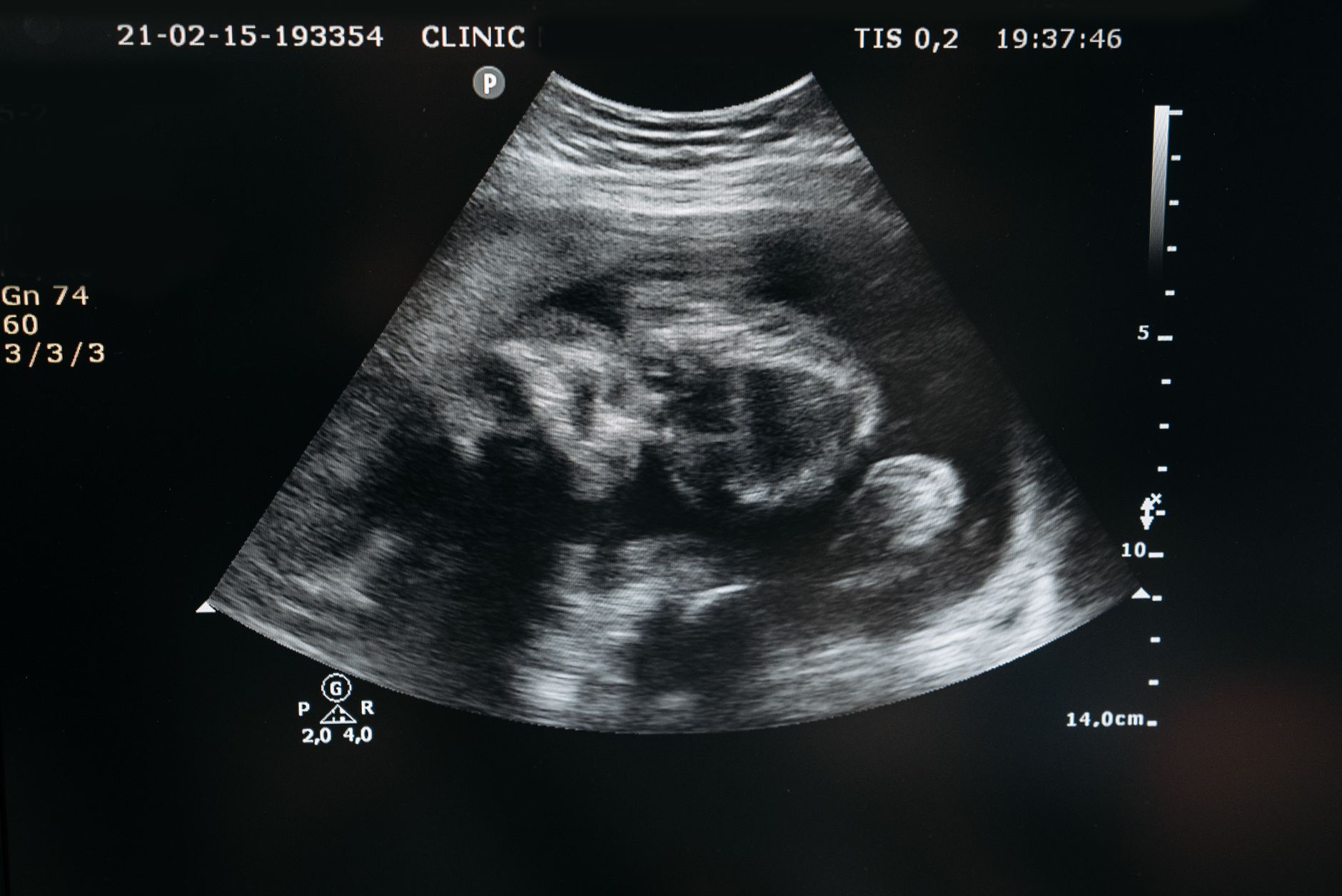
These measurements are taken during a standard third-trimester ultrasound, which is usually performed between 28 and 32 weeks. The ultrasound technician will use a wand (called a transducer) to take pictures of your baby and measure their size. The measurements are then plugged into a formula to estimate your baby’s weight and gestational age.
It’s important to remember that these estimates aren’t exact. The estimated fetal weight (EFW), for example, can be off by as much as 10–15%. That’s why providers don’t rely on a single measurement. Instead, they track your baby’s growth over time to see if the trend is steady. If your baby’s measurements fall outside the typical range, your provider might order additional ultrasounds to monitor growth more closely.
One thing to keep in mind: these measurements are just one piece of the puzzle. Your provider will also consider your baby’s movements, your amniotic fluid levels, and your overall health when assessing your baby’s well-being. If you’re ever worried about the numbers on your ultrasound report, don’t hesitate to ask your provider for more information—or for reassurance.
What Is the Head Circumference at 31 Weeks?
At 31 weeks, your baby’s head circumference is typically around 11 inches (28 centimeters). That’s about the size of a large grapefruit or a small melon. Head circumference is an important measurement because it helps track your baby’s brain development. During an ultrasound, your provider will measure the distance around your baby’s head to ensure it’s growing at a healthy rate.
Here’s what you can expect for head circumference at 31 weeks:
- Average head circumference: ~11 inches (28 cm)
- Typical range: 10.5–11.5 inches (27–29 cm)
If your baby’s head circumference falls outside this range, your provider might order additional ultrasounds to monitor growth more closely. In some cases, a smaller or larger head size can be a sign of an underlying issue, such as a genetic condition or a problem with brain development. But in most cases, it’s just a reflection of your baby’s unique growth pattern.
It’s worth noting that head circumference can vary a lot from baby to baby. Some babies have larger heads due to genetics, while others might have smaller heads because they’re growing more slowly. What matters most is that your baby’s head is growing steadily over time. If your provider isn’t concerned, there’s usually no need to worry.
One thing to keep in mind: head circumference isn’t the only measure of brain development. Your provider will also look at other factors, such as your baby’s movements, reflexes, and overall growth. If you’re ever worried about your baby’s head size, don’t hesitate to ask your provider for more information—or for reassurance.
31 Weeks Fetal Development Milestones
At 31 weeks, your baby is hitting some major developmental milestones. Their organs are nearly fully developed, their senses are sharpening, and they’re starting to practice the skills they’ll need after birth. Here’s a look at what’s happening inside your belly this week:
- Brain development: Your baby’s brain is growing rapidly, and the wrinkles and grooves (called gyri and sulci) are becoming more defined. These folds increase the surface area of the brain, allowing for more complex thinking and processing.
- Lung development: Your baby’s lungs are nearly fully developed, and they’re practicing breathing movements by inhaling and exhaling amniotic fluid. This helps strengthen their respiratory muscles and prepares them for life outside the womb.
- Fat stores: Your baby is packing on fat, which will help regulate their body temperature after birth. This fat also gives their skin a smoother, less wrinkly appearance.
- Senses: Your baby’s senses are becoming more refined. They can now see light filtering through your belly, hear your voice and other sounds, and even taste the amniotic fluid (which changes flavor based on what you eat!).
- Movement: Your baby is more active than ever, and you might feel them kicking, stretching, and even hiccuping. These movements are a sign that your baby is healthy and developing as they should.
- Sleep cycles: Your baby is starting to develop regular sleep cycles, including periods of deep sleep and REM (rapid eye movement) sleep. You might notice that your baby is more active at certain times of day.
- Positioning: Most babies at 31 weeks are in a head-down position, preparing for birth. But some babies might still be breech (bottom-down) or transverse (sideways). Don’t worry—there’s still plenty of time for your baby to turn.
These milestones are a sign that your baby is growing and developing as they should. But remember: every baby develops at their own pace. If your baby is a little behind on one milestone, they might catch up in another area. What matters most is that your provider isn’t concerned—and that your baby is healthy and growing steadily.
When Will a 31-Week Baby Be Considered Low Birth Weight?
A baby born at 31 weeks is considered premature and will likely spend some time in the neonatal intensive care unit (NICU). But what about their weight? At this stage, the average baby weighs 3 to 3.5 pounds (1.4 to 1.6 kg). A baby born at 31 weeks is typically considered low birth weight if they weigh less than 5.5 pounds (2.5 kg) at birth. However, most babies born at this stage weigh closer to 3 or 4 pounds, which is considered very low birth weight.
Here’s a quick breakdown of birth weight categories:
| Category | Weight Range | Notes |
|---|---|---|
| Low birth weight | Less than 5.5 pounds (2.5 kg) | Most babies born at 31 weeks fall into this category. |
| Very low birth weight | Less than 3.3 pounds (1.5 kg) |

