

Quick take: At 30 weeks pregnant, your baby is about the size of a large cabbage or a small cantaloupe—roughly 15.7 inches (40 cm) long and weighing around 2.9 to 3.3 pounds (1.3 to 1.5 kg). Most babies are gaining about half a pound (230 g) per week now, and their movements feel stronger and more frequent. While every baby grows at their own pace, your provider will track size and development closely at your next ultrasound—especially if you’re measuring small or large for dates.
You’re scrolling through your phone at 11 p.m., one hand resting on your belly, the other holding a half-eaten snack. The question pops into your head again: How big is my baby at 30 weeks? You’ve seen the fruit comparisons—watermelon, cabbage, cantaloupe—but what does that really mean? Is your little one on track? Should you be worried if they feel smaller (or bigger) than your friend’s baby at the same stage?
Here’s the reassuring truth: at 30 weeks, your baby is growing rapidly, but there’s a wide range of what’s considered “normal.” This week, they’re likely between 2.5 and 3.5 pounds (1.1 to 1.6 kg) and about 15 to 17 inches (38 to 43 cm) long. Their brain is developing grooves, their lungs are practicing breathing, and their bones are hardening—even if their kicks feel more like jabs to your ribs.
In this guide, we’ll break down everything you need to know about your baby’s size at 30 weeks: how it’s measured, what’s typical (and what’s not), how it compares to other fruits and objects, and what to expect in the coming weeks. We’ll also cover the milestones your baby is hitting this week, how your provider tracks growth, and when to check in if something feels off. No medical jargon, no vague reassurances—just clear, practical answers to the questions keeping you up at night.
How Big Is a Baby at 30 Weeks Pregnant?
At 30 weeks, your baby is roughly the size of a large cabbage, a small cantaloupe, or a loaf of bread. But let’s get specific: the average 30-week fetus measures about 15.7 inches (40 centimeters) from head to heel—that’s “crown-rump length” (the distance from the top of their head to their bottom) plus the length of their legs. In weight, most babies clock in between 2.9 and 3.3 pounds (1.3 to 1.5 kilograms), though some may be slightly smaller or larger and still be perfectly healthy.
To put that into perspective: if you held a 3-pound bag of sugar or flour, that’s roughly the weight of your baby right now. Their length is about the same as a standard ruler (12 inches) plus another 3.7 inches—so if you lay a ruler next to a small banana, you’re getting close.
One mom we spoke to, Sarah, described it this way: “At my 30-week ultrasound, the tech said my baby was the size of a large mango. I laughed because I’d just eaten one for breakfast! It made the number feel real—like I could hold my baby in my hands already.”
It’s worth noting that ultrasound measurements aren’t exact. They can vary by up to 10–15% depending on the baby’s position, the technician’s skill, and even your body type. So if your baby measures 2.7 pounds (1.2 kg) instead of 3, don’t panic—it’s likely just a small difference in how the measurement was taken.
30-Week Fetal Length and Weight Chart
| Measurement | Average at 30 Weeks | Range (Healthy Variation) |
|---|---|---|
| Weight | 3.1 lbs (1.4 kg) | 2.5–3.7 lbs (1.1–1.7 kg) |
| Length (head to heel) | 15.7 in (40 cm) | 14.6–16.9 in (37–43 cm) |
| Head circumference | 11.2 in (28.5 cm) | 10.6–11.8 in (27–30 cm) |
| Abdominal circumference | 10.6 in (27 cm) | 9.8–11.4 in (25–29 cm) |
| Femur (thigh bone) length | 2.1 in (5.4 cm) | 1.9–2.3 in (4.8–5.8 cm) |
Your provider will track these measurements at each ultrasound, especially if you’re high-risk or measuring small/large for dates. They’ll plot your baby’s growth on a fetal growth chart, which compares their size to thousands of other babies at the same gestational age. If your baby is in the 10th to 90th percentile, they’re considered within the normal range.
One key thing to remember: babies grow in spurts. Your little one might gain half a pound one week and barely anything the next. As long as they’re following their own curve (even if it’s at the lower or higher end of the chart), they’re likely doing just fine.
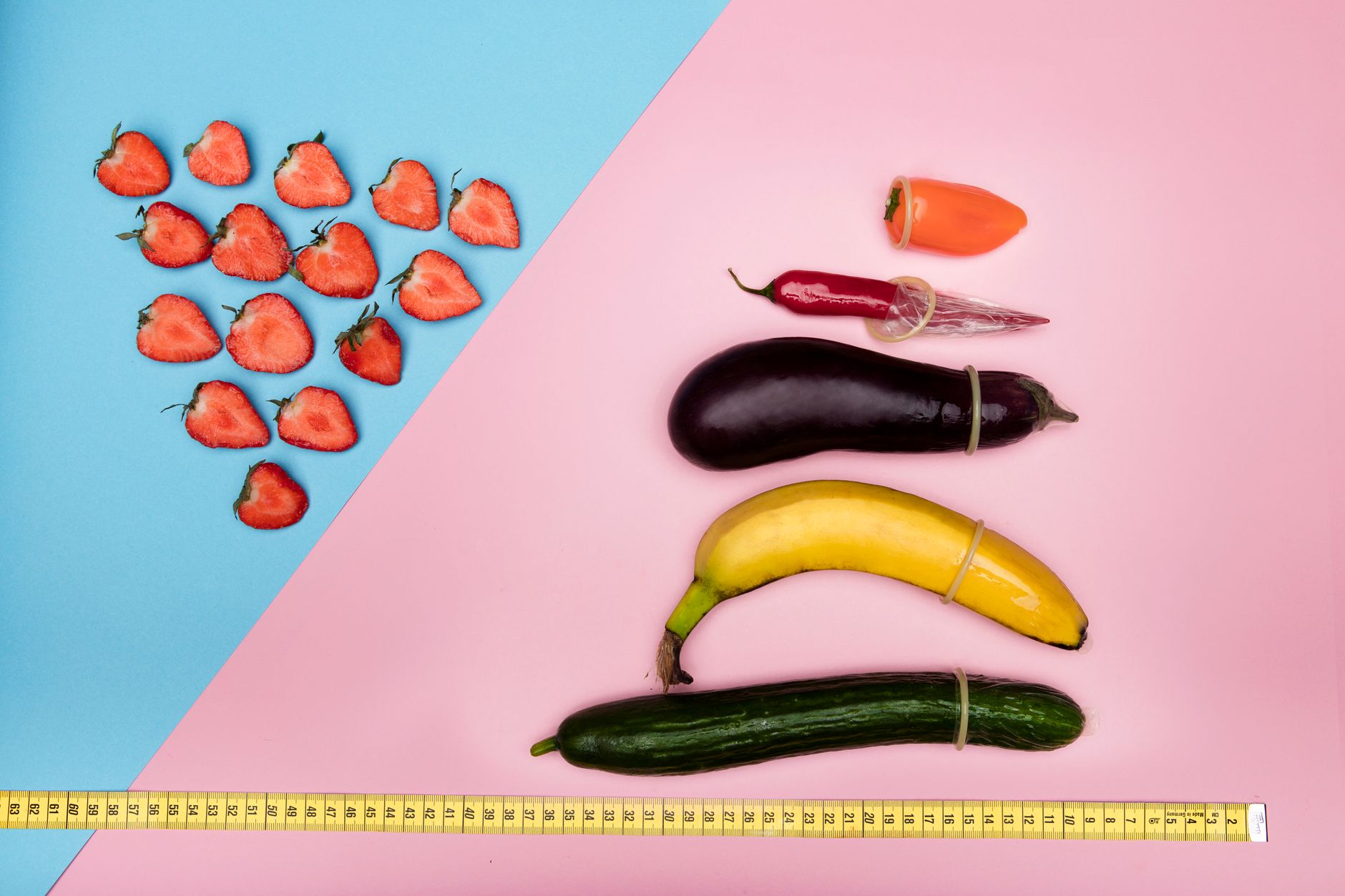
What Does a 30-Week Baby Look Like Compared to a Watermelon?
If you’ve heard that a 30-week baby is the size of a watermelon, you might be picturing a giant, seed-filled fruit taking up your entire belly. The truth? Your baby is closer to a small personal watermelon—about the size of a cantaloupe or a large grapefruit. Here’s how the comparisons break down:
- Watermelon: A whole watermelon is usually 10–15 pounds (4.5–6.8 kg) and 12–18 inches (30–46 cm) long—way bigger than your baby! But a small watermelon (the kind you’d slice for a picnic) is about 5–7 pounds (2.3–3.2 kg) and 10–12 inches (25–30 cm) in diameter—closer to your baby’s weight, but still a bit larger in girth.
- Cantaloupe: A medium cantaloupe weighs about 3–4 pounds (1.4–1.8 kg) and is 5–6 inches (13–15 cm) in diameter. This is a much better match for your baby’s weight, though your little one is longer (15.7 inches) than the fruit is wide.
- Cabbage: A large green cabbage weighs around 3 pounds (1.4 kg) and is about 7–8 inches (18–20 cm) in diameter. This is the closest comparison in both weight and length—your baby is roughly the same size as a head of cabbage, just stretched out.
- Loaf of bread: A standard loaf of sandwich bread is about 16 inches (40 cm) long—almost exactly your baby’s length! It’s a fun visual: imagine your baby curled up inside you, nose to toes, the length of a loaf of bread.
Why do these fruit comparisons matter? They’re a quick way to visualize your baby’s size, but they’re not perfect. Fruits are round and dense, while your baby is long and lean (well, as lean as a 3-pound human can be). Their head is still the largest part of their body, making up about a third of their total length.
One mom, Priya, shared her experience: “At my baby shower, my sister brought a cabbage and a cantaloupe to show everyone how big the baby was. It was hilarious—people kept picking them up and saying, ‘Wow, this is actually heavy!’ It made the number feel real, not just abstract.”
Average Size of a 30-Week Fetus in Inches (and Centimeters)
At 30 weeks, the average baby measures about 15.7 inches (40 centimeters) from head to heel. But let’s break that down further:
- Crown-rump length (CRL): This is the distance from the top of your baby’s head to their bottom (not including legs). At 30 weeks, the average CRL is about 10.6 inches (27 cm).
- Leg length: Your baby’s legs add another 5.1 inches (13 cm) to their total length. Their femur (thigh bone) is about 2.1 inches (5.4 cm) long.
- Head circumference: Around 11.2 inches (28.5 cm)—about the size of a small grapefruit.
- Abdominal circumference: Roughly 10.6 inches (27 cm), similar to a large orange.
If you’re more comfortable with centimeters, here’s the same info in metric:
- Total length: 40 cm
- Crown-rump length: 27 cm
- Femur length: 5.4 cm
- Head circumference: 28.5 cm
- Abdominal circumference: 27 cm
Your provider will measure these dimensions during your anatomy scan (usually done around 18–22 weeks) and any follow-up ultrasounds. They’ll use these numbers to estimate your baby’s weight and check that their head, abdomen, and limbs are growing proportionally.
One thing to keep in mind: ultrasound measurements can be off by up to 10–15%. For example, if your baby measures 38 cm instead of 40 cm, they’re still well within the normal range. The most important thing is that your baby is growing consistently over time, not that they hit an exact number at 30 weeks.
30 Weeks Pregnant Baby Size vs. 28 Weeks: What’s the Difference?
If you’re tracking your baby’s growth week by week, you might be curious: How much bigger is my baby at 30 weeks compared to 28 weeks? The answer? About 0.5 to 0.7 pounds (230 to 320 grams) heavier and 0.8 to 1.2 inches (2 to 3 cm) longer. Here’s a side-by-side comparison:
| Measurement | 28 Weeks | 30 Weeks | Difference |
|---|---|---|---|
| Weight | 2.2–2.6 lbs (1–1.2 kg) | 2.9–3.3 lbs (1.3–1.5 kg) | +0.5–0.7 lbs (+230–320 g) |
| Length (head to heel) | 14.8 in (37.6 cm) | 15.7 in (40 cm) | +0.9 in (+2.4 cm) |
| Head circumference | 10.6 in (27 cm) | 11.2 in (28.5 cm) | +0.6 in (+1.5 cm) |
| Abdominal circumference | 9.8 in (25 cm) | 10.6 in (27 cm) | +0.8 in (+2 cm) |
In just two weeks, your baby has likely gained about 20% of their body weight and grown nearly an inch in length. Their brain is developing rapidly, their lungs are maturing, and their bones are hardening—all of which contribute to this growth spurt.
You might notice these changes in your own body, too. Many women report:
- More pronounced kicks and jabs: Your baby’s movements feel stronger because they’re bigger and have less room to stretch out.
- A higher fundal height: Your provider measures the distance from your pubic bone to the top of your uterus (the “fundal height”). At 28 weeks, it’s usually around 28 cm; at 30 weeks, it’s closer to 30 cm. (This isn’t an exact science—your baby’s position and your body shape can affect the measurement.)
- More visible belly growth: Some moms say their bump “pops” around this time, especially if it’s their first pregnancy. Others notice their belly growing upward rather than outward.
One mom, Jamie, described the difference this way: “At 28 weeks, I could still see my toes. At 30 weeks, my belly had officially blocked the view. My baby’s kicks also went from feeling like little flutters to full-on karate chops. It was wild how much changed in just two weeks!”
Is a 30-Week Baby Size Normal for Each Trimester?
At 30 weeks, you’re solidly in the third trimester, and your baby’s size is very different from what it was in the first or second trimester. Here’s how fetal size changes across pregnancy—and what’s considered “normal” at each stage:
First Trimester (Weeks 1–12)
- Weeks 4–5: Your baby is about the size of a poppy seed (0.04 inches or 1 mm).
- Weeks 6–7: The size of a lentil (0.25 inches or 6 mm).
- Weeks 8–9: A grape (0.63 inches or 1.6 cm).
- Weeks 10–12: A lime (2.1 inches or 5.4 cm, crown-rump length).
At this stage, your baby is growing rapidly, but they’re still tiny—weighing less than an ounce (28 grams) by the end of the first trimester. Most of their growth is focused on developing vital organs, limbs, and the neural tube (which becomes the brain and spinal cord).
Second Trimester (Weeks 13–27)
- Weeks 13–16: A lemon (2.9–4.6 inches or 7.4–11.6 cm, crown-rump length).
- Weeks 17–20: A bell pepper (5.1–6.5 inches or 13–16.5 cm).
- Weeks 21–24: An ear of corn (10.5–12 inches or 26.7–30.5 cm, head to heel).
- Weeks 25–27: A cauliflower (13.6–14.8 inches or 34.6–37.6 cm).
This is when your baby’s growth really takes off. By 20 weeks, they weigh about 10 ounces (280 grams) and are about the length of a banana. By 27 weeks, they’re up to 2 pounds (900 grams) and 14.8 inches (37.6 cm) long. Their movements become more noticeable, and their senses (like hearing and taste) start to develop.
Third Trimester (Weeks 28–40+)
- Weeks 28–30: An eggplant or cabbage (14.8–15.7 inches or 37.6–40 cm).
- Weeks 31–34: A pineapple (16–17.7 inches or 40.6–45 cm).
- Weeks 35–37: A honeydew melon (18–19 inches or 45.7–48.3 cm).
- Weeks 38–40: A small pumpkin (19–21 inches or 48–53 cm).
In the third trimester, your baby gains most of their birth weight. At 30 weeks, they’re about 3 pounds (1.4 kg)—but by 40 weeks, the average baby weighs 7.5 pounds (3.4 kg). Their brain, lungs, and fat stores are still developing, and they’re practicing skills like breathing, sucking, and swallowing.
What’s Considered “Normal” at 30 Weeks?
At 30 weeks, a “normal” baby size falls within the 10th to 90th percentile on a fetal growth chart. This means:
- 10th percentile: About 2.5 pounds (1.1 kg) and 14.6 inches (37 cm).
- 50th percentile (average): 3.1 pounds (1.4 kg) and 15.7 inches (40 cm).
- 90th percentile: 3.7 pounds (1.7 kg) and 16.9 inches (43 cm).
If your baby is measuring smaller than the 10th percentile, your provider might monitor you more closely for conditions like intrauterine growth restriction (IUGR), which can be caused by factors like placental issues, maternal health conditions, or genetic factors. If they’re larger than the 90th percentile, they might check for gestational diabetes or other conditions that can lead to a bigger baby.
But here’s the key: percentiles aren’t a report card. A baby in the 10th percentile can be just as healthy as one in the 90th percentile. What matters most is that your baby is growing consistently over time. If they’ve always been in the 20th percentile, that’s their normal—and that’s perfectly fine.
One mom, Lisa, shared her experience: “My baby was in the 15th percentile at 30 weeks, and I was convinced something was wrong. My provider reassured me that as long as she was growing steadily, she was healthy. Sure enough, she was born at 39 weeks weighing 6 pounds, 12 ounces—small but perfectly healthy!”
How Much Does a 30-Week Baby Weigh in Ounces?
At 30 weeks, the average baby weighs about 49 to 53 ounces (3.1 to 3.3 pounds). To put that into perspective:
- A standard can of soda is 12 ounces—so your baby weighs about 4 cans of soda.
- A large apple is 8 ounces—so your baby is roughly 6 apples.
- A baseball is 5 ounces—so your baby weighs about 10 baseballs.
- A loaf of bread is 16 ounces (1 pound)—so your baby is about 3 loaves of bread.
If you’re more comfortable with pounds and ounces, here’s the breakdown:
- 2 pounds, 15 ounces = 47 ounces (1.3 kg)
- 3 pounds, 1 ounce = 49 ounces (1.4 kg)
- 3 pounds, 3 ounces = 51 ounces (1.45 kg)
- 3 pounds, 5 ounces = 53 ounces (1.5 kg)
Your baby’s weight at 30 weeks is influenced by several factors, including:
- Genetics: If you and your partner were small or large at birth, your baby might follow a similar pattern.
- Maternal health: Conditions like gestational diabetes can lead to a larger baby, while high blood pressure or placental issues might result in a smaller baby.
- Nutrition: Eating a balanced diet with enough protein, healthy fats, and calories supports healthy fetal growth. (But don’t stress about “eating for two”—you only need about 300–450 extra calories per day in the third trimester.)
- Placental function: The placenta delivers oxygen and nutrients to your baby. If it’s not working efficiently, your baby might grow more slowly.
- Multiple pregnancy: If you’re carrying twins or triplets, each baby will likely be smaller than a singleton at the same gestational age.
One mom, Maria, said: “I kept a little notebook where I wrote down my baby’s estimated weight in ounces after each ultrasound. It helped me visualize how much they were growing—like, ‘Oh, this week they gained 3 ounces, that’s half a stick of butter!’ It made the numbers feel less abstract.”
30-Week Baby Size and Development Milestones
At 30 weeks, your baby isn’t just getting bigger—they’re hitting some major developmental milestones. Here’s what’s happening inside your belly this week:
Brain Development
- Your baby’s brain is developing grooves and folds (called sulci and gyri), which increase its surface area and allow for more complex thinking.
- They’re starting to regulate their own body temperature (though they still rely on you for warmth).
- Their sleep cycles are becoming more defined, with periods of REM (rapid eye movement) sleep, which is linked to brain development.
Lung Maturation
- Your baby’s lungs are producing surfactant, a substance that helps their air sacs inflate and prevents them from collapsing. This is critical for breathing after birth.
- They’re practicing breathing movements, though they’re not actually taking in air yet. (They’re “breathing” amniotic fluid, which is totally normal.)
Bone and Muscle Development
- Your baby’s bones are hardening, but their skull remains soft and flexible to make delivery easier. (The soft spots, or fontanelles, won’t fully close until after birth.)
- Their muscles are getting stronger, which is why their kicks and jabs feel more powerful.
- They’re developing more fat stores under their skin, which will help regulate their body temperature after birth.
Sensory Development
- Hearing: Your baby can hear your voice, your heartbeat, and even sounds from outside the womb. They might react to loud noises by jumping or kicking.
- Vision: Their eyes can now detect light filtering through your belly. If you shine a flashlight on your bump, they might turn toward it!
- Taste: They’re swallowing amniotic fluid, which carries flavors from the foods you eat. Some studies suggest this might influence their food preferences after birth.
- Touch: They can feel their own body and the walls of the uterus. They might suck their thumb, grab their feet, or push off the uterine wall with their hands and feet.
Movement and Position
- Your baby is likely in a head-down position (though some babies flip back and forth until 34–36 weeks).
- Their movements are more coordinated. You might feel them stretching, rolling, or even hiccuping (which feels like little rhythmic jumps in your belly).
- They’re running out of space, so their movements might feel more like jolts or pokes than full-body rolls.
One mom, Aisha, described her baby’s movements at 30 weeks: “I could tell when she was awake versus asleep. In the mornings, she’d do these slow, stretchy rolls. At night, she’d go crazy—kicking, jabbing, and what felt like full-on somersaults. It was like she had her own little schedule.”
If you’re curious about what these milestones look like, ask your provider for a 3D or 4D ultrasound. These can give you a clearer picture of your baby’s face, hands, and movements. (Just remember: ultrasound images aren’t always crystal clear, and your baby’s position can affect what you see.)
30 Weeks Pregnant: Baby Size in Centimeters
If you prefer metric measurements, here’s your baby’s size at 30 weeks in centimeters:
- Total length (head to heel): About 40 cm (roughly the length of a standard ruler).
- Crown-rump length: Around 27 cm (the distance from the top of their head to their bottom).
- Head circumference: Approximately 28.5 cm (about the size of a small grapefruit).
- Abdominal circumference: Roughly 27 cm (similar to a large orange).
- Femur (thigh bone) length: About 5.4 cm (just over 2 inches).
To visualize 40 cm, imagine:
- A standard ruler (30 cm) plus another 10 cm (about the length of a large banana).
- A loaf of bread (most are about 40 cm long).
- A large cabbage (about 20 cm in diameter, but stretched out to 40 cm in length).
Your provider will use these centimeter measurements to track your baby’s growth over time. They’ll plot them on a fetal growth chart, which compares your baby’s size to thousands of other babies at the same gestational age. If your baby is consistently growing along their own curve, they’re likely doing just fine—even if they’re smaller or larger than average.
One mom, Elena, shared: “I’m from Spain, so I’m used to thinking in centimeters. At my 30-week scan, the tech said my baby was 39 cm long. I pictured a loaf of bread, and it made me laugh—my baby was basically a baguette!”
30-Week Fetal Growth Rate Week by Week
At 30 weeks, your baby is growing at a rapid pace—but their growth rate isn’t linear. Here’s what to expect in the coming weeks:
Weeks 30–32
- Weight gain: About 0.5 pounds (230 grams) per week.
- Length gain: Around 0.4 inches (1 cm) per week.
- Key developments: Their brain is growing rapidly, their bones are hardening, and their lungs are maturing. They’re also developing more fat stores under their skin.
Weeks 32–34
- Weight gain: About 0.5 pounds (230 grams) per week.
- Length gain: Around 0.4 inches (1 cm) per week.
- Key developments: Their eyes can now open and close, and they’re practicing breathing movements more frequently. Their skin is becoming less translucent as fat stores increase.
Weeks 34–36
- Weight gain: About 0.5 pounds (230 grams) per week.
- Length gain: Around 0.4 inches (1 cm) per week.
- Key developments: Their immune system is developing, and they’re starting to produce their own antibodies. They’re also settling

