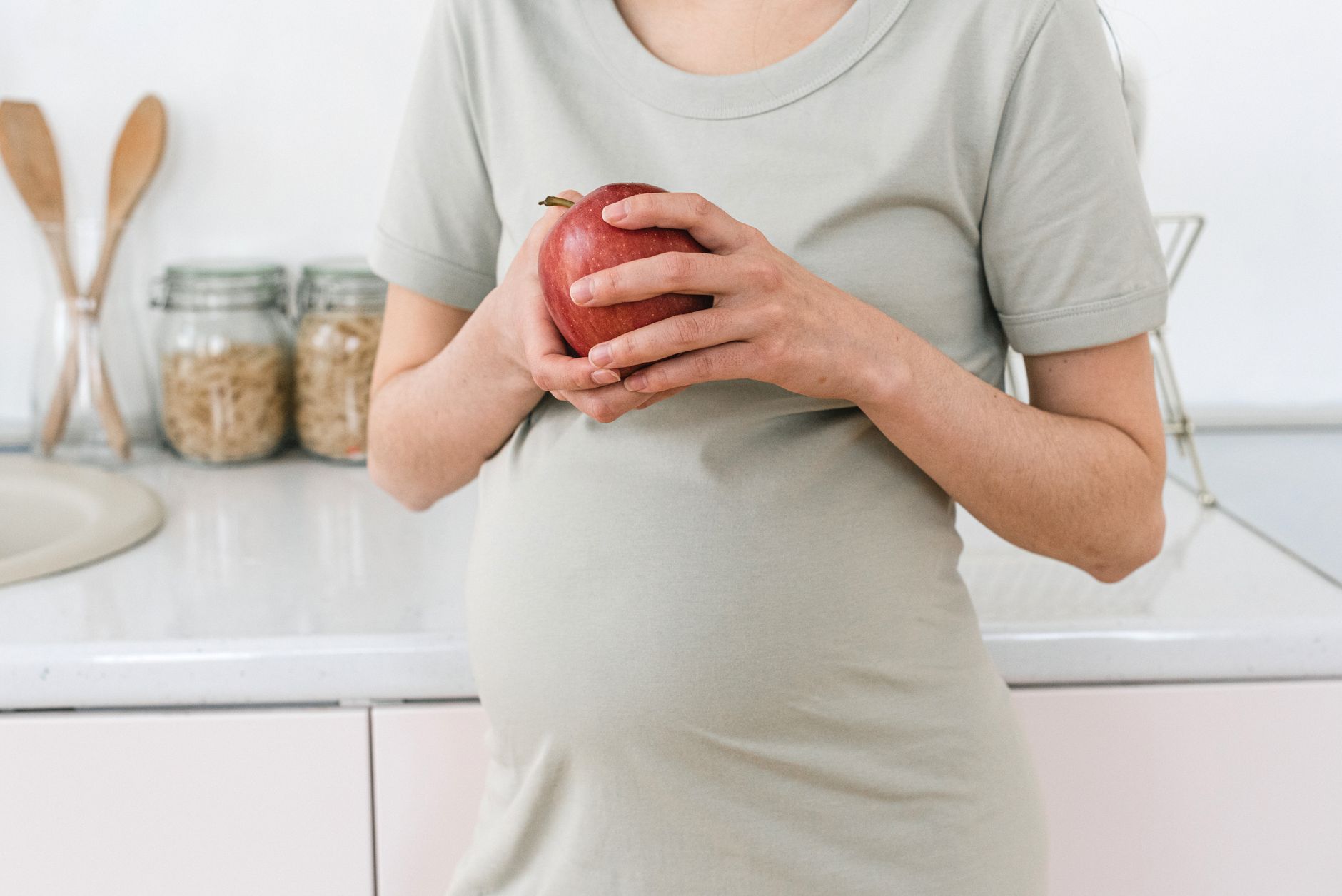
At 20 weeks pregnant, the baby measures about 6.5 inches long and weighs around 10.5 ounces. Learn the typical size, growth milestones, and what to expect now.
By Shubhra Mishra — a mom of two who turned her own confusion during pregnancy into BumpBites, a global mission to make food choices clear, safe, and stress-free for every expecting mother. 💛
Check whether any food is safe during pregnancy with the BumpBites Food Safety Checker.
Quick take: At 20 weeks pregnant, your baby is roughly the size of a banana—about 25 cm (10 inches) long and weighs around 300 g (10 oz). This is a normal, healthy size for the midway point of pregnancy, and most ultrasounds will show clear limb development, facial features, and a growing heartbeat.
It’s 2 a.m., the house is quiet, and you’ve just felt a flutter of movement for the first time. Your mind races: “Is my baby really this big? What does a 20‑week baby look like? Should I be worried about the size?” You’re not alone—most expecting parents hit the 20‑week mark with a mix of excitement and anxiety.
In this guide, we’ll break down exactly how big a 20‑week baby is, what that size means for development, how it compares to everyday objects, and what you can expect during the next ultrasound. We’ll also share practical tips for tracking growth, explain when size variations might signal a concern, and answer the most common follow‑up questions.
By the end of the article you’ll have a clear picture of your baby’s size, know what milestones are being hit, and feel confident interpreting the numbers you see on your next scan.
How big is a baby at 20 weeks pregnant?
At 20 weeks gestation, the average fetus measures about 25 cm (10 inches) from crown to rump and weighs roughly 300 g (10 oz). This places the baby in the “mid‑second trimester” range, where growth accelerates but is still fairly predictable.
Most medical references—including the American College of Obstetricians and Gynecologists (ACOG) and the UK’s National Health Service (NHS)—report a typical length of 16–20 cm (6.3–7.9 in) for the crown‑rump measurement, which translates to about 25 cm (10 in) when you include the head. Weight can vary more widely, ranging from 250 g (8.8 oz) to 350 g (12.3 oz), depending on genetics, maternal nutrition, and the exact dating of the pregnancy.
Because fetal size is measured in a standardized way—crown‑rump length (CRL) early on, then head circumference (HC) and abdominal circumference (AC) later—your provider will compare your baby’s measurements to a growth chart. Staying within the 10th‑90th percentile is generally considered normal. If you fall outside that range, your clinician may recommend additional monitoring, but many babies outsize or undersize slightly and still have healthy outcomes.
Feeling your baby’s first movements? A gentle hand on the belly can help you connect with the growing miracle.
What is the length of a 20‑week baby in centimeters?
W
hen we speak of “length” at 20 weeks, we refer to the crown‑rump length (CRL) plus head size. The median CRL is about 16 cm (6.3 in), while the total length from crown to heel reaches roughly 25 cm (10 in). Converting to inches, that’s about 9.8 inches—just shy of a typical school‑age ruler.
These measurements are taken during the routine anatomy scan, usually between weeks 18 and 22. The sonographer places calipers on the outer edges of the skull and the tip of the chin to calculate the head circumference, then measures the abdomen and femur length. The data are plotted on the Hadlock growth curve—an internationally recognized chart developed from thousands of ultrasound measurements.
Because the fetus grows about 1 cm per week during this period, a 2‑week difference in dating can shift the length by 2 cm (0.8 in). If your baby’s length is slightly above or below the average, it’s typically not a cause for alarm. Your provider will look for consistent growth patterns over multiple scans rather than a single outlier.
What is the weight of a 20‑week fetus?
Weight estimates at 20 weeks are based on biometric calculations from the ultrasound, not a direct scale. The average weight is approximately 300 g (10 oz), with a normal range of 250–350 g (8.8–12.3 oz). This is comparable to a medium‑sized banana or a small apple.
Weight is inferred from head circumference, abdominal circumference, and femur length using formulas from the Hadlock study, which are endorsed by the World Health Organization (WHO) and the Royal College of Obstetricians and Gynaecologists (RCOG). While the estimate can vary by up to 15 % due to factors like fetal position and the skill of the sonographer, it provides a useful benchmark for monitoring growth.
If a baby’s estimated weight falls below the 10th percentile, clinicians may assess maternal nutrition, placental function, and possible growth restriction. Conversely, a weight above the 90th percentile could indicate macrosomia, though this is rare at 20 weeks and often resolves as the pregnancy progresses.
Which fetal development milestones mark the 20‑week size?
At the halfway point, the fetus has reached several key milestones that are visible on ultrasound and feelable to the mother:
Facial features: Eyelids are fully formed, and the eyes can open and close. The nose and upper lip are defined, and tiny hair (lanugo) covers the body.
Limbs: All fingers and toes are separate, and the baby can make a fist. The limbs are proportionate to the body, and the knees begin to flex.
Organs: The lungs are developing branching bronchi, the liver is producing bile, and the kidneys start to produce urine, which contributes to amniotic fluid.
Movement: The fetus can now make coordinated movements, leading to the first “quickening” felt by the mother, usually between weeks 18‑22.
Sensory development: Taste buds develop, and the baby can respond to sounds, especially the mother’s voice.
These milestones are reassuring signs of healthy development. If any of these structures appear absent or markedly delayed on the anatomy scan, your provider may suggest a follow‑up scan or additional testing.
Many parents compare a 20‑week baby to a mango—both are about the size of a large, ripe fruit.
How does a 20‑week baby size compare to fruit and vegetables?
Visual comparisons help translate abstract measurements into something tangible. Here are the most common analogies used by clinicians and parents:
Fruit/Vegetable
Average Length (cm)
Average Weight (g)
Comparison
Banana (medium)
20 cm
120 g
Similar length, lighter
Mango (large)
22 cm
300 g
Close match in both length and weight
Apple (medium)
8 cm diameter
180 g
Comparable weight, shorter length
Avocado (ripe)
15 cm length
200 g
Shorter but similar weight
Most obstetricians will say the 20‑week fetus feels about the size of a banana or a mango. The comparison is not exact—fetal tissue is denser—but it gives you a mental picture of the baby’s growth.
Is the 20‑week baby size normal for each trimester?
The second trimester spans weeks 13‑27, and growth is relatively linear. By week 20, the baby has reached roughly 65 % of its eventual birth length (≈50 cm/20 in) and about 30 % of its birth weight (≈3 kg/6.6 lb).
When you compare the 20‑week size to the first and third trimesters:
First trimester: At 12 weeks the fetus is about 5 cm (2 in) long and weighs 14 g (0.5 oz)—roughly the size of a grape.
Third trimester (around 36 weeks): The baby will be about 46 cm (18 in) long and weigh 2.7 kg (6 lb), similar to a small pumpkin.
Thus, the 20‑week size is a normal midpoint, reflecting steady growth. If a baby’s size deviates significantly from the expected curve for its gestational age, clinicians will investigate potential causes such as maternal hypertension, diabetes, or placental insufficiency.
How does 20‑week baby size affect ultrasound measurements?
Ultrasound is the primary tool for assessing fetal size at 20 weeks. The sonographer measures three key dimensions:
Head circumference (HC): Reflects brain growth; a typical HC at 20 weeks is 170 mm (6.7 in).
Abdominal circumference (AC): Indicates liver and overall body growth; average AC is 150 mm (5.9 in).
Femur length (FL): Serves as a proxy for skeletal development; average FL is 32 mm (1.3 in).
These numbers feed into the Hadlock formula, which predicts fetal weight. A well‑positioned baby will yield reliable measurements; however, if the fetus is curled or the placenta blocks the view, the estimate may be less accurate.
Because the 20‑week scan is often called the “anatomy scan,” clinicians also look for structural anomalies (e.g., spina bifida, heart defects). Size alone rarely determines concern, but a markedly small AC or HC can hint at growth restriction, prompting closer monitoring.
How to measure baby size at 20 weeks and what the charts show
Beyond the ultrasound, you can track growth using a simple chart that lists average length, weight, and head circumference for each week of gestation. Below is a snapshot for the 20‑week point, drawn from the ACOG fetal growth standards.
Gestational Age
Length (cm)
Weight (g)
Head Circumference (cm)
18 weeks
23 ± 2
260 ± 40
165 ± 5
20 weeks
25 ± 2
300 ± 45
170 ± 5
22 weeks
27 ± 2
350 ± 50
175 ± 5
“±” indicates the typical range (roughly the 10th‑90th percentile). When you receive your ultrasound report, compare your baby’s numbers to these ranges. Consistent growth across multiple visits is more reassuring than a single measurement that falls a bit outside the window.
Maternal factors—such as pre‑pregnancy BMI, nutrition, and health conditions—can shift these averages slightly. For example, well‑balanced protein intake and adequate folic acid support healthy fetal weight gain, whereas uncontrolled diabetes can accelerate growth, leading to larger-than‑average measurements.
From our medical team: A 20‑week scan is a milestone for both reassurance and planning. If your baby’s size is within the normal range, continue with routine prenatal visits, maintain a balanced diet rich in iron, calcium, and omega‑3s, and stay active as your provider advises. If any measurement falls outside expected limits, your clinician may schedule a follow‑up scan, recommend Doppler studies, or suggest a growth‑monitoring plan. Remember, a single number rarely tells the whole story; trends over time are what matter most.
Myth vs. fact
Myth: “If my baby is the size of a mango, I’m overdue.”
Fact: A mango‑sized fetus is typical at 20 weeks. The comparison is a visual aid, not a timing cue.
Myth: “A small baby at 20 weeks always means trouble.”
Fact: Slightly smaller measurements can be normal, especially if the mother is petite or if dating is slightly off. Persistent growth restriction over several scans is what warrants further evaluation.
Myth: “Ultrasound weight estimates are exact.”
Fact: Ultrasound calculates weight using formulas that can vary by up to 15 %. They’re useful for trends, not precise scales.
Key takeaways
At 20 weeks, the average fetus is about 25 cm (10 in) long and weighs ~300 g (10 oz), similar to a mango.
Key milestones include defined facial features, separate fingers and toes, and the first felt movements (quickening).
Ultrasound measurements (HC, AC, FL) are plotted on growth charts; staying within the 10th‑90th percentile is reassuring.
Maternal nutrition, hydration, and health conditions can influence fetal size, but modest variations are normal.
Track growth with a weekly chart and discuss any consistent deviations with your provider.
If you notice sudden loss of movement, severe abdominal pain, or bleeding, contact your care team immediately.
Frequently asked questions
How big is a baby at 20 weeks?
A 20‑week baby is roughly the size of a mango or a medium banana—about 25 cm (10 in) long and weighing around 300 g (10 oz).
What does a 20‑week ultrasound show?
The anatomy scan at 20 weeks visualizes the baby's head, brain, spine, heart, kidneys, and limbs, while also providing measurements (head circumference, abdominal circumference, femur length) to estimate size and weight.
Is a 20‑week fetus the size of a mango?
Yes. Many clinicians use the mango analogy because its length (≈22 cm) and weight (≈300 g) closely match the average fetus at this stage.
How much does a 20‑week baby weigh?
The typical weight is about 300 g (10 oz), though a healthy range is 250–350 g (8.8–12.3 oz).
Can you feel your baby at 20 weeks?
Most mothers begin to feel the first flutters, called “quickening,” between weeks 18 and 22, especially if it’s a first pregnancy. The sensations are light, like bubbles or butterflies.
What are the growth milestones at 20 weeks pregnancy?
At 20 weeks the baby has distinct facial features, fully formed fingers and toes, developing lungs, and can make coordinated movements. The skin is covered with fine lanugo hair.
When to call your doctor
If you experience any of the following, seek medical attention promptly: sudden loss of fetal movement, severe abdominal pain, vaginal bleeding, fluid leakage, or a fever above 38 °C (100.4 °F). This article provides general information only and does not replace personalized medical advice from your health care provider.
References
American College of Obstetricians and Gynecologists (ACOG). "Ultrasound in Pregnancy." Guidance for obstetric ultrasound practice, 2023.
National Health Service (NHS). "Fetal development: 20 weeks." Pregnancy guide, updated 2022.
World Health Organization (WHO). "Maternal Nutrition and Fetal Growth." Technical brief, 2021.
Royal College of Obstetricians and Gynaecologists (RCOG). "The Mid‑trimester Anatomy Scan." Clinical guideline, 2022.
Hadlock FP, et al. "Estimation of fetal weight with the use of ultrasound." Radiology, 1985.
Mayo Clinic. "Pregnancy week by week." Patient education, accessed 2024.
Centers for Disease Control and Prevention (CDC). "Prenatal care and fetal growth." Public health report, 2023.
National Institute for Health and Care Excellence (NICE). "Antenatal care guideline." NG123, 2022.
Not sure about the label on 20 Weeks Pregnant Baby Size products?
Snap the ingredients list and SafeFilter checks every ingredient for your stage — only 3 free scans this month, then you're locked until reset. Unlimited from $7/mo or $50/yr.
When Shubhra Mishra was expecting her first child in 2016, she was overwhelmed by conflicting food advice — one site said yes, another said never. By the time her second baby arrived in 2019, she realized millions of mothers face the same confusion.
That sparked a five-year journey through clinical nutrition papers, cultural diets, and expert conversations — all leading to BumpBites: a calm, compassionate space where science meets everyday motherhood.
Her long-term vision is to build a global community ensuring safe, supported, and free deliveriesfor every mother — because no woman should face pregnancy alone or uninformed. 🌿
🌍 Stand with mothers, shape safer guidance
Join a small circle of experts who review BumpBites articles so expecting parents everywhere can decide with confidence.