Discover how to calculate your conception date accurately. Use our simple guide to estimate when you conceived based on your due date or last period.
By Shubhra Mishra — a mom of two who turned her own confusion during pregnancy into BumpBites, a global mission to make food choices clear, safe, and stress-free for every expecting mother. 💛
Check whether any food is safe during pregnancy with the BumpBites Food Safety Checker.
Quick take: You can estimate the day you conceived by counting back from the first day of your last period, confirming ovulation signs, and, if needed, using an early ultrasound. For most women the estimate lands within a few days; irregular cycles or fertility treatments may require extra steps or professional dating.
It’s 2 a.m., you’ve just brushed your teeth and the “what‑if” question pops up: “When did I actually get pregnant?” You’ve heard the term “conception date” tossed around, but the exact day feels elusive. You’re not alone—many expectant parents stare at the calendar, trying to line up the months, the ovulation kits, and the occasional missed period.
Below, we walk through a step‑by‑step method to calculate your conception date, explain why the estimate can shift, and show how tools like ovulation tests, basal‑body‑temperature charts, and early ultrasounds sharpen the picture. Whether you have a textbook‑regular 28‑day cycle or a wildly irregular one, whether you’re using fertility drugs or just a home test, you’ll find a clear path to the date that matters most.
We’ll also bust a few myths that pop up in the forums, list the signs that might hint at the day of fertilization, and give you a handy checklist of questions for your next prenatal visit. Knowing your conception window can help you understand prenatal screening timelines, plan maternity leave, and feel more in control of your pregnancy journey.
How to calculate conception date from the last menstrual period
The most common way clinicians estimate conception is by using the first day of your last menstrual period (LMP). This method assumes a 28‑day cycle with ovulation occurring around day 14. Here’s the simple formula:
Identify the first day of your last period.
Count forward 14 days (this is the typical day of ovulation).
The day ovulation occurs is also the likely day of conception, assuming sperm were present.
For example, if your LMP began on March 1, adding 14 days lands on March 15. That’s the estimated conception date. If you know the exact day you had intercourse that aligns with ovulation, you can narrow it down further.
When you’re tracking your cycle, many women also use the “first day of period” method. It’s the same as LMP but emphasizes that you count from the first day you noticed bleeding, not the day you thought the period started. The difference is subtle but can matter if you have spotting before the main flow.
Keep in mind, this method works best for cycles that are 24–35 days long and when ovulation occurs roughly midway. If your cycle deviates, the estimate may shift by a few days, which we’ll explore in the next section. In clinical practice, providers often use this LMP‑based dating as a starting point because it’s quick, non‑invasive, and aligns with standard obstetric charts.
What factors affect the accuracy of conception date calculations
Several variables can blur the picture of your exact conception day. Understanding them helps you gauge how precise your estimate can be.
Cycle length variability: Women with cycles shorter than 24 days or longer than 35 days often ovulate earlier or later than day 14. This shifts the conception window.
Sperm lifespan: Sperm can survive up to five days in the reproductive tract, meaning intercourse a few days before ovulation can still result in fertilization.
Ovulation timing: Natural ovulation can vary by a day or two each month, especially under stress, illness, or changes in sleep patterns.
Implantation delay: After fertilization, the embryo implants roughly 6–12 days later. Implantation bleeding can be mistaken for a period, confusing the LMP calculation.
Fertility treatments: Medications that trigger ovulation (e.g., clomiphene) or assisted reproductive technologies (IVF) create a known fertilization date, which often overrides the LMP method.
Irregular bleeding: Spotting, breakthrough bleeding, or hormonal contraceptive washout can make the first day of bleeding ambiguous.
These factors mean the LMP method typically lands you within a 5‑day window. For most practical purposes—like estimating due dates—that range is acceptable. When you need a tighter window (e.g., for a high‑risk pregnancy), an early ultrasound or precise ovulation tracking becomes essential. Studies from ACOG and the NHS confirm that first‑trimester ultrasound dating is the most reliable method when menstrual histories are uncertain.
Can I determine my conception date if I have irregular cycles?
Irregular cycles add a layer of uncertainty, but you can still arrive at a reasonable estimate.
First, gather as much data as possible from the months leading up to conception. Look at the length of each cycle, noting the start and end dates of bleeding. If you’ve been tracking basal‑body temperature (BBT) or cervical mucus, those signs can pinpoint ovulation more accurately than the generic day 14 rule.
Here’s a step‑by‑step approach for irregular cycles:
List the start date of each period for the past three months.
Calculate the average cycle length (total days ÷ number of cycles).
Identify the longest gap between periods; ovulation usually occurs about 14 days before the next period, even if the cycle is irregular.
Cross‑reference with any ovulation predictor kit (OPK) results, BBT spikes, or mucus changes you recorded.
Subtract 14 days from the estimated ovulation day to get the conception date.
Many women with irregular cycles find that using an ovulation test during the fertile window gives the clearest picture. If you’re still unsure, a low‑resolution (first‑trimester) ultrasound can refine the dating by measuring the crown‑rump length (CRL) of the embryo, which is reliable up to about 12 weeks.
One reader described her experience: after months of unpredictable periods, she began daily BBT tracking and used an OPK. When she finally saw the temperature spike and a strong positive OPK, she marked that day as the likely conception date. The estimate matched the ultrasound dating within two days, giving her confidence for the rest of the pregnancy.
For those who cannot access a professional ultrasound early, the NHS recommends repeating the LMP‑based calculation using the average cycle length derived from at least three prior cycles. This approach reduces the margin of error to roughly ±7 days, which is often sufficient for routine prenatal care.
How to use ovulation tests and fertility signs to pinpoint the day of conception
Ovulation predictor kits (OPKs) detect the surge of luteinizing hormone (LH) that precedes ovulation by about 24–36 hours. A positive test means ovulation is imminent, and the day of the LH surge is often considered the “fertile day.” Combine this with sperm survival to narrow down the conception window.
Here’s a practical workflow:
Start testing OPKs a few days before you expect ovulation based on your cycle history.
When you get a positive result, note the date. This is your “LH surge day.”
Intercourse on the day of the positive test and the day after maximizes the chance of fertilization.
If you also track cervical mucus, look for the “egg‑white” consistency that appears around the LH surge—another sign that the cervix is fertile.
Record the basal‑body‑temperature rise (about 0.3–0.5 °F) that follows ovulation; this confirms that ovulation occurred.
By aligning the LH surge date with a day of intercourse, you can confidently say that conception likely happened on the day of the LH surge or the following day. For most couples, this narrows the estimate to a 48‑hour window.
Symptoms that some women notice on the day of conception include mild cramping, a slight rise in basal temperature, or a subtle change in cervical mucus. While these signs are not diagnostic on their own, they can reinforce the OPK result. A 2022 CDC review of fertility tracking methods found that combining OPKs with BBT charts improves the accuracy of ovulation detection to over 90 %.
What is the difference between conception date, fertilization date, and due date?
These three dates are often used interchangeably, but each has a distinct meaning:
Term
Definition
Typical Use
Conception date
The day when sperm meets the egg (fertilization) in the fallopian tube.
Personal timelines, fertility tracking.
Fertilization date
Same as conception date; sometimes used in clinical contexts to emphasize the biological event.
IVF reports, embryology labs.
Due date (estimated due date, EDD)
The projected birth date, usually calculated by adding 280 days (40 weeks) to the first day of the LMP.
Obstetric appointments, prenatal care.
The due date is not a precise prediction of when the baby will be born; only about 5 % of births occur on the exact day. It’s a useful benchmark for monitoring fetal growth and scheduling tests.
When you know the conception date, you can also calculate gestational age more accurately. For example, if you determined conception on June 10, you’re roughly 2 weeks pregnant (since gestational age counts from the LMP, which is about two weeks before fertilization). This can be helpful for understanding “how many weeks pregnant am I based on conception date?” — you add 2 weeks to the conception‑based count to align with the standard obstetric timeline.
Clinicians often prefer the LMP‑based due date because it aligns with standardized growth charts, but they will adjust the estimated due date if an early ultrasound suggests a different gestational age, as recommended by ACOG guidelines.
How to confirm my conception date with an early ultrasound
Ultrasound dating is the gold standard for confirming gestational age, especially when cycle information is unclear. In the first trimester (up to 12 weeks), the crown‑rump length (CRL) measurement is highly accurate—within ±5 days of the true conception date.
During an early scan, the sonographer measures the embryo from the top of its head (crown) to the bottom of its buttocks (rump). The resulting CRL is then matched to gestational age charts. For instance, a CRL of 7 mm corresponds to about 6 weeks gestation, which translates to a conception date roughly 4 weeks earlier (because gestational age starts from LMP).
Factors that affect ultrasound accuracy include:
Maternal BMI—higher body mass can reduce image clarity.
Exact timing—ultrasounds after 12 weeks become less precise for dating because fetal growth rates vary.
Operator skill—experienced technicians provide more reliable measurements.
If you’ve used an ovulation test and have a suspected conception date, an early scan can either confirm it or adjust it by a few days. Many clinicians will tell you the “estimated conception date” based on the ultrasound, especially when you’re undergoing fertility treatment and need precise timing for monitoring.
According to a 2023 RCOG guideline, a first‑trimester scan performed before 13 weeks + 6 days should be used for dating whenever there is any doubt about LMP reliability.
How to estimate conception date after a missed period
A missed period is often the first clue that pregnancy has begun, but it doesn’t tell you exactly when fertilization occurred. Here’s how to backtrack:
Note the first day of your last period (LMP). If you can’t recall, estimate based on your typical cycle length.
Count forward 14 days (or the average day of ovulation for your cycle) to locate the likely ovulation window.
If you’ve recorded any ovulation signs (OPK, mucus, BBT), use those dates instead of the generic day 14.
Subtract the average implantation lag (6–12 days) from the date you first noticed pregnancy symptoms (e.g., breast tenderness, mild cramping).
For example, if your last period started on April 1, you likely ovulated around April 15. If you missed a period on May 1, conception probably occurred around April 15, give or take a few days.
Many women also use a “conception date calculator online free” to input their LMP, cycle length, and any ovulation test results. These tools quickly generate an estimated date and even a due date, though they rely on the same assumptions as manual calculations.
In the UK, the NHS advises that if you’re unsure about your LMP or have irregular cycles, you should schedule an early ultrasound rather than rely solely on symptom‑based dating, especially if you’re considering options like early genetic screening.
How to calculate conception date when using fertility treatments
When you’re on fertility medications or undergoing assisted reproductive technology (ART), the timeline becomes more precise because the medical team knows exactly when the egg was retrieved or when insemination happened.
Here’s what to do:
Ask your reproductive endocrinologist for the exact date of egg retrieval (for IVF) or the date of intrauterine insemination (IUI).
If you used a trigger shot (hCG) to induce ovulation, the fertilization likely occurred about 36 hours after the shot.
Mark that date as your conception date. For IVF embryos that are transferred on day 3, add three days to the retrieval date; for blastocyst transfers (day 5), add five days.
Use an online conception date calculator to input this information; many sites have a specific “IVF conception date calculator” field.
Because the medical timeline is exact, the resulting gestational age is often more accurate than LMP‑based dating. However, doctors may still perform an early ultrasound to confirm that the embryo implanted as expected.
Guidelines from the American Society for Reproductive Medicine (ASRM) recommend confirming gestational age with a first‑trimester scan even after IVF, as implantation timing can still vary slightly.
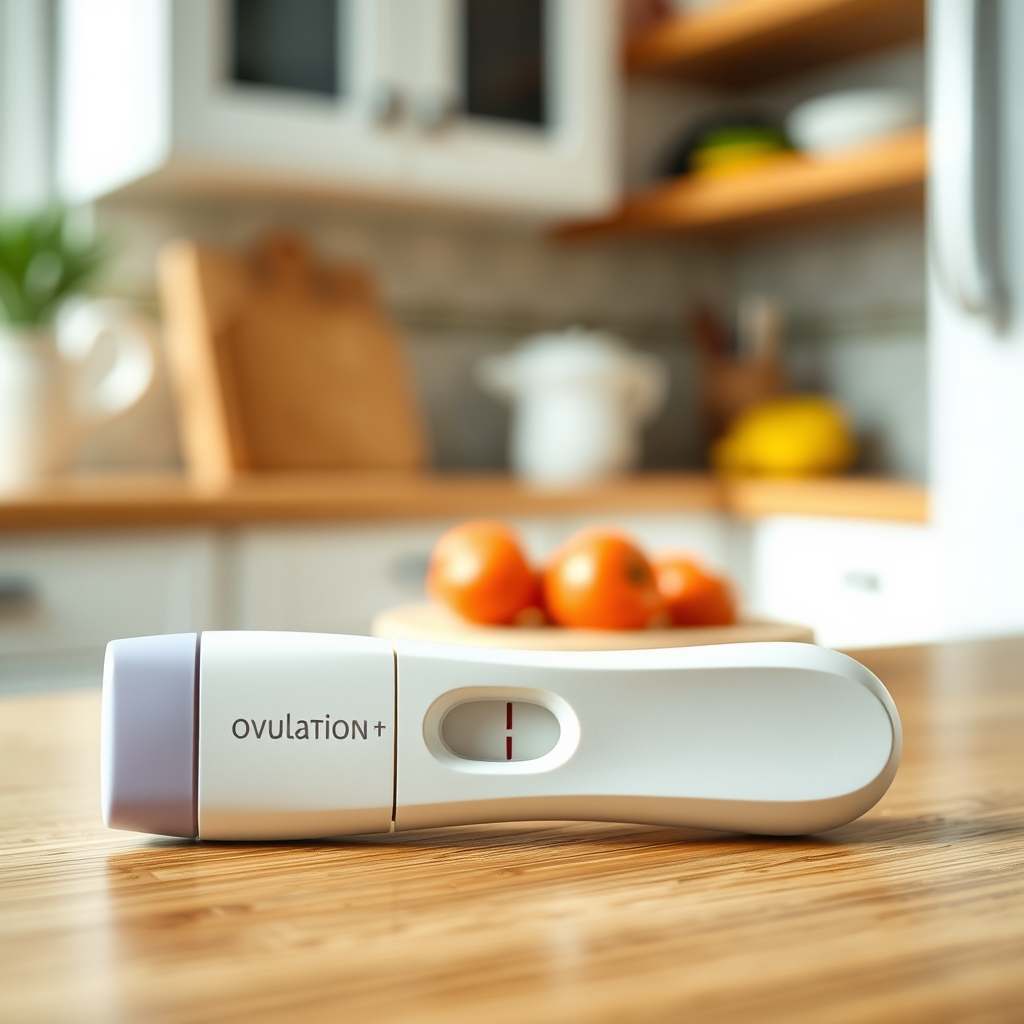
Ovulation tests help pinpoint the fertile window, narrowing the conception date estimate.
How to use a pregnancy app or digital tracker to refine your conception date
Modern pregnancy apps (e.g., Ovia, Flo, or the NHS Pregnancy Tracker) let you input LMP, cycle length, OPK results, and BBT data all in one place. The algorithm then outputs a “most likely conception window” and automatically updates your estimated due date.
To get the most accurate estimate:
Enter the exact date of your last period and any known cycle irregularities.
Log each positive OPK, cervical‑mucus observation, and temperature spike. Most apps highlight the day of the LH surge as the probable ovulation day.
If you’ve had an early ultrasound, input the CRL measurement; many apps will recalculate gestational age based on that data.
Review the app’s “confidence interval” – a narrower range (e.g., ±2 days) indicates higher certainty.
Research published by the Journal of Medical Internet Research in 2021 found that users who combined app‑based tracking with clinician‑confirmed ultrasound dating reduced dating errors by up to 30 % compared with LMP alone. While apps are convenient, always discuss the numbers with your provider, especially if you’re planning time‑sensitive procedures.
Understanding hormone blood tests (hCG) and early pregnancy dating
Human chorionic gonadotropin (hCG) is the hormone that rises after implantation. A quantitative hCG blood test measures the exact level of the hormone, which can give clues about how many days have passed since conception.
Typical hCG rise patterns:
Day 0–4 post‑conception: hCG is usually undetectable.
Day 5–7: hCG begins to appear, often detectable at 5–10 mIU/mL.
Day 8–14: Levels double roughly every 48–72 hours, reaching 1,000–10,000 mIU/mL.
If you have a quantitative hCG result, your provider can compare it to standard curves (e.g., the ACOG hCG reference chart) to estimate gestational age within a week. This method is especially helpful when LMP is unknown or when a miscarriage is suspected.
However, hCG alone cannot pinpoint the exact day of fertilization because hormone production varies between individuals. The NHS advises using hCG as a complementary tool, not a standalone dating method.
When and why you should discuss your conception date with your provider
Knowing your conception date can influence several aspects of prenatal care:
Screening timing: Certain genetic tests (e.g., NIPT) are most accurate after 10 weeks gestation, which is calculated from the conception date.
Medication safety: Some medications have different risk profiles before versus after 8 weeks, so accurate dating helps your provider choose the safest options.
High‑risk monitoring: Conditions like placenta previa or pre‑eclampsia are monitored based on gestational age; precise dating ensures timely surveillance.
Bring any ovulation test results, BBT charts, or ultrasound reports to your appointment. Ask your provider: “Based on my data, what is the most accurate estimate of my conception date, and does it affect my prenatal plan?” Clear communication helps avoid unnecessary anxiety and ensures that you and your care team are on the same page.
Doctor's note
From our medical team: Estimating a conception date is a useful exercise for planning, but it’s not a substitute for prenatal care. If you’re unsure about your dating, especially if you have irregular periods, have used fertility treatments, or have symptoms like bleeding, schedule an early ultrasound. Your provider can confirm gestational age and address any concerns about the timing of implantation or potential complications.
Myth vs. fact
Myth: You can know the exact day you got pregnant just by counting days on a calendar.
Fact: While you can estimate within a few days using LMP and ovulation signs, the exact moment of fertilization is rarely pinpointed without medical imaging or assisted reproduction data.
Myth: A missed period means you conceived on that exact day.
Fact: A missed period signals that a pregnancy is ongoing, but conception typically occurs 2–3 weeks earlier, depending on your cycle.
Myth: All online conception date calculators are equally accurate.
Fact: Calculators that let you input cycle length, ovulation test results, and treatment details are more reliable than simple “LMP + 14 days” tools.
Key takeaways
Start with the first day of your last period and add 14 days to estimate ovulation; adjust for your personal cycle length.
Use ovulation predictor kits, basal‑body‑temperature charts, and cervical‑mucus tracking to narrow the fertile window.
If you have irregular cycles, calculate an average cycle length and cross‑check with any ovulation signs you recorded.
Early ultrasound (first‑trimester) is the most accurate method to confirm gestational age and conception date.
Fertility treatments provide exact dates; simply add the known interval (e.g., 36 hours after a trigger shot) to get your conception date.
Digital pregnancy apps can integrate all your data, but always verify the output with your clinician.
Quantitative hCG tests can help estimate gestational age when menstrual history is unclear, but they are not a stand‑alone dating tool.
Frequently asked questions
How do I know the exact day I conceived?
The exact day is rarely known without medical data; most people estimate by counting 14 days from the first day of their last period or by using ovulation test results, which narrows the window to a couple of days.
What is the difference between conception date and due date?
Conception date marks when the egg was fertilized, while the due date (estimated due date) adds 280 days to the first day of your last period; it’s the standard obstetric benchmark for tracking pregnancy progress.
Can a doctor determine my conception date?
Yes—through a first‑trimester ultrasound measuring crown‑rump length, a clinician can estimate the conception date within about ±5 days, especially if your menstrual history is unclear.
How accurate is a conception date calculator?
Calculators that incorporate your cycle length, ovulation test results, and any fertility‑treatment details are generally accurate within a few days; they’re less precise when you have irregular cycles or missing data.
Does an irregular menstrual cycle affect conception date calculation?
Irregular cycles increase uncertainty; averaging several cycles, using ovulation signs, and confirming with an early ultrasound improve accuracy.
When does implantation occur after conception?
Implantation typically happens 6–12 days after fertilization, with most embryos implanting around day 9; this timing can influence when early pregnancy symptoms appear.
Can stress or lifestyle factors shift my estimated conception date?
Stress, significant weight changes, or irregular sleep patterns can affect ovulation timing, potentially shifting the fertile window by a day or two. Tracking ovulation signs each cycle helps account for these variations.
Should I share my estimated conception date with my employer for maternity leave planning?
Yes—providing an approximate conception date can help coordinate leave dates and any required medical documentation. Explain that the estimate is based on standard dating methods and may have a small margin of error.
When to call your doctor
If you experience any of the following, contact your obstetric provider promptly: heavy vaginal bleeding, severe abdominal pain, fever over 100.4 °F (38 °C), sudden swelling of hands or face, or signs of miscarriage such as tissue passing. Remember, this article provides general information and is not a substitute for personalized medical advice.
References
American College of Obstetricians and Gynecologists (ACOG). “Estimating Due Date.” Practice Bulletin No. 169, 2023.
National Institute for Health and Care Excellence (NICE). “Early Pregnancy and Antenatal Care.” NG54, 2022.
World Health Organization (WHO). “Recommendations for Routine Antenatal Care.” 2021.
Centers for Disease Control and Prevention (CDC). “Ovulation Predictor Kits and Fertility Tracking.” 2022.
U.S. Food and Drug Administration (FDA). “Guidance for Fertility Treatment Devices.” 2020.
Royal College of Obstetricians and Gynaecologists (RCOG). “Ultrasound in Pregnancy.” Green‑top Guideline No. 23, 2022.
International Committee for Monitoring Assisted Reproductive Technology (ICMART). “Definitions and Outcome Measures.” 2021.
Mayo Clinic. “Pregnancy due date calculator: How it works.” Updated 2023.
American Society for Reproductive Medicine (ASRM). “Guidelines for the Use of Assisted Reproductive Technology.” 2022.
Journal of Medical Internet Research. “Effectiveness of pregnancy‑tracking apps combined with ultrasound for dating accuracy.” 2021.
National Health Service (NHS). “Early pregnancy dating and the role of ultrasound.” 2023.
American College of Obstetricians and Gynecologists (ACOG). “hCG testing in early pregnancy.” Clinical Guidance, 2022.
Not sure about the label on When Did I Conceive Pregnancy Calculate Your Date products?
Snap the ingredients list and SafeFilter checks every ingredient for your stage — only 3 free scans this month, then you're locked until reset. Unlimited from $7/mo or $50/yr.
When Shubhra Mishra was expecting her first child in 2016, she was overwhelmed by conflicting food advice — one site said yes, another said never. By the time her second baby arrived in 2019, she realized millions of mothers face the same confusion.
That sparked a five-year journey through clinical nutrition papers, cultural diets, and expert conversations — all leading to BumpBites: a calm, compassionate space where science meets everyday motherhood.
Her long-term vision is to build a global community ensuring safe, supported, and free deliveriesfor every mother — because no woman should face pregnancy alone or uninformed. 🌿
🌍 Stand with mothers, shape safer guidance
Join a small circle of experts who review BumpBites articles so expecting parents everywhere can decide with confidence.