The CRIB-II score calculator predicts NICU admission risk by evaluating newborn health factors; use it to assess severity and guide care decisions for parents.
By Shubhra Mishra — a mom of two who turned her own confusion during pregnancy into BumpBites, a global mission to make food choices clear, safe, and stress-free for every expecting mother. 💛
Check whether any food is safe during pregnancy with the BumpBites Food Safety Checker.
Quick take: The CRIB-II score is a tool doctors use to estimate how sick a preterm newborn might be—and whether they’ll need NICU care. It looks at five simple things (birth weight, gestational age, temperature, blood acidity, and oxygen need) and gives a number between 0 and 27. A score of 10 or higher usually means higher risk and a likely NICU stay. You can use a free online calculator to see your baby’s score, but remember: it’s just one piece of the puzzle. Always talk to your care team about what the number really means for your little one.
You’re sitting in the dim glow of the delivery room, your preterm baby just born. The team is working quickly—checking monitors, adjusting tiny tubes, murmuring numbers you don’t quite understand. Then you hear it: “CRIB-II score.” Your heart sinks. What does that even mean? Is it bad? Will your baby need the NICU?
🔢 Calculate it for your situation: Use our CRIB-II Neonatal Risk for a personalized result in seconds.
If this sounds familiar, you’re not alone. Many parents of preterm infants first hear about the CRIB-II score in those overwhelming first minutes after birth. It’s a tool designed to help doctors predict how much support your baby might need—and whether a NICU admission is likely. But what exactly goes into that score? How do you interpret it? And most importantly, what does it mean for your baby’s care?
In this guide, we’ll walk you through everything you need to know about the CRIB-II score: how it’s calculated, what the numbers mean, and how it compares to other neonatal risk tools. We’ll also show you how to use a free online calculator (like our CRIB-II Neonatal Risk tool) to get a sense of your baby’s risk level. Most importantly, we’ll help you understand that while the CRIB-II score is a useful tool, it’s not the whole story—your baby’s care team will use it alongside other factors to make the best decisions for your little one.
The CRIB-II score helps care teams decide if a preterm baby needs NICU support—but it’s just one part of your baby’s story.
What is the CRIB-II score?
The CRIB-II (Clinical Risk Index for Babies, version II) is a scoring system used to assess the risk of serious illness or death in preterm infants. It was developed in the 1990s and updated in 2003 to make it simpler and more accurate. Today, it’s one of the most widely used tools in neonatal intensive care units (NICUs) to help doctors predict which babies might need extra support—and how much.
Think of the CRIB-II score like a weather forecast for your baby’s health. Just as a meteorologist looks at temperature, wind speed, and humidity to predict a storm, the CRIB-II score looks at five key factors to estimate how “stormy” your baby’s early days might be. The higher the score, the higher the risk of complications—and the more likely your baby will need NICU care.
Here’s what makes the CRIB-II score different from other neonatal risk tools:
It’s designed specifically for preterm infants (babies born before 32 weeks of pregnancy).
It’s simple to calculate—doctors can do it quickly at the bedside using just a few pieces of information.
It’s been validated in thousands of babies worldwide, so doctors trust it as a reliable predictor.
It helps care teams plan ahead—for example, whether your baby might need a ventilator, IV nutrition, or extra monitoring.
One mom, Sarah, shared her experience: “When my son was born at 28 weeks, the doctor told us his CRIB-II score was 8. I had no idea what that meant, but the nurse explained that it was in the ‘moderate risk’ range. That helped us prepare for what was ahead—knowing he’d likely need help breathing and feeding, but that the team was ready for it.”
What does CRIB-II stand for?
The name “CRIB-II” stands for Clinical Risk Index for Babies, version II. The “II” is important—it’s the updated version of the original CRIB score, which was developed in the 1990s. The first version included more factors (like congenital malformations) and was a bit more complicated to use. The updated CRIB-II simplified the scoring to focus on the most important predictors of risk, making it faster and more reliable for everyday use in the NICU.
How is the CRIB-II score calculated? A step-by-step guide
The C
RIB-II score is calculated using five simple pieces of information about your baby. You don’t need to be a doctor to understand it—just know where to find the numbers. Here’s what goes into the score:
Birth weight (in grams)
Gestational age (how many weeks pregnant you were when your baby was born)
Body temperature (in degrees Celsius, taken shortly after birth)
Base excess (a measure of blood acidity, from an arterial blood gas test)
Need for supplemental oxygen (whether your baby needed extra oxygen at 10 minutes after birth)
Each of these factors is plugged into a formula to give a score between 0 and 27. The higher the score, the higher your baby’s risk of needing NICU care or facing serious complications.
Let’s break it down step by step—with an example to make it real.
Step 1: Gather the five pieces of information
Here’s what you’ll need to know about your baby:
Factor
What it means
Example value
Birth weight
How much your baby weighed at birth (in grams).
1,200 grams
Gestational age
How many weeks pregnant you were when your baby was born.
29 weeks
Body temperature
The baby’s temperature (in °C) taken shortly after birth. Normal is around 36.5–37.5°C.
36.0°C
Base excess
A measure of blood acidity from an arterial blood gas test. Normal is around -2 to +2.
-6
Need for supplemental oxygen
Whether your baby needed extra oxygen at 10 minutes after birth (yes or no).
Yes
In this example, let’s say your baby was born at 29 weeks, weighing 1,200 grams. Their temperature was 36.0°C, their base excess was -6, and they needed extra oxygen at 10 minutes after birth.
Step 2: Use the CRIB-II formula (or a calculator)
The CRIB-II formula looks like this:
CRIB-II score = (3 × birth weight factor) + (2 × gestational age factor) + (4 × temperature factor) + (2 × base excess factor) + (oxygen factor)
Each factor is assigned a number based on your baby’s values. Here’s how it works:
If math isn’t your thing (or you’re just exhausted from delivery), don’t worry—you don’t have to do the calculations yourself. There are free online tools that do it for you. For example, you can use our CRIB-II Neonatal Risk calculator. Just enter your baby’s numbers, and it’ll give you the score instantly.
“I was so overwhelmed after my daughter was born at 27 weeks,” said Priya, a mom of a preterm baby. “The nurse showed me how to use the CRIB-II calculator on my phone. Seeing the score helped me understand why she needed to go to the NICU—and that it wasn’t because we’d done anything wrong.”
Online CRIB-II calculators make it easy to estimate your baby’s risk level—just enter a few key numbers.
How to interpret your baby’s CRIB-II score
Now that you know how the CRIB-II score is calculated, what does the number actually mean? The score ranges from 0 to 27, and it’s divided into three broad risk categories:
Low risk: 0–5
Moderate risk: 6–9
High risk: 10 or higher
Here’s a closer look at what each range means for your baby’s care:
Score 0–5: Low risk
Babies with a CRIB-II score in this range are generally stable and may not need intensive care. They might still be monitored in a special care nursery or NICU for a short time, but their risk of serious complications is low.
What this means for your baby:
They’re likely to breathe on their own or need only minimal support (like a little extra oxygen).
They may be able to feed by mouth sooner than higher-risk babies.
Their hospital stay might be shorter, and they may go home closer to their due date.
Example: A baby born at 31 weeks, weighing 1,600 grams, with a temperature of 36.8°C, a base excess of -1, and no need for oxygen would have a CRIB-II score of 0. This baby is at low risk and may only need a short stay in the NICU for feeding support and monitoring.
Score 6–9: Moderate risk
Babies in this range have a higher chance of needing NICU care. They may need help with breathing, feeding, or temperature regulation, and their hospital stay could be longer.
What this means for your baby:
They might need a ventilator or CPAP (a machine that helps keep their airways open) for a few days or weeks.
They may need IV nutrition (called TPN) until they’re strong enough to feed by mouth.
They’re at higher risk for complications like infections or bleeding in the brain, so they’ll need close monitoring.
Example: A baby born at 29 weeks, weighing 1,200 grams, with a temperature of 36.0°C, a base excess of -4, and needing oxygen would have a CRIB-II score of 8. This baby is at moderate risk and will likely need NICU care for several weeks.
Score 10 or higher: High risk
Babies with a CRIB-II score of 10 or higher are at the highest risk of serious complications or death. They will almost certainly need NICU care, and their stay could be long and complex.
What this means for your baby:
They may need a ventilator for a prolonged period, possibly weeks or even months.
They’re at high risk for complications like chronic lung disease, brain bleeds, or infections.
Their care team will include specialists like neonatologists, respiratory therapists, and nutritionists.
Their hospital stay could last months, and they may need extra support (like oxygen or feeding tubes) after going home.
Example: A baby born at 25 weeks, weighing 700 grams, with a temperature of 35.5°C, a base excess of -8, and needing oxygen would have a CRIB-II score of 16. This baby is at high risk and will need intensive NICU care for an extended period.
“When my twins were born at 26 weeks, their CRIB-II scores were 12 and 14,” said Maria, a NICU mom. “The doctor explained that this meant they’d need a lot of support, but that the team was prepared. Knowing the score helped me understand why they were whisked away so quickly—and why their care was so intense.”
What the CRIB-II score doesn’t tell you
While the CRIB-II score is a useful tool, it’s not a crystal ball. It doesn’t predict:
Exactly how long your baby will stay in the NICU. The score gives a general idea, but every baby is different. Some babies with high scores recover quickly, while others with lower scores may have unexpected setbacks.
Your baby’s long-term outcomes. The CRIB-II score is designed to predict short-term risk (like the first few weeks of life), not whether your baby will have developmental delays or other long-term challenges. Many babies with high CRIB-II scores go on to thrive with the right support.
Individual complications. The score doesn’t tell you whether your baby will develop a specific problem, like a brain bleed or infection. It’s a general risk estimate, not a diagnosis.
“The CRIB-II score is like a roadmap,” explained Dr. Lee, a neonatologist. “It tells us which roads might be bumpy, but it doesn’t predict every pothole. We use it to plan the journey, but we adjust as we go.”
CRIB-II vs. other neonatal risk scores: How does it compare?
The CRIB-II score isn’t the only tool doctors use to assess newborns. There are several other scoring systems, each with its own strengths and weaknesses. Here’s how the CRIB-II compares to the most common ones:
Scoring system
What it measures
Best for
Limitations
How it compares to CRIB-II
APGAR score
Five simple signs: heart rate, breathing, muscle tone, reflexes, and skin color. Scored at 1 and 5 minutes after birth.
All newborns, regardless of gestational age. Quickly assesses how well a baby is adapting to life outside the womb.
Not designed to predict long-term outcomes or NICU admission. Doesn’t account for preterm-specific risks.
The APGAR score is done on every baby, while the CRIB-II is only for preterm infants. APGAR is simpler but less predictive of NICU needs.
SNAP-II (Score for Neonatal Acute Physiology, version II)
Six physiological measures: blood pressure, temperature, oxygenation, pH, seizures, and urine output.
All newborns, including term and preterm. Predicts illness severity and mortality.
More complex to calculate than CRIB-II. Requires more lab tests and monitoring.
SNAP-II is broader and can be used for term babies, but it’s less specific for preterm infants than CRIB-II. Both are good predictors of NICU admission.
SNAPPE-II (SNAP-II + Perinatal Extension)
SNAP-II plus three additional factors: birth weight, Apgar score, and whether the baby was small for gestational age.
All newborns. Predicts mortality and length of NICU stay.
Even more complex to calculate. Requires more data than CRIB-II.
SNAPPE-II is more comprehensive but also more cumbersome. CRIB-II is simpler and just as accurate for preterm babies.
Original CRIB score
Six factors: birth weight, gestational age, congenital malformations, maximum base excess, minimum appropriate FiO2, and maximum appropriate FiO2.
Preterm infants. Predicts mortality and illness severity.
More complex than CRIB-II. Includes congenital malformations, which aren’t always known at birth.
CRIB-II is a simplified, updated version of the original CRIB score. It’s easier to calculate and just as accurate.
Why doctors prefer CRIB-II for preterm infants
While all these scoring systems have their place, the CRIB-II is often the go-to for preterm babies for a few key reasons:
It’s simple. The CRIB-II uses just five factors, all of which are available shortly after birth. This makes it quick and easy to calculate, even in a busy delivery room.
It’s specific to preterm infants. Unlike the APGAR or SNAP-II, the CRIB-II is designed specifically for babies born before 32 weeks. This makes it more accurate for predicting their unique risks.
It’s validated. The CRIB-II has been tested in thousands of preterm infants worldwide, so doctors trust its predictions.
It’s practical. The score helps care teams make real-time decisions, like whether a baby needs to be transferred to a higher-level NICU or whether they’re stable enough to stay in a special care nursery.
“We use the CRIB-II because it’s a reliable, no-nonsense tool,” said Dr. Patel, a neonatologist. “It doesn’t require fancy tests or extra time—just the basic information we already have. That’s invaluable when you’re making split-second decisions about a baby’s care.”
What does a high CRIB-II score mean for your baby’s NICU stay?
If your baby has a high CRIB-II score (10 or higher), you’re probably wondering what that means for their time in the NICU. While every baby’s journey is unique, here’s what you can generally expect:
Immediate care: The first 24–48 hours
Babies with high CRIB-II scores are usually whisked away to the NICU right after birth. In the first day or two, the care team will focus on stabilizing your baby and addressing any immediate threats to their health. Here’s what that might look like:
Breathing support: Many preterm babies with high CRIB-II scores need help breathing. This could mean:
A ventilator (a machine that breathes for them).
CPAP (continuous positive airway pressure, which keeps their airways open).
High-flow nasal cannula (a tube that delivers extra oxygen).
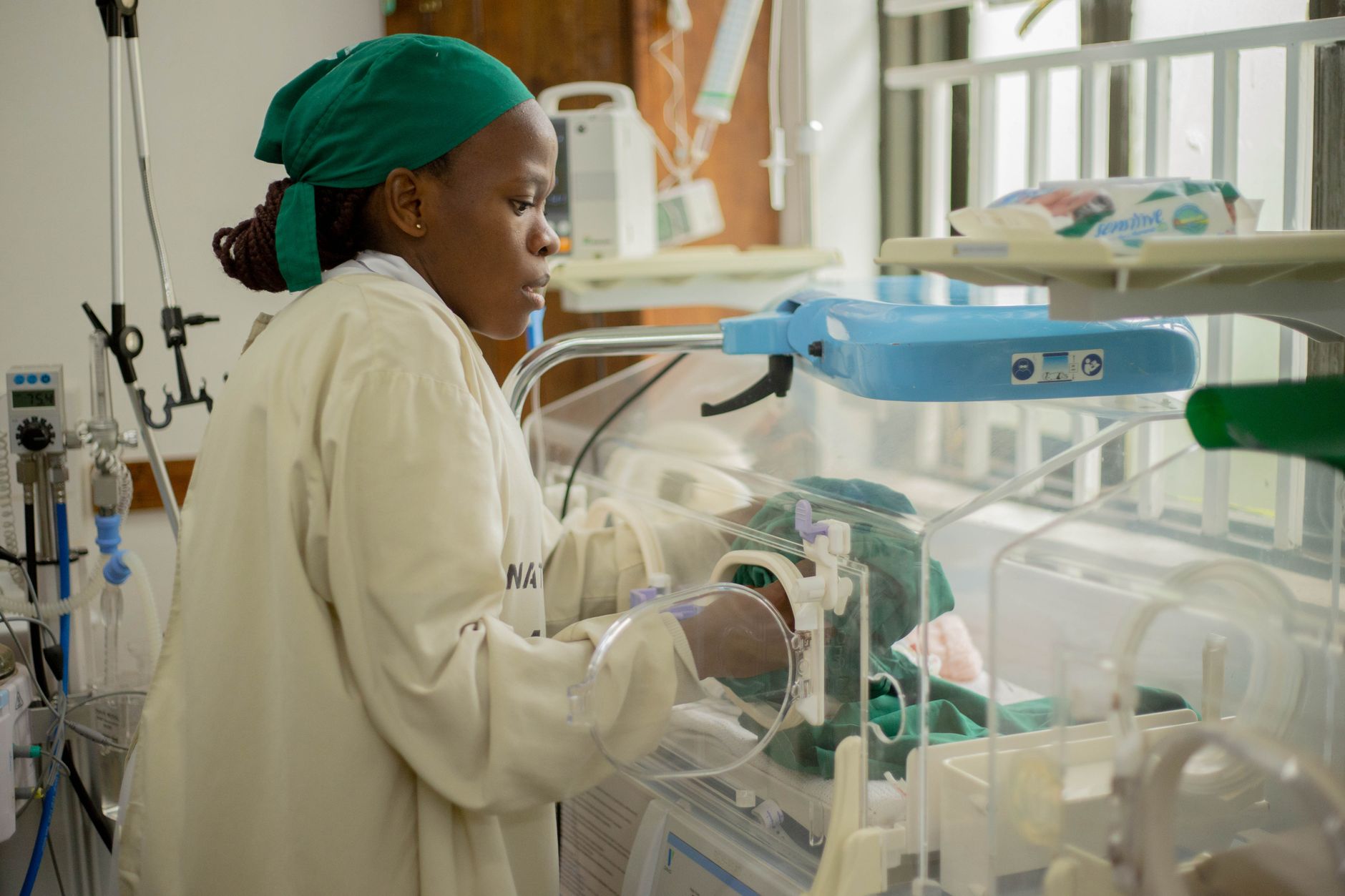
Temperature regulation: Preterm babies struggle to stay warm. Your baby will likely be placed in an incubator or under a radiant warmer to keep their body temperature stable.
IV fluids and nutrition: Your baby may not be able to feed by mouth right away. Instead, they’ll receive fluids and nutrients through an IV (called TPN, or total parenteral nutrition).
Monitoring: Your baby will be hooked up to monitors that track their heart rate, breathing, oxygen levels, and blood pressure. Alarms will sound if anything changes, so the team can respond quickly.
“The first 48 hours are all about keeping your baby alive and stable,” explained Dr. Chen, a NICU nurse. “We’re watching every breath, every heartbeat, and every drop of fluid. It’s intense, but it’s what gives these tiny fighters the best chance.”
Short-term care: The first few weeks
Once your baby is stable, the focus shifts to helping them grow and recover. This phase can last weeks or even months, depending on your baby’s needs. Here’s what to expect:
Weaning off support: The team will gradually reduce breathing support as your baby gets stronger. For example, they might switch from a ventilator to CPAP, then to a nasal cannula, and finally to room air.
Feeding: Your baby will start with small amounts of breast milk or formula through a feeding tube. As they grow, they’ll learn to suck, swallow, and breathe in coordination—a skill that preterm babies often struggle with. You may be encouraged to pump breast milk, as it’s the best nutrition for preterm infants and can help protect against infections.
Preventing complications: Babies with high CRIB-II scores are at risk for complications like:
Respiratory distress syndrome (RDS): A lung condition common in preterm babies, caused by a lack of surfactant (a substance that keeps the lungs inflated).
Intraventricular hemorrhage (IVH): Bleeding in the brain, which can lead to developmental delays. The risk is highest in the first few days of life.
Necrotizing enterocolitis (NEC): A serious intestinal infection that can occur when the gut isn’t fully developed.
Infections: Preterm babies have weaker immune systems, making them more vulnerable to infections like sepsis or pneumonia.
The care team will monitor your baby closely for signs of these complications and treat them promptly if they arise.
Kangaroo care: Once your baby is stable enough, you’ll be encouraged to hold them skin-to-skin (called kangaroo care). This helps regulate their temperature, heart rate, and breathing, and it’s also a beautiful way to bond with your baby. Many NICUs have policies that allow parents to do kangaroo care even if their baby is on a ventilator or other support.
“The first few weeks are a rollercoaster,” said Emily, whose son had a CRIB-II score of 15. “One day he’d make progress, the next he’d have a setback. But the nurses were amazing—they celebrated every little milestone with us, like when he first opened his eyes or when he finally came off the ventilator.”
Long-term care: Preparing for discharge
The goal of the NICU is to help your baby grow strong enough to go home. For babies with high CRIB-II scores, this process can take months. Here’s what the final stretch might look like:
Feeding milestones: Your baby will need to be able to feed by mouth (either breast or bottle) and gain weight consistently before they can go home. This can be a slow process, especially for babies who’ve had breathing or feeding tubes.
Breathing milestones: Your baby will need to breathe on their own without support for a set period (usually 24–48 hours) before discharge. Some babies go home on oxygen, but this is less common for those with very high CRIB-II scores.
Temperature regulation: Your baby will need to maintain a stable body temperature in an open crib (not an incubator) before going home.
Follow-up care: Before discharge, the NICU team will make sure you’re prepared to care for your baby at home. This might include:
CPR training for parents.
Instructions on how to use any equipment (like an oxygen tank or feeding pump) your baby might need at home.
A plan for follow-up appointments with specialists, like a neonatologist, ophthalmologist (eye doctor), or developmental therapist.
Referrals to early intervention programs, which provide support for babies with developmental delays.
“Going home was both exciting and terrifying,” said David, whose daughter had a CRIB-II score of 11. “The NICU had become our second home, and suddenly we were on our own. But the team prepared us well—they gave us a list of red flags to watch for, and they scheduled follow-up visits to make sure she was thriving.”
How the CRIB-II score can help predict NICU length of stay
One of the most common questions parents ask is, “How long will my baby be in the NICU?” While the CRIB-II score can’t give you an exact answer, it can help estimate the general length of stay. Here’s what the research says:
Low-risk babies (CRIB-II 0–5): These babies often stay in the NICU for 1–4 weeks, depending on their gestational age and how quickly they learn to feed and breathe on their own.
Moderate-risk babies (CRIB-II 6–9): These babies typically stay in the NICU for 4–8 weeks. Some may need longer if they develop complications.
High-risk babies (CRIB-II 10+): These babies often stay in the NICU for 2–4 months or longer. Some may need to be transferred to a specialized NICU if they develop complex medical needs.
A 2018 study published in the Journal of Perinatology found that for every 1-point increase in the CRIB-II score, the average NICU stay increased by about 2 days. For example, a baby with a CRIB-II score of 12 might stay in the NICU about 24 days longer than a baby with a score of 0. This isn’t a hard-and-fast rule, but it gives you a rough idea of what to expect.
“The CRIB-II score isn’t a perfect predictor, but it’s a helpful guide,” said Dr. Wilson, a neonatologist. “It helps us set realistic expectations for parents—and it helps us allocate resources, like making sure we have enough ventilators or staff for the babies who’ll need them most.”
The CRIB-II score helps NICU teams plan for your baby’s care—but every baby’s journey is unique.
Limitations and accuracy of the CRIB-II score
The CRIB-II score is a valuable tool, but it’s not perfect. Like any medical scoring system, it has limitations—and it’s important to understand what it can and can’t do. Here’s what you need to know:
What the CRIB-II score gets right
The CRIB-II score is highly accurate at predicting two key outcomes in preterm infants:
Mortality risk: The score is a strong predictor of whether a preterm baby will survive their NICU stay. Studies show that babies with higher CRIB-II scores are more likely to die in the first few weeks of life. For example, a baby with a score of 15 or higher has a mortality risk of about 30–50%, while a baby with a score of 0–5 has a risk of less than 5%.
NICU admission risk: The score is also a good predictor of whether a preterm baby will need NICU care. Babies with scores of 6 or higher almost always require NICU admission, while those with scores of 0–5 may not.
The CRIB-II score is particularly useful in the first few hours after birth, when doctors are making critical decisions about a baby’s care. “It’s like a flashlight in the dark,” said Dr. Martinez, a neonatologist. “It doesn’t show us the whole path, but it helps us take the first few steps with confidence.”
Where the CRIB-II score falls short
Despite its strengths, the CRIB-II score has some important limitations:
It’s not a crystal ball. The score predicts risk, not certainty. A baby with a high score might do well, while a baby with a low score might have unexpected complications. “I’ve seen babies with CRIB-II scores of 15 who went home in a few weeks, and babies with scores of 5 who needed months of care,” said Dr. Lee. “Every baby is different.”
It doesn’t account for all risk factors. The CRIB-II score looks at five key factors, but there are other things that can affect a preterm baby’s health, like:
Infections (e.g., chorioamnionitis, a uterine infection that can affect the baby).
Maternal health conditions (e.g., preeclampsia, diabetes, or smoking).
Genetic or congenital conditions (e.g., heart defects or chromosomal abnormalities).
Quality of care (e.g., whether the NICU is well-staffed and
🔢 Ready to crunch your numbers? Use our CRIB-II Neonatal Risk for a personalized result in seconds.
Not sure about the label on Nicu Admission Risk Crib Ii Score Calculator Interpretation products?
Snap the ingredients list and SafeFilter checks every ingredient for your stage — only 3 free scans this month, then you're locked until reset. Unlimited from $7/mo or $50/yr.
When Shubhra Mishra was expecting her first child in 2016, she was overwhelmed by conflicting food advice — one site said yes, another said never. By the time her second baby arrived in 2019, she realized millions of mothers face the same confusion.
That sparked a five-year journey through clinical nutrition papers, cultural diets, and expert conversations — all leading to BumpBites: a calm, compassionate space where science meets everyday motherhood.
Her long-term vision is to build a global community ensuring safe, supported, and free deliveriesfor every mother — because no woman should face pregnancy alone or uninformed. 🌿
🌍 Stand with mothers, shape safer guidance
Join a small circle of experts who review BumpBites articles so expecting parents everywhere can decide with confidence.