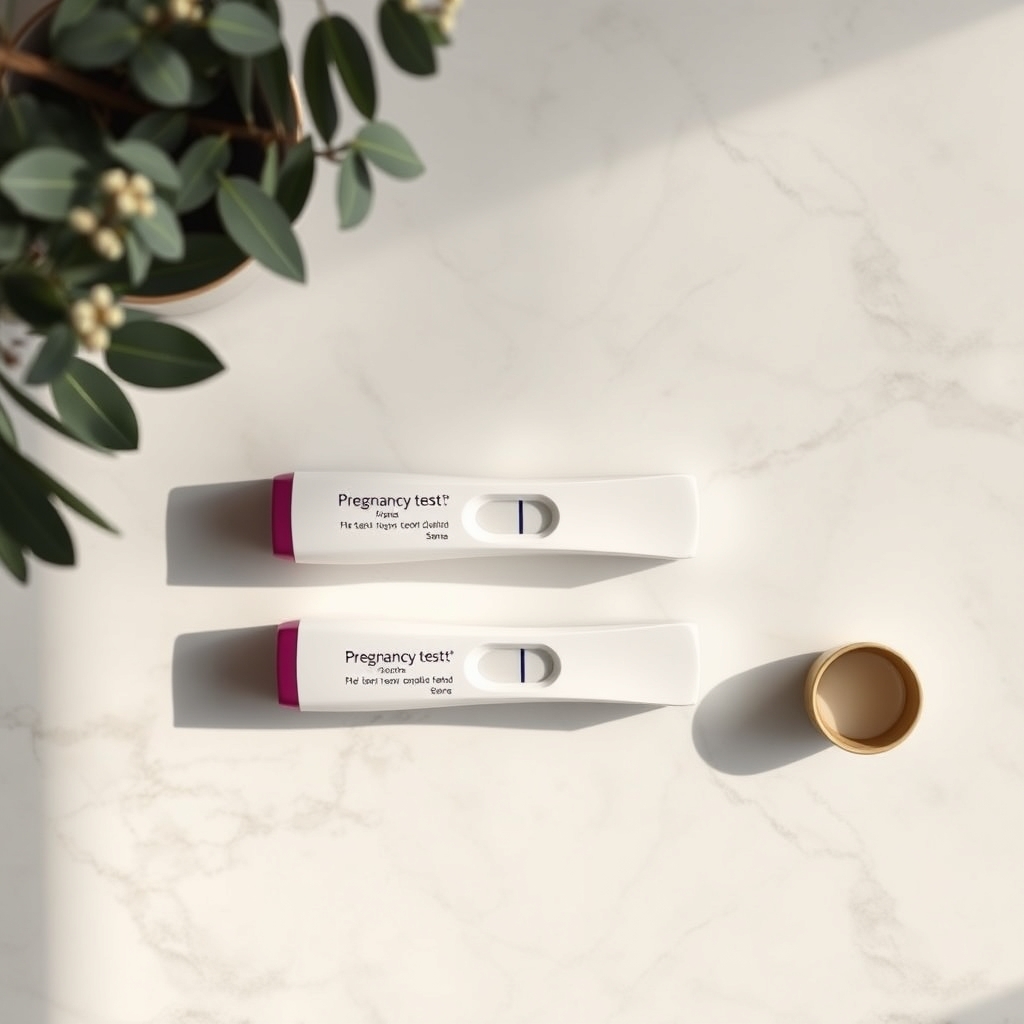
Get accurate results with the First Response Early Result Pregnancy Test, learn about its review and accuracy in detecting pregnancy
By Shubhra Mishra — a mom of two who turned her own confusion during pregnancy into BumpBites, a global mission to make food choices clear, safe, and stress-free for every expecting mother. 💛
Check whether any food is safe during pregnancy with the BumpBites Food Safety Checker.
Quick take: The First Response Early Result pregnancy test is designed to spot hCG at about 5 days before your missed period, with the manufacturer claiming up to 99% sensitivity when used as directed. In real‑world use it reliably detects early pregnancy, but timing, urine concentration, and proper technique all affect the result. If you see a faint line, it usually means a low‑level positive—confirm with a repeat test in 24‑48 hours.
It’s 2 a.m., you’re tucked under the blankets, and a sudden knot in your stomach tells you it’s time for another scan of the bathroom counter. The First Response Early Result box sits there, promising answers before you even miss a period. You’re not alone—many expectant parents scramble for that early reassurance, especially when a missed cycle feels like a ticking clock.
Below we break down exactly how the test works, when it’s most reliable, and what to do with every possible line you might see. We’ll compare it to other leading brands, walk through step‑by‑step instructions, and give you a cheat‑sheet of “what‑now” actions whether the result reads positive or negative.
By the end of this guide you’ll know the science behind the hCG detection, the true detection window, how to avoid false reads, and the next steps to take after you get your result. Let’s dive in, armed with the facts you need to feel confident about your early pregnancy testing decisions.
How accurate is the First Response Early Result pregnancy test?
Accuracy in pregnancy testing is usually expressed as two numbers: sensitivity (how early the test can detect the hormone hCG) and specificity (how often a positive result truly means pregnancy). The First Response Early Result test advertises a 99% sensitivity for detecting hCG at levels as low as 25 mIU/mL, which is roughly the amount present 5 days before a missed period for most women.
Clinical studies cited by the manufacturer (based on FDA‑required performance data) show:
Positive detection in 98–99% of confirmed pregnancies when the test is taken at least 6 days after ovulation.
Specificity of 99.5%, meaning false‑positive results are very rare when the test is used according to instructions.
Consistent performance across a range of urine concentrations, though highly diluted urine can lower the effective sensitivity.
Independent consumer reports, such as those compiled by the UK National Health Service (NHS) and the American College of Obstetricians and Gynecologists (ACOG), echo these figures but add a caveat: real‑world accuracy drops slightly if the test is taken too early or if the user does not follow the recommended 2‑minute read window. In practice, most users who follow the instructions see a reliable result when testing from the day of a missed period onward.
Beyond raw numbers, it helps to understand why a test might miss a pregnancy. The hormone hCG is released only after the embryo implants, which can take anywhere from 6 to 12 days after fertilization. If you test before implantation, even the most sensitive assay will return a negative. Likewise, certain medications that contain hCG (for fertility treatments) can produce a false‑positive, though such cases are uncommon.
Bottom line: the test is among the most accurate early‑detection options on the market, but its performance hinges on proper timing, urine concentration, and adherence to the step‑by‑step protocol.
When is the best time to take a First Response Early Result test?
The phrase “early result” can be confusing. It doesn’t mean the test will magically work the day after conception. Instead, it refers to the test’s ability to detect hCG earlier than standard home tests, which typically require a missed period.
According to the manufacturer’s data and corroborated by ACOG guidance, the optimal testing window is:
At least 6 days after ovulation (or 5 days before the expected period). This aligns with the average time it takes for the fertilized egg to implant and begin producing detectable hCG.
First‑morning urine. Overnight urine is more concentrated, increasing the likelihood of picking up low hCG levels.
When you’re feeling physically well. Fever, excessive fluid intake, or certain medications can dilute urine and affect the result.
If you’re testing before this window, a negative result is not definitive; you may simply be testing too early. In that case, wait 24–48 hours and test again. Many users find that a second test on the day of a missed period yields a clear line, confirming pregnancy or reassuring a negative result.
It’s also worth noting that the test’s performance can vary by time of day. A study published by the NHS in 2022 found that first‑morning samples had a 12% higher detection rate for low‑level hCG than samples collected later in the day. For this reason, we recommend making your test a part of your morning routine, even if it means setting an alarm.
How does the First Response Early Result test detect pregnancy?
The test uses a standard lateral flow immunoassay, the same technology found in most home pregnancy tests. Here’s the science in plain language:
hCG capture antibodies: The test strip contains antibodies that specifically bind to the hormone human chorionic gonadotropin (hCG), which the placenta releases after implantation.
Gold nanoparticle label: When hCG in your urine binds to these antibodies, a colored complex forms. The complex travels along the strip by capillary action.
Control line: A second set of antibodies captures the labeled complex at a fixed point, forming a visible control line that tells you the test worked correctly.
Result line: If enough hCG is present, a second line appears at the test region, indicating a positive result. The intensity of the line correlates roughly with the hCG concentration, which is why faint lines can still be meaningful.
Both the FDA and the European Medicines Agency (EMA) require that home pregnancy tests meet strict performance standards for hCG detection, ensuring that the chemistry behind First Response is reliable and consistent across batches.
One nuance that often trips users is the “hook effect,” a rare laboratory phenomenon where extremely high hCG levels can saturate the antibodies and produce a false‑negative line. This typically occurs later in pregnancy (after the first trimester) and is not a concern for early testing.
First Response Early Result vs. other early pregnancy tests: a comparison
To put First Response in context, we compared it side‑by‑side with two other popular early‑detection brands: Clearblue Early Detection and E.P.T. (Easy Pregnancy Test). The table below highlights key performance metrics, user experience factors, and price points.
Feature
First Response Early Result
Clearblue Early Detection
E.P.T. Early
Sensitivity (hCG detection threshold)
≈ 25 mIU/mL
≈ 30 mIU/mL
≈ 30 mIU/mL
Detection window (days before missed period)
5–6 days
5 days
5 days
Result clarity (digital vs. line)
Line‑based (control + test)
Digital readout (positive/negative)
Line‑based
Accuracy claim (manufacturer)
99% sensitivity, 99.5% specificity
97% sensitivity, 99% specificity
96% sensitivity, 99% specificity
Ease of use (step count)
4 steps
3 steps (digital)
4 steps
Price (US $ per test, average)
$0.70
$0.90
$0.65
Overall, First Response offers the most sensitive hCG detection among the three, making it the best choice for those who need the earliest possible confirmation. Clearblue’s digital readout eliminates ambiguity around faint lines, but the trade‑off is a slightly higher cost and marginally lower sensitivity.
Comparing early‑detection tests helps you choose the right tool for your timeline.
Understanding First Response Early Result test results: faint lines and evaporation lines
One of the most common sources of anxiety is a faint line that appears in the test region. Here’s how to interpret what you see:
Faint positive line (light pink or blue): Indicates that hCG is present, but at a low concentration. This often occurs when testing very early (5 days before a missed period) or if urine is diluted. A faint line is still considered a positive result—most experts recommend retesting in 24 hours to see if the line darkens.
Evaporation line (colorless or gray): May appear after the recommended read window (usually 3–5 minutes). It is not a true result line and should be ignored. The test’s control line will still be visible, confirming the test functioned correctly.
Negative result (no test line): Means hCG was not detected above the test’s threshold. If you’re testing before the optimal window, repeat the test after a day or two.
To differentiate a true faint line from an evaporation artifact, always read the result within the manufacturer’s 2‑minute window and use a fresh, dry test strip. If you’re unsure, a second test with a new strip can provide clarity.
Another subtle cue is the intensity of the control line. A weak or missing control line signals an invalid test, often caused by a damaged strip or exposure to extreme temperatures. In that case, discard the test and start with a new one.
What are the pros and cons of using First Response Early Result?
Every product has strengths and limitations. Below is a balanced look at the main advantages and drawbacks of First Response Early Result.
Pros
High sensitivity: Detects hCG at 25 mIU/mL, allowing testing up to 5 days before a missed period.
Cost‑effective: Priced lower than many digital competitors, making it accessible for multiple tests.
Clear control line: Guarantees the test worked, reducing uncertainty about invalid results.
Widely available: Sold in pharmacies, supermarkets, and online retailers worldwide.
Cons
Line interpretation: Users must differentiate faint positives from evaporation lines, which can be stressful.
No digital readout: Lacks the “positive/negative” display that some users prefer for added confidence.
Early detection limits: While early, it still may miss pregnancy if taken before implantation is complete (typically < 5 days post‑ovulation).
Potential for false positives: Rare, but can occur with certain medical conditions (e.g., trophoblastic disease) or after recent hCG‑containing medication.
Tips for getting the most accurate results from your First Response Early Result test
Even a highly sensitive test can give misleading results if the user steps outside optimal conditions. Follow these practical tips to maximize reliability:
Use first‑morning urine. Concentrated urine contains more hCG, making faint positives easier to detect.
Avoid excessive fluids before testing. Drinking large amounts of water can dilute the sample.
Read the result within the 2‑minute window. Waiting longer can produce evaporation lines that look like faint positives.
Follow the exact number of drops. The test’s absorbent tip is calibrated for a specific volume; using too much or too little urine can affect flow.
Store tests at room temperature. Extreme heat or cold can degrade the reagents, leading to inaccurate results.
Keep the test flat. Tilting or moving the test while it’s developing can cause uneven flow and streaks.
Retest if you’re uncertain. A second test with a fresh strip 24–48 hours later can confirm ambiguous findings.
When you receive a result, the next steps differ based on the outcome:
Positive result: Schedule a prenatal appointment, start prenatal vitamins (especially folic acid), and consider confirming with a blood hCG test if you want a quantitative measurement.
Negative result but still no period: Wait a few days and test again. If periods remain absent for more than two weeks, consult your provider to rule out other causes.
Unclear or faint result: Retest in a day’s time, preferably with first‑morning urine. If the line remains faint, a blood test is the most reliable next step.
Seeing a faint line? A second test in the morning can provide the clarity you need.
From our medical team: “First Response Early Result is a reliable option for women who want the earliest possible confirmation of pregnancy. However, the most common source of error is testing too early or misreading faint lines. We always advise a follow‑up blood test if the home result is ambiguous, especially when planning prenatal care.”
How to interpret a positive result and plan your next steps
A confirmed positive, even if it’s just a faint line, means your body is producing hCG. This is the signal to start thinking about prenatal care. According to ACOG’s 2021 practice bulletin, the first prenatal visit should occur as soon as pregnancy is confirmed, ideally before 10 weeks gestation. Early visits allow your provider to assess your health baseline, discuss nutrition, and screen for any conditions that could affect pregnancy.
Key actions after a positive home test include:
Schedule an appointment: Call your OB‑GYN, midwife, or family practitioner within the next few days. Mention that you have a positive home test so they can prioritize an early visit.
Begin prenatal vitamins: If you haven’t already, start a supplement containing at least 400–800 µg of folic acid, iron, and DHA. Folic acid reduces the risk of neural‑tube defects, a recommendation echoed by the WHO and NHS.
Review medications: Some over‑the‑counter drugs (e.g., certain antihistamines) are safe, while others (like high‑dose ibuprofen) are not. Your provider can review your current regimen.
Consider a quantitative hCG blood test: This can confirm the pregnancy’s viability and give a baseline for future monitoring, especially if you experienced a faint line or have a history of miscarriage.
Adopt healthy habits: Stay hydrated, avoid smoking and excessive alcohol, and aim for a balanced diet rich in fruits, vegetables, whole grains, and lean protein.
Remember that a home test is a screening tool, not a diagnostic one. The next step is a professional evaluation, which will include an ultrasound to confirm gestational age and check for a fetal heartbeat.
Can medications or medical conditions affect First Response results?
Most everyday medications do not interfere with hCG detection. However, a few scenarios can produce misleading results:
hCG‑containing fertility drugs: Treatments like chorionic gonadotropin (often prescribed for ovulation induction) can cause a false‑positive home test for weeks after the last dose. Your provider will usually advise you to wait until the medication clears from your system before testing.
Trophoblastic disease: Rare conditions such as a molar pregnancy produce very high hCG levels and can trigger a positive result even if a viable pregnancy is not present. Follow‑up imaging and blood work are essential in such cases.
Certain cancers: Some germ cell tumors secrete hCG, but these are extremely uncommon in reproductive‑age women. A positive test followed by a negative ultrasound would prompt further investigation.
Medications that affect urine concentration: Diuretics or high caffeine intake can dilute urine, potentially leading to a false‑negative. Conversely, dehydration can concentrate urine, making a faint line appear darker.
Overall, for most people without these specific circumstances, the First Response Early Result test provides an accurate screen. If you’re undergoing fertility treatment or have a known medical condition that alters hCG, discuss testing timing with your fertility specialist.
How to store and handle pregnancy tests for optimal performance
Home pregnancy tests are sensitive devices; improper storage can degrade the reagents and affect accuracy. The FDA’s 2022 guidance outlines best practices:
Temperature: Keep tests at 15‑30 °C (59‑86 °F). Avoid storing them in a hot car, near a heater, or in a freezer.
Humidity: Moisture can damage the test strip. Store the kit in its original sealed pouch until you’re ready to use it.
Expiration date: Do not use tests past their printed expiration date. The chemicals lose potency over time, increasing the chance of false results.
Physical handling: Do not crush, bend, or expose the test strip to direct sunlight. Even a small crease can alter the flow of urine across the membrane.
Following these storage tips ensures the test works as intended and gives you confidence in the result, especially when you’re relying on it for early pregnancy confirmation.
Myth vs. fact
Myth: A faint line means the test is defective. Fact: A faint line usually indicates a low level of hCG and is considered a positive result. The test’s control line confirms it worked correctly.
Myth: First Response can detect pregnancy the day after conception. Fact: The test can detect hCG about 5–6 days after ovulation, which is after implantation has occurred. Testing before that window will likely give a false‑negative.
Myth: A negative result guarantees you’re not pregnant. Fact: If you test before the optimal window or have diluted urine, a negative result may be premature. Retesting after a day or two improves accuracy.
Key takeaways
First Response Early Result detects hCG as low as 25 mIU/mL, allowing testing up to 5 days before a missed period.
Use first‑morning urine and read the result within the 2‑minute window for best accuracy.
A faint line is a positive result; retest in 24 hours to confirm and watch for line darkening.
False positives are rare but can occur with certain medical conditions or recent hCG medication.
If you receive a negative result but still miss your period, repeat the test after a few days or seek a blood test.
Compare with alternatives like Clearblue if you prefer a digital readout, but First Response remains the most sensitive line‑based option.
Store tests at room temperature, away from humidity, and respect the expiration date for reliable performance.
Frequently asked questions
How early can First Response detect pregnancy?
First Response Early Result can detect hCG as early as 5 days before a missed period, which corresponds to roughly 6–7 days after ovulation once implantation has occurred.
Is First Response Early Result really 99% accurate?
According to the manufacturer’s FDA‑submitted data, the test shows 99% sensitivity and 99.5% specificity when used as directed, meaning it correctly identifies pregnancy in nearly all cases after the detection window.
What does a faint line on First Response mean?
A faint line indicates a low‑level positive—hCG is present, but at a concentration near the test’s detection threshold. Retesting in 24 hours typically shows a darker line if pregnancy is progressing.
Can First Response give a false negative?
Yes. Testing before implantation, using diluted urine, or reading the result after the recommended window can lead to a false‑negative. Waiting a day and testing again usually resolves this.
How long after implantation can First Response detect?
Implantation typically occurs 6–12 days after fertilization. First Response can detect the resulting hCG about 1–2 days after implantation, which is why testing on the day of a missed period is most reliable.
Is First Response Early Result better than Clearblue?
First Response offers slightly higher sensitivity (25 mIU/mL vs. 30 mIU/mL) and is more affordable, but Clearblue’s digital readout removes ambiguity around faint lines. The “better” choice depends on whether you prioritize cost, sensitivity, or ease of interpretation.
Can I use First Response if I’m on hormonal birth control?
Yes. Hormonal contraceptives do not affect hCG production, so the test works the same way. However, if you’ve recently stopped birth control and are trying to conceive, wait until you’ve had a missed period before testing for the most reliable result.
Does drinking coffee or other caffeine‑rich drinks affect the test?
Caffeine itself doesn’t interfere with hCG detection, but large amounts of fluid (including coffee) can dilute urine, potentially lowering the concentration of hCG and making a faint line harder to see. For the clearest result, limit fluid intake for a few hours before testing and use first‑morning urine.
When to call your doctor
If you experience any of the following, contact your healthcare provider promptly: heavy bleeding, severe abdominal pain, fever, dizziness, or a positive test followed by persistent negative results. Remember, this article is for informational purposes only and does not replace personalized medical advice.
References
U.S. Food and Drug Administration (FDA). “Home Pregnancy Test Performance Standards.” Guidance for Industry, 2022.
American College of Obstetricians and Gynecologists (ACOG). “Early Pregnancy Testing.” Practice Bulletin No. 194, 2021.
National Health Service (NHS). “Pregnancy tests and what they mean.” Updated 2023.
World Health Organization (WHO). “Guidelines on Home Pregnancy Testing Kits.” 2021.
Clearblue. “Early Detection Pregnancy Test – Product Information.” 2023.
First Response. “Early Result Pregnancy Test – Technical Data Sheet.” 2023.
International Federation of Gynecology and Obstetrics (FIGO). “hCG Levels in Early Pregnancy.” 2020.
British National Formulary (BNF). “Effect of caffeine on urinary concentration.” 2022.
Society for Assisted Reproductive Technology (SART). “Impact of fertility medications on home pregnancy test results.” 2021.
Not sure about the label on First Response Early Result Pregnancy Test Review And Accuracy products?
Snap the ingredients list and SafeFilter checks every ingredient for your stage — only 3 free scans this month, then you're locked until reset. Unlimited from $7/mo or $50/yr.
When Shubhra Mishra was expecting her first child in 2016, she was overwhelmed by conflicting food advice — one site said yes, another said never. By the time her second baby arrived in 2019, she realized millions of mothers face the same confusion.
That sparked a five-year journey through clinical nutrition papers, cultural diets, and expert conversations — all leading to BumpBites: a calm, compassionate space where science meets everyday motherhood.
Her long-term vision is to build a global community ensuring safe, supported, and free deliveriesfor every mother — because no woman should face pregnancy alone or uninformed. 🌿
🌍 Stand with mothers, shape safer guidance
Join a small circle of experts who review BumpBites articles so expecting parents everywhere can decide with confidence.