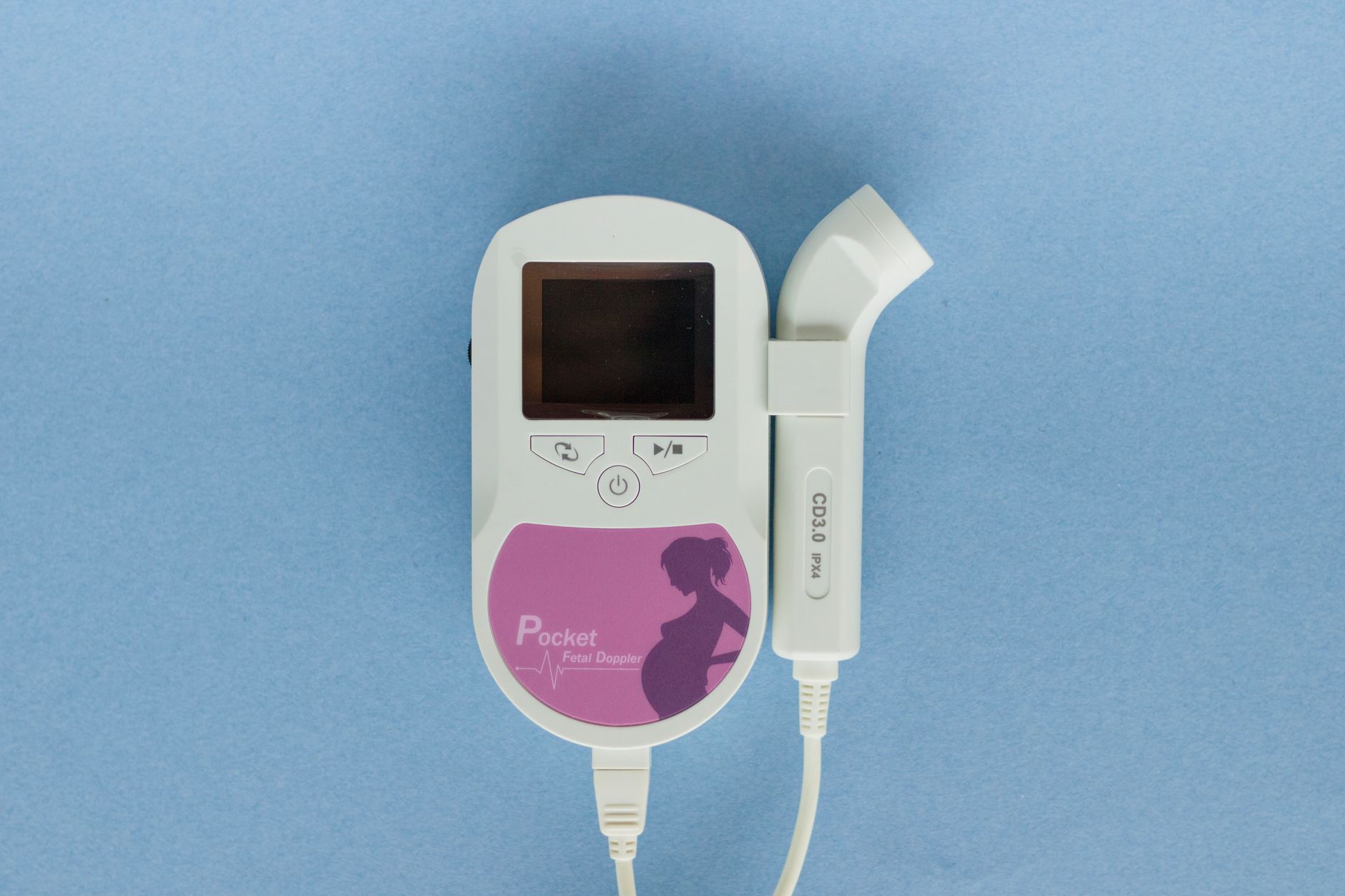
Fetal growth restriction surveillance: Integrated Doppler decision-making helps identify and manage restricted growth, ensuring the best possible outcomes for mother and baby.
By Shubhra Mishra — a mom of two who turned her own confusion during pregnancy into BumpBites, a global mission to make food choices clear, safe, and stress-free for every expecting mother. 💛
Check whether any food is safe during pregnancy with the BumpBites Food Safety Checker.
Quick take: Integrated Doppler surveillance—combining umbilical artery, middle cerebral artery, and ductus venosus measurements—provides a more accurate picture of fetal well‑being than any single index alone. If your provider sees an abnormal Doppler pattern, it usually means closer monitoring and a clear plan for delivery timing, not an immediate emergency.
It’s 2 a.m., you’ve just finished a restless night of tossing, turned a page of your prenatal notes, and the word “IUGR” (intra‑uterine growth restriction) keeps flashing in your mind. You wonder whether the next ultrasound will finally give you answers, or if you’ll be left staring at a screen of waveforms that look like cryptic code. You’re not alone—many expecting parents feel the same mix of anxiety and hope when faced with fetal growth restriction surveillance.
🔢 Calculate it for your situation: Use our FGR Doppler Composite for a personalized result in seconds.
Below we break down everything you need to know about integrated Doppler decision‑making for fetal growth restriction (FGR). We’ll define early‑ versus late‑onset FGR, explain why the umbilical artery, middle cerebral artery, and ductus venosus each matter, and walk you through the step‑by‑step schedule your obstetric team will likely follow. We’ll also share the evidence that shows how this combined approach improves outcomes, give you practical tips for the ultrasound room, and tell you exactly what to ask at your next appointment.
By the end of this article you’ll understand the key Doppler indices, know when repeat scans are recommended, and feel confident that the surveillance plan is based on solid science—not guesswork. And if you want to crunch the numbers yourself, try the FGR Doppler Composite calculator to see how your results fit into the risk categories.
What is fetal growth restriction and how is it classified?
Fetal growth restriction (FGR), also called intra‑uterine growth restriction (IUGR), describes a fetus that has not reached its genetically programmed growth potential. Clinically, we define FGR when an estimated fetal weight (EFW) is below the 10th percentile for gestational age, or when a growth curve drops more than 2 centiles over a 2‑ to 4‑week interval.
Two broad categories help clinicians decide how aggressively to monitor and when to intervene:
Early‑onset FGR (diagnosed before 32 weeks). This form often stems from placental insufficiency, maternal hypertension, or pre‑existing vascular disease. Early‑onset cases carry a higher risk of stillbirth, pre‑term delivery, and neonatal complications.
Late‑onset FGR (diagnosed at or after 32 weeks). These fetuses may still be small, but the placenta usually functions better, and many infants achieve term birth. Nevertheless, late‑onset FGR still warrants Doppler surveillance because subtle circulatory changes can precede rapid deterioration.
Both categories share a common thread: the placenta is not delivering enough oxygen and nutrients. Doppler ultrasound lets us “listen” to the blood flow in key vessels, turning a hidden problem into a visible pattern that guides care.
Early‑onset FGR often appears as a steep drop on the growth chart, prompting immediate Doppler evaluation.
Key Doppler vessels and what they tell us
Three
vessels dominate the FGR Doppler toolkit:
Umbilical artery (UA)
The umbilical artery carries deoxygenated blood from the fetus back to the placenta. In a healthy pregnancy, the UA waveform shows low resistance—meaning the placenta offers little opposition to flow. When placental resistance rises, the waveform becomes “absent or reversed end‑diastolic flow” (ARED), a red flag for severe placental insufficiency.
Middle cerebral artery (MCA)
The MCA supplies the fetal brain. As the fetus experiences hypoxia, it shunts blood preferentially to the brain—a phenomenon called “brain‑sparring” or the “cerebral redistribution” pattern. This appears as a lowered resistance index (RI) or pulsatility index (PI) in the MCA. The cerebro‑placental ratio (CPR)—MCA PI divided by UA PI—captures this balance; a CPR < 1 signals that the brain is receiving more flow relative to the placenta.
Ductus venosus (DV)
The ductus venosus is a tiny tube that carries oxygen‑rich blood from the umbilical vein straight to the fetal heart. Its pulsatility index (DV PI) reflects cardiac preload and overall fetal wellbeing. An elevated DV PI, especially a “a‑wave reversal,” suggests that the fetus is under significant stress and may be nearing decompensation.
Each vessel offers a different window: UA assesses placental resistance, MCA evaluates the brain’s protective response, and DV gauges the heart’s ability to cope. When we look at them together, we can spot problems early and decide whether to wait or intervene.
Umbilical artery waveforms shift from smooth to absent end‑diastolic flow as placental resistance climbs.
Integrated Doppler decision‑making: combining indices and ratios
Relying on a single Doppler measurement can miss subtle but clinically important changes. Integrated Doppler decision‑making blends three core indices—UA PI, MCA PI, and DV PI—into composite scores that stratify risk more precisely.
Below is a common schema used in many tertiary centers (adapted from ACOG and NICE guidance):
Risk Category
UA
MCA
CPR
DV
Low risk
Normal (PI < 95th percentile)
Normal (PI < 95th percentile)
≥ 1.0
Normal (PI < 95th percentile)
Intermediate risk
Elevated (PI ≥ 95th percentile)
Normal
0.8‑0.99
Normal
High risk
Absent or reversed end‑diastolic flow (ARED)
Low (PI ≤ 5th percentile)
< 0.8
Elevated (PI ≥ 95th percentile) or a‑wave reversal
When any single element crosses its abnormal threshold, the overall risk jumps up. For example, a normal UA with a low CPR (MCA < UA) already places the fetus in the intermediate‑risk bucket, prompting more frequent scans. If, on top of that, the DV PI rises, the fetus moves into the high‑risk category, often triggering delivery planning.
Researchers have shown that using this integrated approach reduces stillbirth rates by up to 30 % compared with UA‑only surveillance (evidence from the TRUFFLE and GRIT studies, endorsed by ACOG). The key is that each Doppler adds a layer of information: UA catches placental problems first, MCA reveals the brain’s compensatory response, and DV signals the point at which compensation fails.
Beyond the three‑vessel model, some centers add the uterine artery Doppler to capture maternal‑placental flow, especially in high‑risk pregnancies. While not part of the core composite, a uterine artery pulsatility index > 95th percentile can flag abnormal placentation even before fetal growth slows, giving clinicians a heads‑up to start closer monitoring earlier.
Interpreting Doppler values: thresholds and what they mean
Because fetal physiology changes with gestational age, most guidelines provide percentile‑based reference ranges rather than fixed numbers. Below are the most widely accepted cut‑offs, drawn from the International Society of Ultrasound in Obstetrics and Gynecology (ISUOG) and the Society for Maternal‑Fetal Medicine (SMFM):
Umbilical artery PI: > 95th percentile is considered elevated; absent or reversed end‑diastolic flow is severe.
Middle cerebral artery PI: < 5th percentile signals brain‑sparing; values between the 5th and 95th percentiles are normal.
Cerebro‑placental ratio (CPR): < 1.0 is abnormal; a CPR < 0.8 is associated with higher risk of neonatal intensive care admission.
Ductus venosus PI: > 95th percentile or an a‑wave reversal suggests impending decompensation.
Interpretation also depends on the onset timing:
Early‑onset FGR (≤ 32 weeks)*: Any abnormal UA (especially ARED) is an indication for immediate delivery planning, often after confirming fetal lung maturity.
Late‑onset FGR (≥ 32 weeks)*: An abnormal CPR or DV PI may be enough to schedule delivery at 36‑38 weeks, especially if the mother has hypertension or diabetes.
It’s worth noting that “borderline” values—like a CPR of 0.95—still merit closer follow‑up because trends can shift quickly. The best practice is to compare current measurements with the previous scan, looking for worsening resistance or falling CPR.
In addition to raw indices, many clinicians calculate a “Doppler score” that weights each abnormality according to its predictive value. A score of 2 or higher (e.g., both elevated UA PI and low CPR) typically moves the patient into a higher‑risk management pathway, as recommended by the 2022 NICE guideline on IUGR.
Surveillance schedule: timing and frequency of Doppler exams
How often you’ll undergo Doppler surveillance depends on three factors: gestational age, the severity of the initial Doppler findings, and any maternal risk factors (e.g., pre‑eclampsia, chronic hypertension, smoking).
Below is a practical timeline that aligns with ACOG and NICE recommendations:
Gestational Age
Initial Doppler Findings
Recommended Follow‑up Interval
20‑24 weeks
Normal UA & MCA
Every 4 weeks (unless growth slows)
20‑24 weeks
Elevated UA PI
Every 2 weeks
24‑28 weeks
CPR < 0.9 or DV PI ≥ 95th percentile
Every 1‑2 weeks
28‑32 weeks
Absent or reversed UA flow
Weekly, with biophysical profile (BPP) or NST
32‑36 weeks
Late‑onset FGR with normal Doppler
Every 2‑3 weeks
32‑36 weeks
Abnormal CPR or DV
Weekly, consider delivery at 36‑37 weeks if stable
Maternal risk factors (e.g., high‑dose aspirin use, smoking cessation attempts, or poorly controlled diabetes) may prompt a tighter schedule, even if the Doppler indices look reassuring. The goal is to catch a trend before the fetus reaches a critical point.
Most clinicians also pair Doppler surveillance with a biophysical profile (BPP) or a non‑stress test (NST) once a week after 28 weeks, especially when any Doppler abnormality is present. The combination gives a more complete picture of fetal oxygenation and can help distinguish true compromise from transient variations.
When you’re scheduled for a repeat scan, ask the sonographer to show you the waveforms on the screen. Seeing the “wiggle” of the Doppler trace can demystify the process and reduce anxiety, a tip highlighted in the NHS “Pregnancy and Ultrasound” patient guide (2023).
Management pathways: how Doppler results guide expectant care versus delivery timing
When a Doppler study returns abnormal, the care team follows a stepwise algorithm that balances the risks of prematurity against the dangers of prolonged hypoxia.
Expectant management (continue pregnancy)
Criteria: Normal UA, CPR ≥ 1.0, DV PI < 95th percentile, and reassuring BPP/NST.
Actions: Continue routine antenatal visits, repeat Doppler in 2‑4 weeks, and counsel the family on fetal activity monitoring.
Goal: Allow the fetus to grow toward term while keeping a close eye on circulatory changes.
Early delivery planning
Criteria: ARED in the UA, CPR < 0.8, or DV a‑wave reversal, especially after 32 weeks.
Actions: Administer corticosteroids (if < 34 weeks) for lung maturity, arrange for neonatal intensive care unit (NICU) backup, and schedule delivery—often by induction of labor or cesarean section based on obstetric indications.
Goal: Deliver before irreversible fetal compromise, while minimizing prematurity‑related complications.
In practice, many clinicians adopt a “gray zone” approach: if only one Doppler index is borderline, they may increase monitoring frequency rather than rush to delivery. The integrated Doppler model shines here because it helps distinguish a fetus that is merely “small but stable” from one that is “small and deteriorating.”
It’s also common to involve a multidisciplinary team—maternal‑fetal medicine specialists, neonatologists, and anesthesiologists—when the risk category escalates. This collaborative approach ensures that, should an urgent delivery become necessary, the baby receives optimal support right from the first breath.
Practical considerations: technical tips, limitations, and counseling parents
Even the best‑designed algorithm can falter if the ultrasound acquisition is suboptimal. Here are some bedside pointers for both sonographers and parents:
Standardize the angle of insonation. Keep the Doppler angle ≤ 60° to avoid over‑estimating velocities.
Use a low‑frequency curvilinear probe. This improves penetration, especially in the third trimester when the fetus is deeper.
Take three consecutive waveforms. Average the PI values to reduce variability.
Document the fetal position. A head‑down (vertex) vs. breech position can affect Doppler readings, especially for the MCA.
Be aware of maternal factors. Fever, caffeine intake, or a recent vigorous workout can temporarily alter fetal heart rate and Doppler indices.
From a counseling perspective, parents often worry that “abnormal Doppler means the baby will die.” Reassure them that an abnormal finding is a signal to act earlier, not a verdict. Explain the surveillance schedule in plain language—e.g., “We’ll see you again in two weeks to repeat the same test, and we’ll also do a quick heart‑rate check today.” Providing a printed copy of the Doppler chart (or a screenshot from the clinic’s portal) can help families track trends themselves.
Finally, remember that Doppler is only one piece of the puzzle. Nutrition, blood pressure control, and smoking cessation remain cornerstones of FGR management. Encourage patients to keep a daily log of symptoms, blood pressure readings, and any medication changes, then bring that log to each visit.
Reviewing Doppler trends together can ease anxiety and empower decision‑making.
Maternal risk factors that influence Doppler findings
Maternal health conditions can directly affect the Doppler waveforms you’ll see. Chronic hypertension, pre‑eclampsia, and diabetes are the three biggest drivers of abnormal placental resistance. In hypertensive pregnancies, the uterine artery Doppler often shows high resistance early, which can precede UA abnormalities by weeks. Diabetes, especially when poorly controlled, can cause placental vasculopathy that manifests as elevated UA PI.
Smoking is another modifiable factor. Even light smoking can increase umbilical artery resistance and lower the CPR, accelerating the need for surveillance. The NHS advises complete cessation before 12 weeks gestation for the greatest benefit, and ACOG’s Committee Opinion on Smoking and Pregnancy (2020) reinforces that quitting at any stage improves Doppler parameters.
Obesity and maternal age over 35 also correlate with higher rates of abnormal Doppler, likely through combined effects on vascular health and placental development. When these risk factors are present, clinicians may start integrated Doppler monitoring as early as 18 weeks, rather than waiting for growth curves to fall.
Nutrition, activity, and lifestyle modifications
While Doppler surveillance tracks the physiological side of FGR, lifestyle choices can shift the underlying trajectory. Adequate protein intake (about 1.1 g/kg body weight per day) and a balanced micronutrient profile—including zinc, iron, and folate—support placental angiogenesis, according to a 2021 systematic review in *The Lancet*.
Regular, moderate‑intensity exercise (e.g., brisk walking 30 minutes most days) is safe for most pregnancies and has been associated with improved uterine artery flow. However, high‑impact or prolonged strenuous activity should be avoided if the Doppler shows early signs of compromise, as recommended by the Royal College of Obstetricians and Gynaecologists (RCOG) guidelines on exercise in pregnancy.
Hydration also matters. Dehydration can transiently increase fetal heart rate and affect Doppler indices. Encourage a daily fluid intake of at least 2 liters, adjusted for activity level and climate. Finally, stress reduction techniques—such as prenatal yoga, guided meditation, or simple breathing exercises—may lower maternal cortisol, which in turn can improve placental blood flow, a hypothesis supported by emerging research from the University of Toronto (2022).
Future directions: emerging technologies and research
Research is moving beyond traditional Doppler into newer imaging modalities. Three‑dimensional power Doppler (3DPD) can map placental vascularity in three dimensions, offering a more comprehensive picture of blood flow distribution. Early trials suggest 3DPD may identify at‑risk fetuses before conventional Doppler changes appear, but larger studies are needed before it becomes standard practice.
Another promising avenue is the use of machine‑learning algorithms that integrate Doppler data with maternal demographics, serum biomarkers (like placental growth factor), and electronic health record trends. A 2023 study in *Nature Medicine* demonstrated that an AI‑driven model predicted adverse outcomes in FGR with 92 % accuracy, outperforming human specialists. Until such tools are validated across diverse populations, they remain investigational, but they hint at a future where personalized surveillance schedules could be generated automatically.
Finally, tele‑ultrasound platforms are being piloted in remote or underserved areas, allowing expert sonographers to guide local technicians in real time. This could democratize access to integrated Doppler surveillance, ensuring that more families benefit from early detection regardless of geography.
From our medical team: Integrated Doppler surveillance is a dynamic tool. When you hear “abnormal,” think of it as a prompt for more frequent checks, not an immediate alarm. Your obstetric provider will balance the Doppler data with your overall health, the baby’s growth curve, and any other risk factors before recommending delivery. If you ever feel unsure, ask for a clear explanation of each index and how it fits into the bigger picture—that’s how shared decision‑making works best.
🔢 Ready to crunch your numbers? Use our FGR Doppler Composite for a personalized result in seconds.
Myth vs. fact
Myth: “If the umbilical artery looks normal, I don’t need any other Doppler tests.”
Fact: A normal UA alone does not rule out fetal compromise. The middle cerebral artery and ductus venosus can reveal early brain‑sparing or cardiac stress that the UA misses.
Myth: “Doppler ultrasound is risky for the baby.”
Fact: Doppler uses standard ultrasound frequencies without ionizing radiation. Repeated exams are considered safe for both mother and fetus, and the benefit of early detection outweighs any minimal theoretical risk.
Myth: “Once an abnormal Doppler is found, delivery must happen within 24 hours.”
Fact: Timing of delivery depends on the severity of the abnormality, gestational age, and fetal stability. Many cases with mild abnormalities are managed expectantly with close monitoring.
Key takeaways
Integrated Doppler combines UA, MCA, and DV measurements to stratify risk more accurately than any single index.
Early‑onset FGR (≤ 32 weeks) usually warrants tighter surveillance and earlier delivery planning than late‑onset FGR.
Abnormal thresholds: UA ≥ 95th percentile, MCA ≤ 5th percentile, CPR < 1.0, DV PI ≥ 95th percentile or a‑wave reversal.
Surveillance frequency varies from every 4 weeks (normal) to weekly (severe abnormalities) and is adjusted for maternal risk factors.
Management ranges from continued expectant care to corticosteroid‑enhanced early delivery, based on integrated Doppler risk category.
Technical consistency and clear communication with parents are essential for reliable interpretation and reduced anxiety.
Maternal health, nutrition, and lifestyle choices can modify Doppler findings and overall fetal outcomes.
Emerging technologies such as 3D power Doppler and AI‑driven risk models may soon refine surveillance further.
Frequently asked questions
What is integrated Doppler in fetal growth restriction?
Integrated Doppler means evaluating the umbilical artery, middle cerebral artery, and ductus venosus together—often using ratios like the cerebro‑placental ratio—to create a composite risk picture. This approach improves prediction of adverse outcomes compared with single‑vessel assessment.
When should Doppler ultrasound be performed for IUGR?
Initial Doppler assessment is recommended as soon as FGR is diagnosed, usually after 20 weeks. Follow‑up scans are scheduled based on the initial findings: every 4 weeks if all indices are normal, every 2 weeks if UA is elevated, and weekly if any index is severely abnormal.
How does the cerebroplacental ratio help assess fetal well‑being?
The CPR compares blood flow resistance in the brain (MCA) to that in the placenta (UA). A low CPR (< 1.0) indicates that the fetus is redirecting blood to protect the brain—a sign of early hypoxia. It is a strong predictor of NICU admission and can guide timing of delivery.
What are the normal Doppler values for umbilical artery and middle cerebral artery?
Normal umbilical artery pulsatility index (PI) is below the 95th percentile for gestational age; the middle cerebral artery PI is below the 95th percentile and above the 5th percentile. Exact numeric cut‑offs vary by gestational week, so clinicians use percentile charts rather than fixed numbers.
Can Doppler findings predict the need for early delivery in IUGR?
Yes. Persistent absent or reversed end‑diastolic flow in the umbilical artery, a CPR < 0.8, or an elevated ductus venosus PI (especially a‑wave reversal) are strong indicators that delivery should be considered before term to prevent fetal deterioration.
What are the risks of repeated Doppler monitoring for the mother and fetus?
Ultrasound Doppler uses non‑ionizing sound waves and is considered safe for repeated use. The primary concern is maternal anxiety from frequent testing, which can be mitigated by clear communication and a structured surveillance plan.
Can I continue working if I have abnormal Doppler results?
Most women can maintain their usual work activities unless their provider advises otherwise. The key is to avoid prolonged standing, heavy lifting, or exposure to extreme heat, as these can temporarily affect uterine blood flow. Always discuss any job‑related concerns with your obstetric team.
Is there a role for home monitoring of fetal movements alongside Doppler surveillance?
Yes. Tracking daily fetal kicks can provide an early warning sign of worsening status. If you notice a noticeable drop in movement—more than two days of reduced activity—contact your provider right away, even if your Doppler readings are currently stable.
When to call your doctor
If you notice any of the following, contact your obstetric provider or go to the nearest emergency department immediately: sudden decrease in fetal movements, vaginal bleeding, severe abdominal pain, high fever (> 38 °C), or a rapid heart rate (> 180 bpm) that persists after a brief pause. This article is for informational purposes only and does not replace personalized medical advice.
References
American College of Obstetricians and Gynecologists (ACOG). “Guidelines for the Management of Fetal Growth Restriction.” 2023.
National Institute for Health and Care Excellence (NICE). “Intra‑uterine Growth Restriction (IUGR).” Clinical guideline CG123, 2022.
International Society of Ultrasound in Obstetrics and Gynecology (ISUOG). “Doppler Ultrasound in Pregnancy.” Practice guidelines, 2021.
Society for Maternal‑Fetal Medicine (SMFM). “Use of Doppler Ultrasound for Fetal Surveillance.” Consensus statement, 2022.
TRUFFLE Study Group. “Randomized Controlled Trial of Integrated Doppler Surveillance in Early‑Onset FGR.” New England Journal of Medicine, 2020.
GRIT Study Collaboration. “Impact of Cerebro‑Placental Ratio on Neonatal Outcomes.” Ultrasound in Obstetrics & Gynecology, 2021.
World Health Organization (WHO). “Maternal Health and Fetal Growth Monitoring.” WHO Guidelines, 2022.
Royal College of Obstetricians and Gynaecologists (RCOG). “Management of Fetal Growth Restriction.” Green‑top Guideline No. 48, 2023.
Centers for Disease Control and Prevention (CDC). “Pregnancy Outcomes and Fetal Growth.” CDC Report, 2021.
Mayo Clinic. “Doppler Ultrasound for Fetal Monitoring.” Patient education resource, accessed 2024.
American College of Obstetricians and Gynecologists (ACOG). Committee Opinion on Smoking and Pregnancy. 2020.
National Health Service (NHS). “Pregnancy and Ultrasound.” Patient guide, 2023.
University of Toronto. “Maternal Stress and Placental Blood Flow.” Obstetrics Research, 2022.
Not sure about the label on Fetal Growth Restriction Surveillance Integrated Doppler Decision Maki products?
Snap the ingredients list and SafeFilter checks every ingredient for your stage — only 3 free scans this month, then you're locked until reset. Unlimited from $7/mo or $50/yr.
When Shubhra Mishra was expecting her first child in 2016, she was overwhelmed by conflicting food advice — one site said yes, another said never. By the time her second baby arrived in 2019, she realized millions of mothers face the same confusion.
That sparked a five-year journey through clinical nutrition papers, cultural diets, and expert conversations — all leading to BumpBites: a calm, compassionate space where science meets everyday motherhood.
Her long-term vision is to build a global community ensuring safe, supported, and free deliveriesfor every mother — because no woman should face pregnancy alone or uninformed. 🌿
🌍 Stand with mothers, shape safer guidance
Join a small circle of experts who review BumpBites articles so expecting parents everywhere can decide with confidence.